
Discover essential insights in our skin cancer risk factors list. Learn how to assess and minimize your risk for better prevention today.
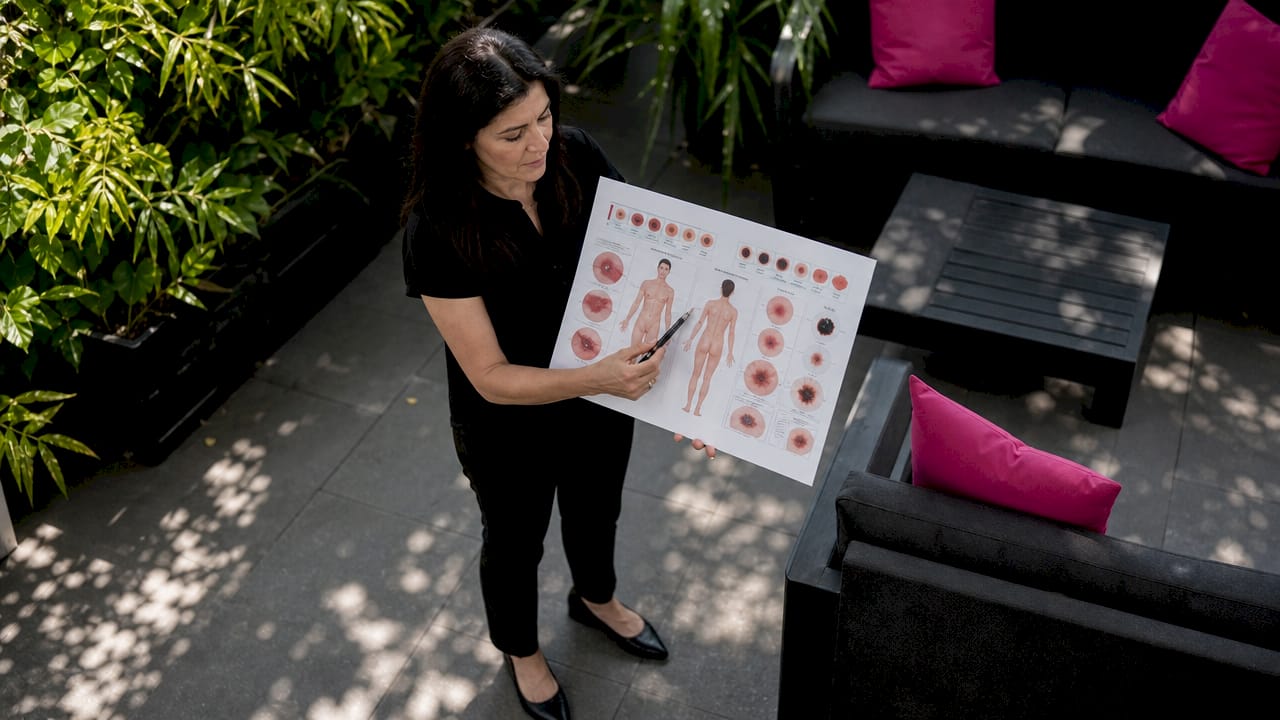
Skin cancer risk factors are specific characteristics and exposures that measurably raise your likelihood of developing basal cell carcinoma, squamous cell carcinoma, or melanoma. The most significant factors include UV exposure, Fitzpatrick skin type, mole profile, family history, and immune system status. Knowing your personal risk profile is the first step toward prevention. Raodermatology has spent 25+ years helping patients across California, New Jersey, and New York assess these risks and act before cancer develops.
1. The complete skin cancer risk factors list at a glance
Understanding which factors matter most helps you prioritize your prevention efforts. The core risk categories span biology, behavior, environment, and genetics. No single factor guarantees a diagnosis, but combinations multiply risk significantly.
The major categories are:
- Skin type and pigmentation (Fitzpatrick types I–III carry the highest UV vulnerability)
- UV exposure history (sunburns, tanning beds, outdoor occupation)
- Mole count and type (more than 50 total moles or more than 5 atypical moles)
- Family and personal history (prior skin cancer, first-degree relatives with melanoma)
- Genetic mutations (BRCA2, BRAF, CDKN2A)
- Immune system status (organ transplant recipients, HIV-positive individuals)
- Age and cumulative sun damage (risk rises with decades of unprotected exposure)
- Environmental and occupational exposures (arsenic, coal tar, radiation)
2. How skin type and pigmentation shape your risk
Lighter skin tones in Fitzpatrick types I–III face the highest risk of sunburn and skin cancer because they produce less melanin. Melanin absorbs UV radiation before it damages DNA in deeper skin cells. Less melanin means less natural protection on every sun-exposed day.
Blue or green eyes and blond or red hair are also independent markers of UV sensitivity. These traits often cluster with Fitzpatrick type I or II skin, compounding the risk. If you have all three, your baseline risk is meaningfully higher than average.
Darker skin types are not risk-free. Melanoma in darker-skinned individuals tends to appear on palms, soles, and mucous membranes rather than sun-exposed areas. These locations are easy to miss in a standard self-exam. That pattern contributes directly to later-stage diagnoses and worse outcomes in skin of color populations.

Pro Tip: If you have a darker skin tone, add your palms, soles, nail beds, and the inside of your mouth to every self-exam. These are the sites most likely to be overlooked.
3. UV exposure and sun-related behaviors
UV radiation from the sun and tanning beds is the leading environmental cause of skin cancer. UVA rays penetrate deeply and accelerate aging and DNA mutation. UVB rays cause the surface burns most people associate with sun damage. Both types drive cancer development.
Indoor tanning raises melanoma risk by 20% with even a single session. Starting before age 35 increases that risk by 75%. Those numbers make tanning beds one of the most preventable risk factors on this entire list.
A tan is not protection. Tanning signals DNA damage in skin cells, not adaptation. Your body darkens the skin as a distress response, not a shield. Childhood sunburns are particularly damaging because young skin cells are dividing rapidly and mutations accumulate over decades.
- Wear broad-spectrum SPF 30 or higher sunscreen daily. SPF 30 blocks 97% of UVB rays, compared to 93% for SPF 15.
- Reapply every two hours when outdoors.
- Seek shade between 10 a.m. and 4 p.m. when UV intensity peaks.
- Wear protective clothing. Holding fabric up to light reveals its UV protection level. Less transparent fabric blocks more UV.
Pro Tip: Apply sunscreen to your ears, the back of your neck, and the tops of your feet. These spots receive direct sun but rarely get coverage.
4. Mole count and atypical moles
Your mole profile is one of the clearest measurable markers of melanoma risk. Having more than 50 moles or more than 5 atypical moles significantly raises your melanoma risk. Atypical moles, also called dysplastic nevi, look irregular and can be difficult to distinguish from early melanoma without professional evaluation.
Congenital melanocytic nevi, moles present at birth, carry their own elevated risk depending on size. Large congenital nevi require monitoring from early childhood. Any mole that changes in color, shape, or size warrants prompt dermatology review.
| Feature | Normal mole | Atypical mole |
|---|---|---|
| Shape | Round or oval, symmetrical | Irregular, asymmetrical |
| Border | Smooth, well-defined | Ragged or blurred edges |
| Color | Uniform tan or brown | Multiple shades, uneven |
| Size | Smaller than 6mm | Often larger than 6mm |
| Surface | Flat or slightly raised | Varied texture |
Use the ABCDE rule (Asymmetry, Border, Color, Diameter, Evolving) as your self-exam framework. Any mole that evolves over weeks deserves a professional look. A dermatologist can use dermatoscopy to examine moles at a level no naked eye can match.
5. Genetic and familial risk factors
Genetics contribute significantly to skin cancer susceptibility. Mutations in BRCA2, BRAF, and CDKN2A are directly linked to elevated melanoma risk. CDKN2A in particular is a tumor suppressor gene. When it mutates, cells lose a key brake on uncontrolled growth.
Family history amplifies personal risk in a measurable way. Having a first-degree relative with melanoma roughly doubles your lifetime risk. The role of genetics in skin cancer is not just about inherited mutations. It also includes shared behaviors and environments within families.
Immune system status is equally important. Organ transplant recipients take immunosuppressive drugs long-term. That suppression removes the immune surveillance that normally catches and destroys abnormal cells. HIV-positive individuals face a similar dynamic. Both groups need more frequent skin cancer screening than the general population.
Key genetic and immune risk factors include:
- First-degree relative diagnosed with melanoma
- Personal history of any prior skin cancer
- Inherited mutations in CDKN2A, BRCA2, or BRAF
- Long-term immunosuppressive therapy
- HIV or other conditions affecting immune function
- Rare inherited syndromes such as xeroderma pigmentosum
6. Additional risk factors that often go unnoticed
Age is a cumulative risk factor. Decades of UV exposure add up, and DNA repair mechanisms become less efficient over time. Skin cancer rates rise steadily after age 50, though younger people are far from immune, especially with tanning bed use in their history.
Occupation matters more than most people realize. Chronic outdoor sun exposure in farming, construction, surfing, and landscaping significantly elevates nonmelanoma skin cancer risk. These workers accumulate years of unprotected UV exposure across large body surface areas.
Environmental exposures beyond UV also raise risk. Arsenic in drinking water, coal tar in industrial settings, and prior radiation therapy to the skin all increase the likelihood of squamous cell carcinoma in particular. These are less common but worth knowing if your work or medical history includes them.
One common misconception: pregnancy-related mole changes do not increase malignancy risk. Hormonal changes during pregnancy can darken or enlarge moles, but this does not make them cancerous. It does complicate visual monitoring, which is why pregnant patients with a high mole count benefit from professional tracking rather than self-assessment alone.
Skin of color individuals face a specific disparity worth naming directly. Later-stage diagnoses are more common in this group, leading to worse outcomes despite lower overall incidence. The gap is driven by underscreening, atypical tumor locations, and a widespread misconception that darker skin is fully protected.
Key takeaways
Skin cancer risk is shaped by a combination of genetic, behavioral, and environmental factors, and knowing your personal profile makes prevention far more targeted and effective.
| Point | Details |
|---|---|
| Skin type is not the whole story | Darker skin tones still develop melanoma, often in overlooked sites like palms and soles. |
| Tanning is always harmful | Every tan reflects DNA damage. There is no safe base tan from sun or tanning beds. |
| Mole profile is measurable | More than 50 moles or more than 5 atypical moles signals a need for regular dermatology screening. |
| Genetics and immunity matter | CDKN2A mutations, family history, and immunosuppression each independently raise melanoma risk. |
| SPF 30 outperforms SPF 15 | SPF 30 blocks 97% of UVB rays versus 93% for SPF 15, making it the recommended daily minimum. |
What I’ve learned from watching patients underestimate their own risk
The patients who concern me most are not the ones who know they are high risk. They are the ones who have convinced themselves they are not. I see it constantly: someone with Fitzpatrick type III skin, a history of blistering sunburns in their 20s, and 60-plus moles who says, “I’ve never really worried about it.”
The skin cancer risk factors list is not a checklist you pass or fail. It is a probability map. Each factor you carry shifts the odds. Two or three together can move someone from low risk to high risk without a single symptom appearing.
One thing I push back on hard is the idea that a smartphone app can substitute for a professional exam. Consumer-grade apps are unreliable for skin cancer detection and should not replace professional evaluation. I understand the appeal. But an app cannot palpate a lesion, assess dermoscopic patterns, or factor in your full medical history. It gives false reassurance to people who need real answers.
The other misconception I encounter regularly is the “base tan” myth. There is no safe base tan. A tan is a sign of skin injury, full stop. Patients who spend two weeks in a tanning bed before a beach vacation have not protected themselves. They have added two weeks of DNA damage on top of whatever comes next.
My practical advice: if you carry three or more factors from this list, schedule a full-body skin exam with a board-certified dermatologist. Do not wait for a suspicious spot. Prevention and early detection are where outcomes are won.
— Krunal
Skin cancer screening and prevention at Raodermatology
Raodermatology offers specialized skin cancer prevention and detection services across its California, New Jersey, and New York locations. Dr. Babar K. Rao and his team bring 25+ years of experience to full-body skin exams, mole mapping, and personalized risk assessments.

Patients with multiple risk factors benefit most from a structured screening schedule rather than reactive care. Raodermatology’s clinical team uses dermatoscopy and dermatopathology to catch changes that are invisible to the naked eye. Whether you are managing a high mole count, a family history of melanoma, or years of occupational sun exposure, a consultation gives you a clear picture of where you stand and what to do next. Schedule your skin cancer screening at Raodermatology today.
FAQ
What is the biggest risk factor for skin cancer?
UV exposure from sunlight and tanning beds is the leading modifiable risk factor for skin cancer. Starting indoor tanning before age 35 raises melanoma risk by 75%.
Can people with darker skin get skin cancer?
Yes. Darker-skinned individuals develop melanoma most often on palms, soles, and mucous membranes rather than sun-exposed areas, which leads to later detection and worse outcomes.
How many moles are too many?
Having more than 50 total moles or more than 5 atypical moles significantly increases melanoma risk and warrants regular professional monitoring.
Does family history of melanoma affect my risk?
A first-degree relative with melanoma roughly doubles your lifetime risk. Genetic mutations like CDKN2A and BRCA2 also independently raise susceptibility and may warrant genetic counseling.
Can a smartphone app detect skin cancer?
No. Consumer-grade smartphone apps are unreliable for skin cancer detection and should not replace evaluation by a board-certified dermatologist.
Recommended
Filed under: