
Learn how to safely use imiquimod Aldara for skin conditions. Discover dosing details, what to expect, and manage side effects effectively.
How to Use Imiquimod (Aldara): Dosing & What to Expect
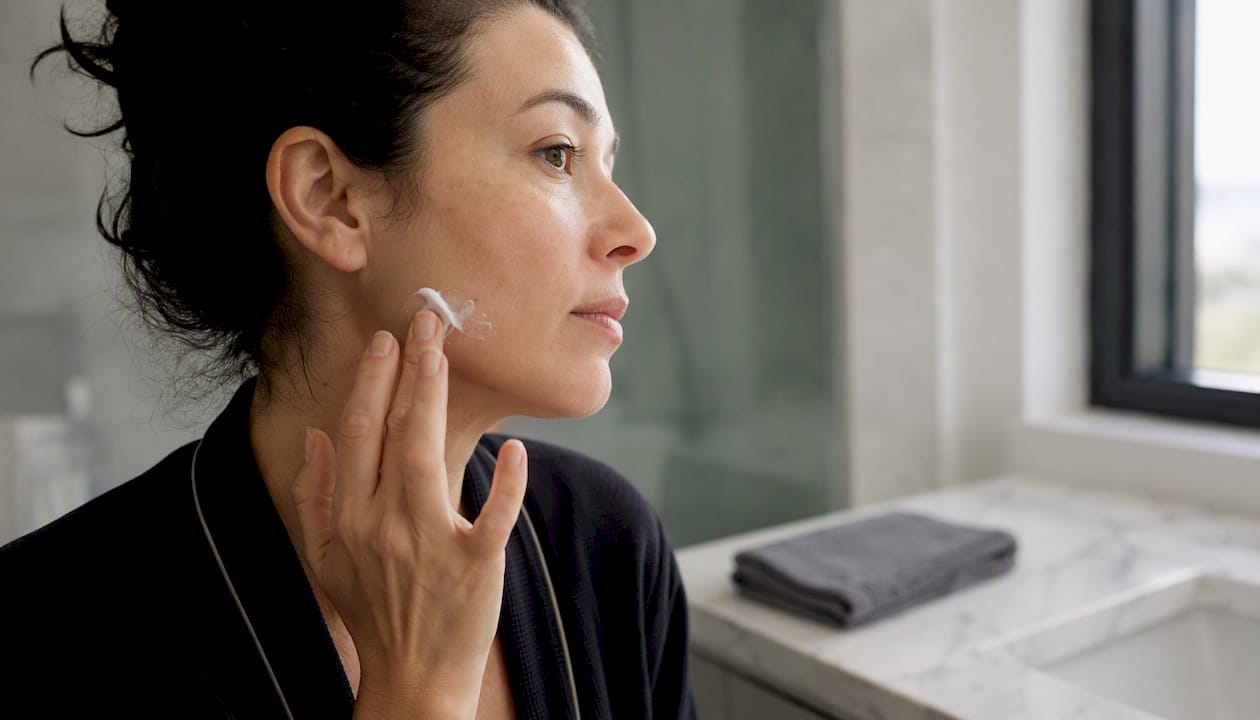
Aldara (imiquimod) is a prescription-only topical immune-response modifier approved by the FDA for three specific skin conditions: actinic keratosis on the face or scalp, superficial basal cell carcinoma in select cases, and external genital or perianal warts in patients 12 and older. You cannot buy it over the counter in the United States. A licensed clinician must evaluate your skin and write the prescription before you can fill it.
The short version before you read further:
- Aldara and its generic imiquimod formulations are prescription-only in the U.S.
- Application frequency differs by condition: twice weekly for actinic keratosis, five times weekly for superficial basal cell carcinoma, three times weekly for genital warts.
- Local redness, itching, and flaking are expected. They signal your immune system is responding, not that something has gone wrong.
Prescription status: You must see a licensed U.S. clinician to obtain ALDARA® or any generic imiquimod cream. No valid prescription means no legal access, period.
Table of Contents
- What is imiquimod (Aldara) and how does it work on your skin?
- What conditions is Aldara FDA-approved to treat?
- Condition-by-condition dosing: frequency, duration, and packet guidance
- What side effects should you expect, and when should you call your doctor?
- Who should avoid Aldara, and what interactions matter?
- What to expect during treatment and how to stay on track
- What are the alternatives to imiquimod, and when do clinicians choose them?
- How to get Aldara in the United States: prescriptions, generics, and cost
- Key Takeaways
- The part most patients don’t hear until they’re already frustrated
- Raodermatology offers specialist evaluation and follow-up for skin lesions
- Useful sources
- FAQ
What is imiquimod (Aldara) and how does it work on your skin?
ALDARA® is the branded 5% imiquimod cream. Generic aldara imiquimod formulations at the same concentration are also available. The drug belongs to a class called immune response modifiers, which means it does not attack abnormal cells directly. Instead, it activates your own immune system to do the work.
When you apply the cream, imiquimod binds to toll-like receptors in skin cells and triggers a local release of cytokines, including interferon-alpha. That cytokine surge recruits immune cells to the treatment site, which then target and clear abnormal or virus-infected cells. The mechanism is well-documented in the product’s composition and pharmacology data.
Three practical takeaways from how it works:
- The visible inflammation you see at the application site is usually the intended immune response, not a sign of infection or injury.
- Because the drug works through immune activation, results build gradually over weeks rather than appearing overnight.
- Patients with suppressed immune systems may not mount the same response, which is one reason the label limits use in immunocompromised populations.
Understanding this mechanism matters when you hit week three and your skin looks angrier than you expected. That reaction is often the treatment working, not failing. Knowing the difference between expected inflammation and a complication that needs clinical attention is the most useful thing you can take from this section. More on that in the side effects section below.
What conditions is Aldara FDA-approved to treat?
The FDA prescribing information for ALDARA® lists three approved indications, each with specific patient eligibility criteria. Clinicians do not prescribe this cream for every skin lesion, and the label is explicit about where it should not be used.
The three FDA-approved indications:
- Actinic keratosis (AK): Clinically typical, nonhyperkeratotic, nonhypertrophic AK on the face or scalp of immunocompetent adults. The treatment area is defined as a small contiguous area typical for the condition treated.
- Superficial basal cell carcinoma (sBCC): Biopsy-confirmed sBCC in adults when surgical methods are medically less appropriate. The tumor must be on the trunk, neck, or extremities (excluding hands and feet), with a maximum diameter of 2 cm.
- External genital and perianal warts (condylomata acuminata): Patients 12 years and older.
What it is NOT approved for:
- Nodular or infiltrative BCC subtypes.
- AK on body sites other than the face or scalp.
- Patients who are immunosuppressed (safety and efficacy are not established in this group).
- Genital warts in children under 12.
A note on off-label use: Clinicians occasionally prescribe imiquimod for conditions outside these three indications. That is a clinical judgment call made between you and your provider, not something the FDA label endorses. If your prescription is for something other than these three conditions, ask your clinician to explain the evidence base.
Condition-by-condition dosing: frequency, duration, and packet guidance
The FDA-approved dosing schedules differ meaningfully by condition. Using the wrong frequency for your indication is one of the most common patient errors, so the table below is worth bookmarking.
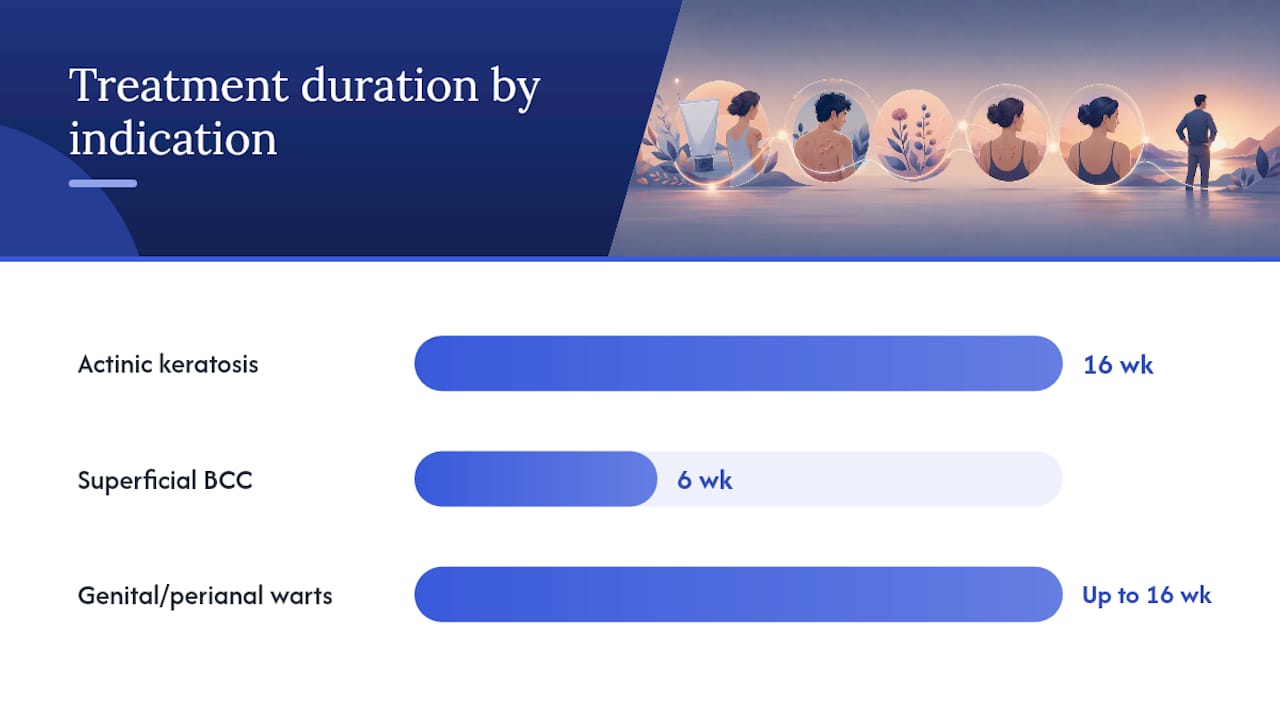
| Indication | Frequency | Duration | Leave-on time | Packet limit |
|---|---|---|---|---|
| Actinic keratosis (face/scalp) | 2×/week | 16 weeks | ~8 hours | No more than 36 packets per course |
| Superficial BCC | 5×/week | 6 weeks | ~8 hours | Per label guidance |
| External genital/perianal warts | 3×/week | Until clearance, up to 16 weeks | ~8 hours | Per label guidance |
ALDARA® comes in single-use 250 mg packets. For the AK regimen, the label specifies no more than 36 packets for the full 16-week course. Partially used packets should be discarded after each application, not saved for the next dose.
Apply the cream before bedtime and wash it off after approximately 8 hours. That timing is not arbitrary. The leave-on window is calibrated to maximize immune activation while limiting the risk of excessive local reactions from prolonged contact.
Your prescriber may adjust the regimen based on how your skin responds. A severe local reaction might prompt a brief rest period. That adjustment does not mean the treatment has failed; it means your clinician is managing the response appropriately. Total treatment duration should not exceed the label limits, even when doses are missed.
What side effects should you expect, and when should you call your doctor?
Local skin reactions are not just possible with aldara imiquimod cream — they are expected. The DailyMed labeling lists the most common reactions at the application site:
Common local reactions (usually manageable):
- Redness and erythema
- Itching and burning
- Flaking, scaling, and dryness
- Scabbing and crusting
- Swelling
Occasional systemic symptoms:
- Fatigue and flu-like malaise
- Fever and headache
- Muscle aches (from cytokine release)
These systemic symptoms reflect the same immune activation that makes the drug work. They are more common during the higher-frequency sBCC regimen (5×/week) than during the AK regimen (2×/week).
Managing mild to moderate local reactions:
- A fragrance-free moisturizer applied after the wash-off period can reduce dryness and flaking.
- If irritation becomes difficult to tolerate, your clinician may recommend a short rest period of a few days. Do not extend the total treatment duration to compensate for rest days beyond what your prescriber advises.
- Avoid other irritating topicals (retinoids, exfoliants, benzoyl peroxide) on the same area during treatment.
When to stop and call your clinician the same day: Widespread severe inflammation beyond the treatment area, signs of skin infection (increasing warmth, pus, spreading redness), high fever, fainting, or a significant drop in blood pressure all require prompt clinical contact. These are not typical reactions and should not be managed at home with a moisturizer.
Pro Tip: Take a photo of the treatment area at the start of each week. A visual record helps your clinician distinguish expected progression from a reaction that warrants a regimen change, and it removes the guesswork from follow-up appointments.
For additional guidance on interpreting skin inflammation during topical therapy, Raodermatology’s dermatitis management guide covers how dermatologists help patients read their skin’s signals.
Who should avoid Aldara, and what interactions matter?
Not everyone is a candidate for imiquimod therapy. The MedlinePlus drug information page and the FDA label both outline key precautions.
Groups who should discuss risks carefully with their clinician before using imiquimod:
- Pregnant or breastfeeding patients: Safety in pregnancy has not been established. Tell your clinician if you are pregnant, planning to become pregnant, or breastfeeding before starting treatment.
- Immunosuppressed patients: Efficacy and safety are not established in patients who are immunocompromised due to disease or medication. This includes organ transplant recipients and patients on systemic immunosuppressants.
- Patients with autoimmune conditions: Because imiquimod activates immune pathways, it may exacerbate certain autoimmune diseases.
- Pediatric patients: Approved for genital warts in patients 12 and older. Safety and efficacy for AK and sBCC have not been established in pediatric populations.
- Elderly patients: No dose adjustment is specified in the label, but older patients with thinner or more fragile skin may experience more pronounced local reactions and should be monitored closely.
Interaction considerations:
- Avoid applying other topical treatments (retinoids, alpha-hydroxy acids, prescription topical steroids unless directed) to the same area concurrently. Combining irritants amplifies local reactions without improving outcomes.
- If you are on systemic immunomodulators or biologics, discuss the combination with your prescriber before starting imiquimod. The interaction is not always contraindicated, but it requires clinical judgment.
- Sunscreen and sun avoidance matter during treatment. Treated skin is more photosensitive, and UV exposure can worsen local reactions.
What to expect during treatment and how to stay on track
The timeline for visible improvement varies by indication, but a general pattern holds across all three uses.
Typical progression:
- Weeks 1–2: Mild redness and itching begin at the application site. This is the immune response ramping up.
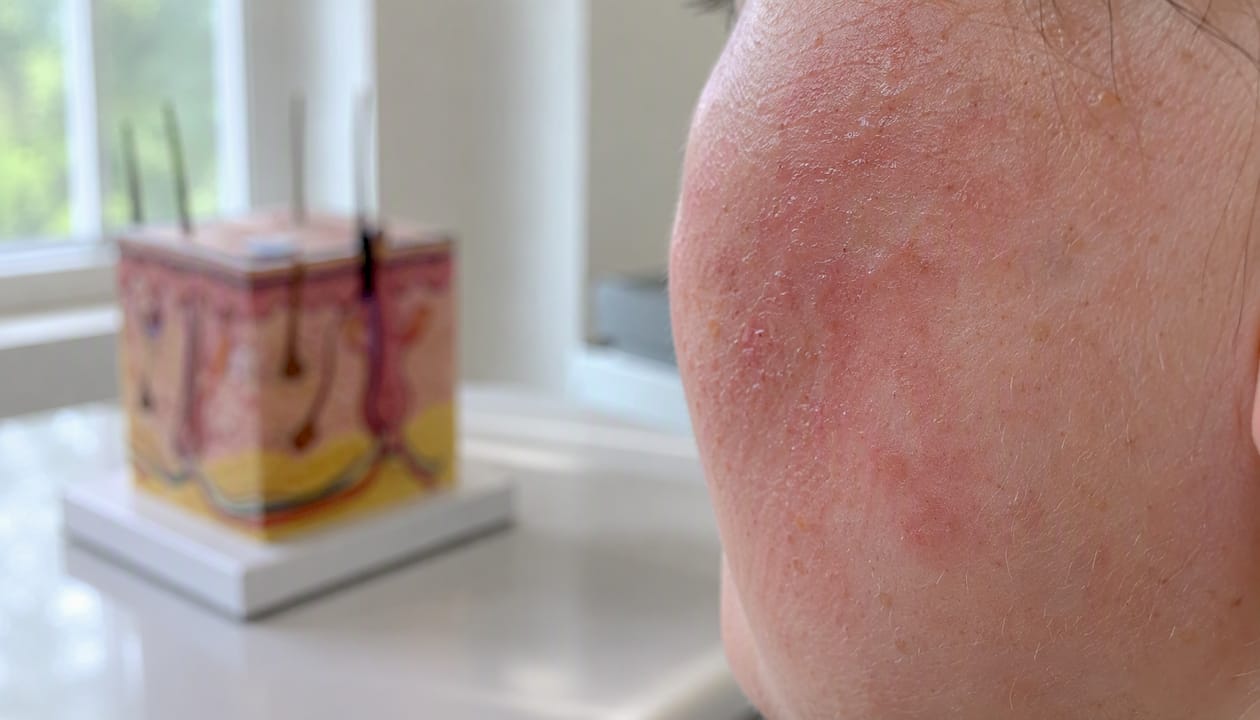
- Weeks 3–6: Inflammation often peaks. Scabbing, crusting, and more pronounced erythema are common. For AK patients, this is usually the most uncomfortable phase.
- After completing treatment: Healing continues for several weeks post-therapy. Lesion clearance may not be fully visible until 8–12 weeks after the last application.
Adherence is the most common practical barrier to successful imiquimod therapy. Patients who stop early because of inflammation often do so right when the treatment is most active. Strategies that help:
- Schedule a check-in appointment at the midpoint of your regimen, not just at the end.
- Use a calendar or app to track application days. Missing doses is easy when the schedule is non-intuitive (e.g., Monday/Thursday for 2×/week AK therapy).
- Plan rest periods proactively with your clinician rather than stopping unilaterally when irritation spikes.
Pro Tip: For sBCC patients, Raodermatology schedules a clinical review at the end of the 6-week course and again at 12 weeks post-treatment. Because topical therapy does not provide histologic clearance confirmation the way surgical excision does, that follow-up appointment is not optional — it is how recurrence gets caught early.
The post-treatment skin care guide from Raodermatology covers supportive measures that help skin recover after completing a topical regimen.
What are the alternatives to imiquimod, and when do clinicians choose them?
Imiquimod is one tool, not the only one. For each of the three indications, clinicians weigh several factors when deciding whether a different approach fits better.
For actinic keratosis:
- Photodynamic therapy (PDT) combines a photosensitizing agent with light activation and is effective for widespread AK, particularly on the face. It requires an in-office procedure but concentrates treatment into fewer sessions.
For superficial BCC:
For genital warts:
The decision comes down to lesion size, location, histology, patient comorbidities, and realistic adherence capacity. Raodermatology evaluates each patient individually and recommends the approach most likely to achieve clearance given the full clinical picture, not just the diagnosis. The role of dermatologists in skin cancer care explains how specialist evaluation shapes these decisions.
How to get Aldara in the United States: prescriptions, generics, and cost
Aldara imiquimod 5 cream is prescription-only in the U.S. There is no over-the-counter version. Your access pathway starts with a clinical evaluation.
How to get a prescription:
- In-person dermatology visit: The most reliable route for AK and sBCC, where a biopsy or clinical diagnosis is typically required before prescribing.
- Primary care: Some primary care providers prescribe imiquimod for genital warts or AK, though complex cases are usually referred to dermatology.
- Telemedicine: For straightforward genital wart cases, online prescribing platforms can evaluate patients remotely and send a prescription to a pharmacy or arrange home delivery when clinically appropriate.
Generics and cost:
Generic imiquimod 5% cream is widely available and typically costs less than the branded ALDARA®. Most major insurance plans cover imiquimod for FDA-approved indications, though prior authorization may be required for sBCC. If your insurance denies coverage or your out-of-pocket cost is high, ask your pharmacist about manufacturer patient-assistance programs or prescription discount cards.
Practical steps before your appointment:
- Photograph the lesion or affected area and bring those images to your visit.
- Bring any prior biopsy reports if you have them.
- Verify your insurance formulary before filling the prescription. Some plans prefer the generic; others require a step-therapy process.
- Ask your clinician or pharmacist about patient-assistance options if cost is a barrier.
Key Takeaways
Aldara (imiquimod) is a prescription topical immune modifier approved for three specific conditions, applied on a strict schedule with local inflammation as an expected and intended part of how it works.
| Point | Details |
|---|---|
| Three FDA indications | Actinic keratosis (face/scalp), superficial BCC (select cases), and external genital/perianal warts (age 12+). |
| Dosing by condition | AK: 2×/week for 16 weeks; sBCC: 5×/week for 6 weeks; genital warts: 3×/week up to 16 weeks, with ~8-hour leave-on time each application. |
| Inflammation is expected | Local redness, itching, and scabbing signal immune activation; stop and call your clinician for severe reactions, signs of infection, or systemic symptoms. |
| Prescription-only access | A licensed U.S. clinician must evaluate and prescribe; generic imiquimod is available and often more affordable than branded Aldara. |
| Raodermatology’s approach | Raodermatology provides specialist evaluation, prescribing, and structured follow-up for AK, sBCC, and warts across California, New Jersey, and New York. |
The part most patients don’t hear until they’re already frustrated
There is a gap between what the prescribing visit covers and what patients actually need to know to finish the course. Most of the calls and early stops I see in practice come from patients who were told “expect some redness” and then hit week four looking at a crusted, inflamed patch of skin and assumed something had gone wrong.
The inflammatory response from imiquimod is not a side effect in the traditional sense. It is the mechanism. The drug is deliberately provoking your immune system to attack abnormal cells. That means the patients who have the most visible reaction are often the ones whose treatment is working hardest. The patients who sail through with minimal irritation sometimes need a closer look at whether the dose is actually reaching the right tissue.
What I think gets underweighted in most patient education is the follow-up structure, especially for sBCC. Topical therapy does not give you a pathology report. You cannot look at a healed patch of skin and know with certainty that the margins are clear the way a surgeon can after excision. That is not a reason to avoid imiquimod when it is the right choice, but it is a reason to treat the 12-week post-treatment visit as non-negotiable rather than optional. Raodermatology’s skin cancer expertise and dermatopathology resources exist precisely for that kind of close monitoring.
The other thing worth saying plainly: adherence is hard. A 16-week regimen with visible skin reactions, applied twice a week before bed, is genuinely demanding. Patients who plan for the hard weeks rather than being surprised by them complete treatment at much higher rates. Build the rest days in. Schedule the midpoint check-in. Take the photos. These are not extra steps; they are the difference between a completed course and a partial one that leaves residual disease.
Raodermatology offers specialist evaluation and follow-up for skin lesions
Patients dealing with actinic keratosis, a suspicious lesion, or treatment-resistant warts get more from a specialist evaluation than a general prescription. Raodermatology’s skin cancer services cover the full pathway: clinical diagnosis, biopsy when needed, prescribing the right therapy for your specific lesion, and structured follow-up to confirm clearance.
With locations across California, New Jersey, and New York, Raodermatology brings 25+ years of skin cancer expertise to both in-person and, where appropriate, telehealth evaluations. Insurance is accepted for medically necessary treatments, and the team can walk you through coverage and prior-authorization requirements before you fill a prescription. To schedule an evaluation for AK, a suspicious lesion, or warts that have not responded to prior treatment, visit the medical dermatology services page or call your nearest location directly.
Useful sources
The following primary sources were used to build this guide. Bringing them to your appointment gives you a starting point for a more specific conversation with your clinician.
- ALDARA® (imiquimod) cream, for topical use
- ALDARA® (imiquimod) cream, for topical use
- DailyMed - IMIQUIMOD cream (setid 47d3045f…)
- DailyMed - IMIQUIMOD cream
- Imiquimod Topical: MedlinePlus Drug Information
- Imiquimod (topical route) - Side effects & dosage
- Online Prescription for Imiquimod (Generic Aldara)
Raodermatology’s skin cancer service page and medical dermatology overview are also useful resources if you want to understand what a specialist evaluation involves before booking an appointment.
FAQ
What is Aldara (imiquimod) cream used for?
ALDARA® (imiquimod) 5% cream is FDA-approved for three conditions: actinic keratosis on the face or scalp in immunocompetent adults, biopsy-confirmed superficial basal cell carcinoma in select cases, and external genital or perianal warts in patients 12 and older.
Can I buy Aldara cream over the counter in the U.S.?
No. Aldara and all generic imiquimod formulations are prescription-only in the United States. You need a licensed clinician to evaluate your skin and write a prescription before you can fill it at a pharmacy.
Can imiquimod get rid of HPV-related warts permanently?
Imiquimod clears visible external genital and perianal warts in many patients, but it does not eliminate the underlying HPV virus from the body. Recurrence is possible, and follow-up with your clinician after completing the course is recommended.
How long does it take for Aldara to work?
Timeline depends on the indication. For actinic keratosis, the full 16-week course is required, and lesion clearance may not be fully visible until 8–12 weeks after the last application. For genital warts, some patients see clearance before the 16-week maximum. Inflammation typically peaks around weeks 3–6 for all indications.
What should I do if I miss a dose?
Apply the missed dose as soon as you remember, then return to your regular schedule. Do not apply two doses in one night to make up for a missed application. If you miss several doses in a row, contact your clinician rather than extending the total treatment duration beyond the label limit on your own.
Recommended
- How to prepare for your dermatology appointment: a step-by-step guide | Rao Dermatology
- Photodynamic Therapy for Actinic Keratosis: Advanced Treatment at Rao Dermatology | Rao Dermatology
- Medical Dermatology Services: Examples and What to Expect | Rao Dermatology
- A patient’s guide to lasers in dermatology | Rao Dermatology
Filed under: