
Learn what skin cancer screening is and why early detection is crucial for your health. Get informed and protect your skin effectively!
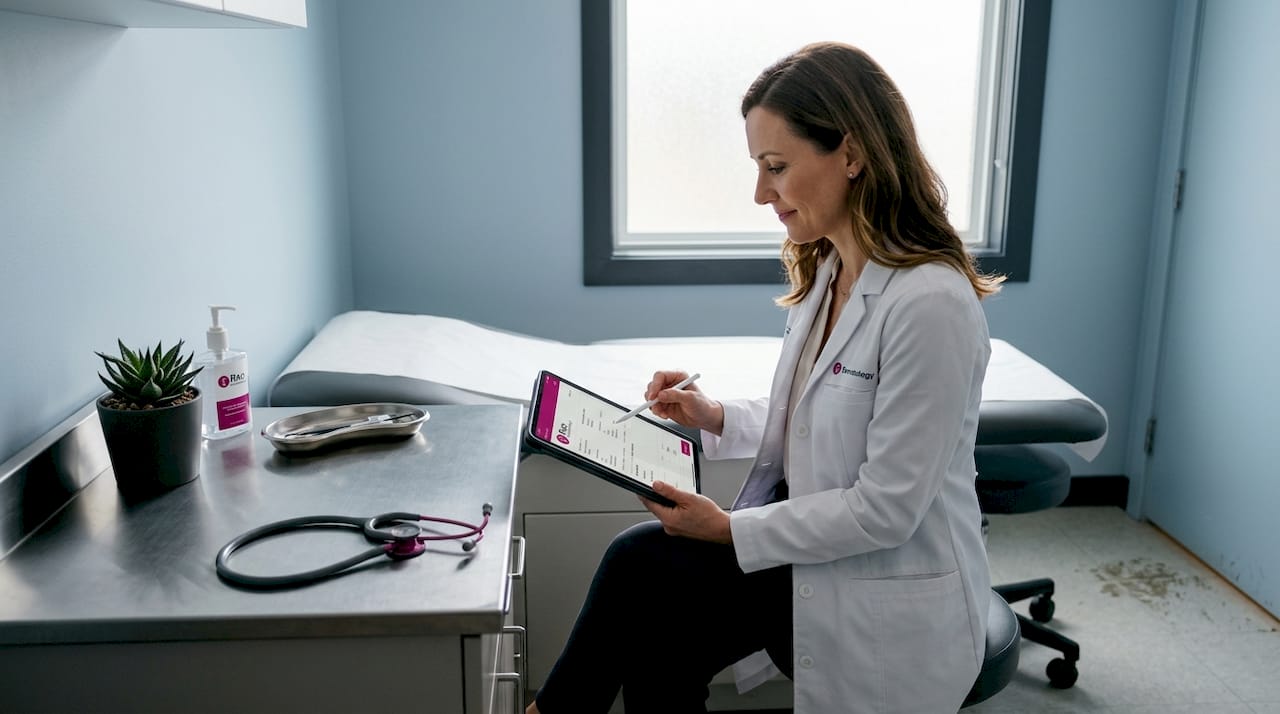
One in five Americans will be diagnosed with skin cancer by the time they turn 70, making it the most common cancer in the United States. Yet despite those numbers, many people still aren’t sure what skin cancer screening actually means, whether it’s a blood test, a scan, or something else entirely. The confusion is understandable, but it carries real risk. This guide breaks down exactly what screening involves, how to do it yourself, what happens during a professional exam, and how to make smarter, more personalized decisions about your skin health.
Table of Contents
- Skin cancer screening explained: What it is and why it matters
- What happens during a skin cancer screening?
- Self-exams: The ABCDE rule and when to get professional help
- Risks, limitations, and evidence: What you should really know
- Prevention and next steps: Beyond the screening
- Our perspective: Why nuanced, personalized screening beats one-size-fits-all
- Your skin health journey starts here
- Frequently asked questions
Key Takeaways
| Point | Details |
|---|---|
| Definition | Skin cancer screening is a visual exam to detect early signs of skin cancer. |
| Self-exam method | Use the ABCDE rule to check your skin for suspicious spots at home. |
| Professional screening | Dermatologists perform full-body checks, sometimes using special magnifiers. |
| Limitations | Routine screening may lead to unnecessary biopsies, so recommendations depend on your risk. |
| Prevention | Regular sun protection and follow-ups help reduce your risk alongside screening. |
Skin cancer screening explained: What it is and why it matters
Skin cancer screening is simpler than most people expect. It doesn’t require lab work or imaging machines. According to MedlinePlus, skin cancer screening is a visual examination of the skin designed to detect signs of cancer, such as unusual moles, spots with abnormal color, or changes in size and texture, performed either by individuals through self-exams or by healthcare providers before any symptoms appear.
That simplicity is actually its greatest strength. Because the skin is visible and accessible, abnormalities can often be caught before they grow deeper or spread to other organs. The earlier a skin cancer is found, the more treatment options you have and the better your odds.
“Skin cancer is the most common cancer in the United States. About 1 in 5 Americans will develop skin cancer by the age of 70.” — American Academy of Dermatology
Screening is valuable for everyone, but it’s especially critical for people with:
- A personal or family history of skin cancer
- Fair skin, light eyes, or a tendency to burn easily
- A large number of moles or a history of unusual moles
- Significant lifetime sun exposure or tanning bed use
- A weakened immune system
Understanding the melanoma overview from a dermatology perspective makes it easier to see why early detection matters so much. For melanoma specifically, the most dangerous form of skin cancer, catching it in its earliest stage can be life-saving. There are real benefits of annual screening that go well beyond peace of mind.
What happens during a skin cancer screening?
Knowing the process removes the anxiety that keeps many people from scheduling an appointment. Here’s what to expect, step by step.
Professional skin cancer screening:
- Preparation: You’ll typically be asked to undress and put on a medical gown. Some providers ask you to remove nail polish so nails can be checked.
- Head-to-toe visual exam: Your dermatologist will systematically examine your entire body, including your scalp, between your toes, the soles of your feet, your nails, and even your genital area.
- Dermoscopy when needed: For suspicious spots, your provider may use a dermatoscope, a handheld tool that magnifies the skin and illuminates deeper layers to reveal patterns invisible to the naked eye.
- Documentation: Any spots of concern are noted, measured, and sometimes photographed for comparison at future visits.
- Discussion: Your dermatologist will explain their findings and recommend next steps, which might include monitoring, a biopsy, or referral.
According to MedlinePlus, a professional full-body exam typically lasts 10 to 15 minutes. It’s quick, painless, and can genuinely save your life.
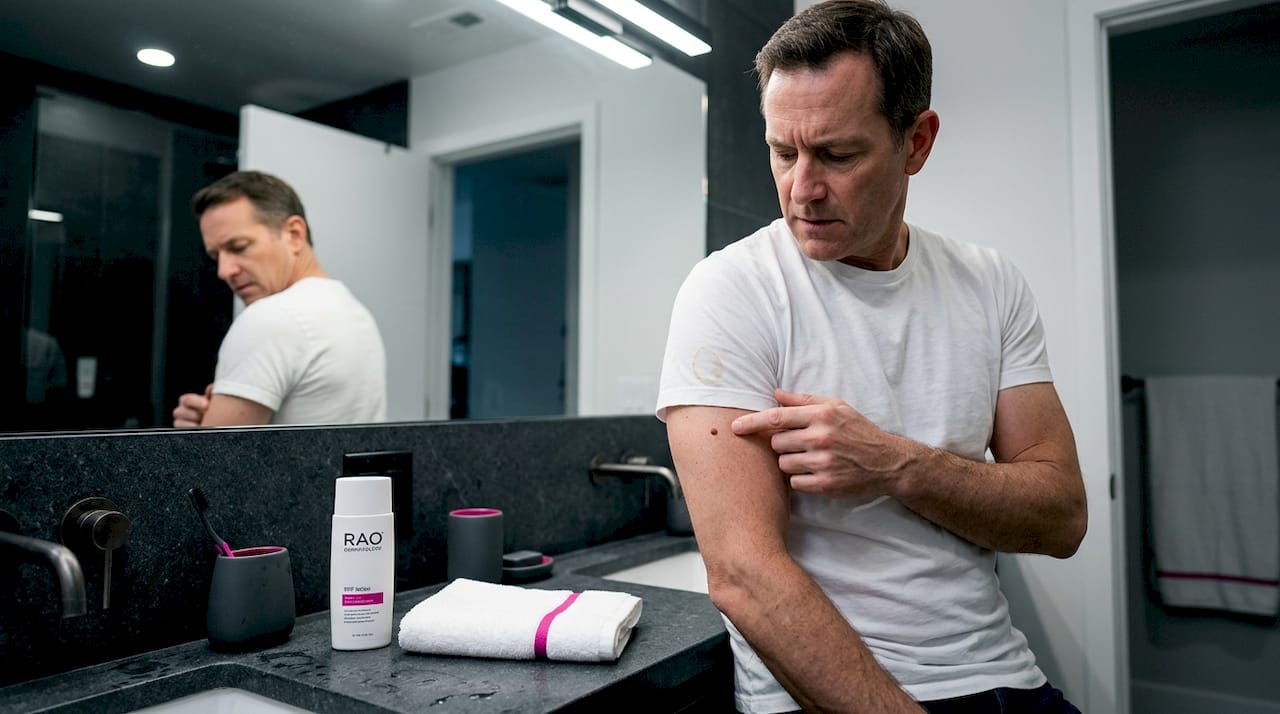
Comparison of screening methods:
| Feature | Professional exam | Self-exam |
|---|---|---|
| Who performs it | Dermatologist or provider | You |
| Frequency | Annually or per risk level | Monthly recommended |
| Tools used | Dermatoscope, lighting | Mirror, good lighting |
| Body areas covered | Full body including scalp | Self-accessible areas |
| Follow-up capability | Immediate clinical decision | Triggers professional visit |
The role of dermatoscopy in improving early detection is significant. Studies confirm that dermoscopy enhances accuracy compared to the naked eye alone, but it requires a trained hand to interpret correctly. That’s why even the most diligent self-examiner still benefits from professional evaluation.
You can also review how screenings work in more detail to understand what your provider is actually looking for and why certain spots get flagged.
Pro Tip: Before your appointment, do a quick scan of your own skin and write down any spots that concern you. Bring that list to your visit. Your dermatologist can address each one directly, which saves time and reduces worry.
Self-exams: The ABCDE rule and when to get professional help
A professional exam once a year is the goal, but what about the other 11 months? That’s where self-exams come in. Monthly checks give you a baseline understanding of your own skin, so you’re far more likely to notice when something changes.
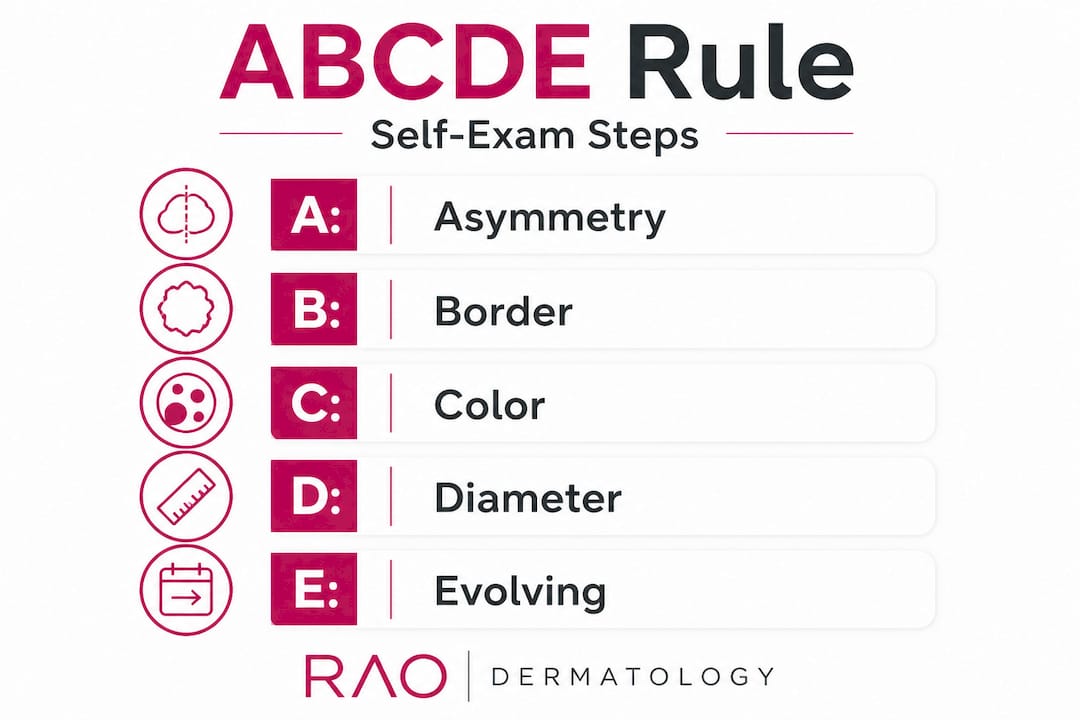
The most reliable tool for self-examination is the ABCDE rule, specifically developed to help people identify potential melanoma:
- A – Asymmetry: One half of the mole doesn’t match the other
- B – Border: Edges are irregular, ragged, notched, or blurred
- C – Color: Multiple shades of brown, black, red, white, or blue in one spot
- D – Diameter: Larger than 6 millimeters (about the size of a pencil eraser)
- E – Evolving: Any change in size, shape, color, or a new symptom like bleeding or itching
Any spot that checks one or more of these boxes deserves a professional look. Don’t wait to see if it gets worse.
When to skip the self-exam and go straight to a dermatologist:
- A sore that doesn’t heal within 4 weeks
- A spot that bleeds without injury
- A mole that changes noticeably between monthly checks
- Any new growth that looks unusual or different from your other spots
- Skin that feels persistently itchy, tender, or painful in one area
Common areas people miss during self-exams:
- The scalp (use a blow dryer and mirror, or ask someone to help)
- Between the toes and the soles of the feet
- Behind the ears
- The lower back and buttocks
- Under fingernails and toenails
The at-home skin check guide walks through best practices for a thorough monthly review. You can also follow specific monthly self-exam steps to build a reliable routine, and review what to look for in self-examinations to sharpen your eye for warning signs.
The survival data speaks for itself. The AAD reports that the 5-year survival rate for melanoma caught at its earliest stage is approximately 99%. That number drops sharply when the cancer spreads. Early detection isn’t just a phrase. It’s a genuine statistical advantage.
Pro Tip: Take photos of any spots you’re watching over time. Use the same lighting and angle each month. Visual comparison makes it much easier to spot changes that might otherwise seem subtle.
Risks, limitations, and evidence: What you should really know
Screening sounds straightforward, but the research picture is more nuanced than most public health messaging suggests. It’s worth knowing what the evidence actually says.
The US Preventive Services Task Force (USPSTF) and the National Cancer Institute have reviewed the data and found that there is insufficient evidence that routine skin cancer screening for the general population reduces mortality. That might sound alarming, but context matters.
Here’s the clearer picture of what the evidence does and does not support:
- Population-wide screening lacks randomized trial data showing it reduces deaths from skin cancer at a population level.
- High-risk individuals still benefit meaningfully from professional monitoring, since their baseline likelihood of developing a dangerous lesion is much higher.
- Overdiagnosis is a real concern. Screening can identify slow-growing lesions that might never cause symptoms or harm, leading to treatment that carries its own risks.
- Unnecessary biopsies can cause anxiety, scarring, and financial cost without clear benefit.
- Psychological impact is significant. Some patients experience ongoing worry about lesions that are ultimately benign.
“The USPSTF concludes that the current evidence is insufficient to assess the balance of benefits and harms of visual skin cancer screening in adults by a primary care clinician.” — National Cancer Institute
This doesn’t mean skip your screening. It means risk-based decisions are the current best practice. A blanket “everyone should screen every year” approach doesn’t account for the very different risk profiles between a 25-year-old with olive skin and no family history versus a 55-year-old with fair skin, a history of sunburns, and a parent who had melanoma.
The debate on routine screening is ongoing among dermatologists and primary care providers. Understanding both sides helps you have a more informed conversation with your own provider. You can also review the evidence and limitations around skin cancer detection to make a well-rounded decision.
Prevention and next steps: Beyond the screening
Screening catches problems. Prevention stops them from starting. Both belong in your skin health plan.
The most evidence-backed prevention strategies focus on UV protection, which is responsible for the vast majority of skin cancer cases:
- Wear broad-spectrum sunscreen with SPF 30 or higher every day, even when it’s cloudy or you’re mostly indoors near windows
- Reapply every two hours when outdoors, and immediately after swimming or sweating
- Seek shade between 10 a.m. and 4 p.m. when UV radiation is strongest
- Wear protective clothing: long sleeves, wide-brimmed hats, and UV-blocking sunglasses
- Avoid tanning beds entirely. They emit UV radiation levels that can exceed the midday sun
- Check your medications. Some common drugs, including certain antibiotics and diuretics, increase photosensitivity
The NCI’s skin cancer prevention data confirms that consistent UV protection with SPF 30 and above is especially effective for fair-skinned individuals and that counseling on sun protection behaviors is one of the most impactful tools available.
After a professional screening, your follow-up plan depends on what was found. If nothing suspicious was flagged, your provider will typically recommend returning annually or at a schedule tailored to your risk level. If a spot was biopsied, results usually come back within one to two weeks. If something requires treatment, your dermatologist will walk you through options ranging from topical treatments to surgical removal.
Pro Tip: Don’t rely solely on summer sun protection. UVA rays, the ones most linked to aging and deeper skin damage, penetrate clouds and glass year-round. A daily SPF habit in January is just as important as one in July.
For a broader look at staying proactive throughout the year, the expert tips for prevention from our team cover seasonal habits, product recommendations, and lifestyle changes that make a real difference over time.
Our perspective: Why nuanced, personalized screening beats one-size-fits-all
Here’s something the general public health conversation often gets wrong: treating screening as a universal checkbox instead of a personalized clinical decision.
We’ve seen patients come in every year for full-body checks who have almost no individual risk factors, driven purely by anxiety and broad public messaging. We’ve also seen patients at very high risk who haven’t had a professional exam in years because they assumed it “wasn’t for them.” Both situations miss the mark.
The most valuable thing a dermatologist brings to the table isn’t just a trained eye. It’s context. When we know your skin history, your UV exposure history, your family background, and how your skin has changed over time, we can make far smarter recommendations than any general guideline allows. One patient might need twice-yearly exams with total body photography. Another might need a single baseline check and a strong self-exam routine. Those aren’t the same person, and they shouldn’t get the same advice.
The guideline-based frequency for screening is a starting point, not a final answer. What moves the needle on real outcomes is an ongoing conversation between you and your provider, not a one-time appointment. Screening frequency, the tools used, what gets biopsied, and how aggressively suspicious spots are monitored should all evolve with you over time.
We also want to address the fear factor honestly. Some patients avoid screening because they’re afraid of what they’ll find. We understand that instinct, but it works against you. A difficult finding caught early is manageable. The same finding caught late often isn’t. The discomfort of knowing is far less damaging than the consequences of not knowing.
Your skin health journey starts here
At Rao Dermatology, we’ve spent more than 25 years helping patients in California, New Jersey, and New York make smart, evidence-based decisions about their skin health. Whether you’re due for your first professional exam or you’ve noticed a spot that concerns you, our team is here to help you navigate it with confidence.

Our skin cancer screening services are built around your individual risk profile, not a generic protocol. From full-body visual exams to advanced dermatopathology for diagnosis, we use the tools and expertise needed to give you a clear picture of your skin health. Scheduling an appointment is straightforward, and it’s one of the most valuable things you can do for your long-term wellbeing. Reach out to the Rao Dermatology location nearest you and take that first step today.
Frequently asked questions
How often should I get a professional skin cancer screening?
Most experts suggest annual exams for high-risk individuals, but your dermatologist can tailor the schedule based on your personal risk factors, skin type, and history.
What are signs I should see a dermatologist immediately?
See a dermatologist right away if you notice a mole or spot that changes size or color, bleeds, won’t heal, or looks significantly different from your other spots, as these are key ABCDE warning signs.
Can skin cancer screening prevent cancer?
Screening doesn’t prevent cancer, but it helps catch it early when it’s most treatable. Early melanoma detection carries a 5-year survival rate of approximately 99%.
Are there any risks to skin cancer screening?
Yes. Potential harms include overdiagnosis, unnecessary biopsies, and psychological anxiety from finding spots that turn out to be harmless, which is why risk-based screening is the preferred approach.
What’s the difference between a self-exam and a professional screening?
Self-exams are monthly at-home checks using the ABCDE rule, while professional full-body exams are conducted by a dermatologist with clinical lighting and potentially a dermatoscope for magnification.
Recommended
- Skin Cancer Prevention, Detection & Treatment | Rao Dermatology
- Annual Skin Cancer Screening: Why You Need One Every Year | Rao Dermatology
- Annual Skin Cancer Screening: Your Complete Guide to Dermatology Checkups | Rao Dermatology
- What Is Dermatoscopy? Guide to Early Skin Cancer Detection | Rao Dermatology
Filed under: