
Discover the vital role of sun protection in preventing skin damage. Learn essential tips for applying sunscreen and staying safe outdoors.

Sun protection reduces DNA damage, slows premature aging, and lowers your risk of skin cancer — and the three actions that matter most are applying a broad-spectrum SPF 30+ sunscreen daily, covering up with protective clothing and a wide-brim hat, and reapplying every two hours or after swimming. That is the short version. Everything below explains why each step works and how to do it correctly.
Top three actions at a glance:
- Apply a broad-spectrum SPF 30+ sunscreen to all exposed skin before going outside
- Add shade, a wide-brim hat, UV-blocking sunglasses, and protective clothing as your first line of defense
- Reapply sunscreen every two hours, or immediately after towel-drying or swimming
Skin cancer is the most common cancer in the United States. According to the American Academy of Dermatology, skin cancer is the most common cancer in the United States; about one in five Americans will develop it in their lifetime, and nearly 20 Americans die from melanoma each day. Consistent sun protection is one of the few genuinely modifiable risk factors.
The FDA and the National Cancer Institute both recognize UV radiation as a primary driver of skin cancer and photoaging. The AAD’s guidance is direct: protective behaviors reduce that risk, and the evidence behind them is solid.
Table of Contents
- How does UV radiation actually damage your skin?
- What does the evidence say about sun protection and skin cancer?
- How to choose and use sunscreen correctly
- What other protection methods work alongside sunscreen?
- Who needs extra protection and when to see a dermatologist?
- Practical routines for everyday life, the beach, and outdoor work
- Can antioxidants and diet support sun protection?
- How to build sun protection into your daily skincare routine
- Key Takeaways
- Sun protection is more straightforward than the marketing makes it seem
- Raodermatology’s skin protection services
- Authoritative sources and further reading
- FAQ
How does UV radiation actually damage your skin?
Sunlight reaches your skin as two types of ultraviolet radiation: UVA (long-wave, 320–400 nm) and UVB (shorter-wave, 290–320 nm). They cause different kinds of harm, which is exactly why broad-spectrum protection matters.

UVA penetrates deeper into the dermis. It drives photoaging — the wrinkles, sagging, and uneven pigmentation that accumulate over years — and it generates reactive oxygen species (ROS) that damage DNA indirectly through oxidative stress. UVA also suppresses local immune surveillance, which is one reason chronic UV exposure can allow abnormal cells to escape detection. You can find a detailed breakdown of these UV ray mechanisms on the Raodermatology blog.
UVB is the primary cause of sunburn. It directly creates DNA photolesions called cyclobutane pyrimidine dimers (CPDs), which are the molecular signature of UV-induced DNA damage. When these lesions accumulate faster than the body’s repair enzymes can fix them, mutations build up in keratinocytes and melanocytes.
Here is what those mutations lead to over time:
- Photoaging: Collagen breakdown, elastin degradation, and pigment irregularities caused by cumulative UVA exposure
- Actinic keratoses: Rough, scaly patches that are pre-cancerous lesions driven by chronic sun exposure
- Basal cell carcinoma (BCC): The most common skin cancer; grows slowly from cumulative UV exposure, rarely metastasizes but can cause significant local tissue damage
- Squamous cell carcinoma (SCC): Arises from keratinocytes; linked to both cumulative and intermittent intense exposure; can metastasize if untreated
- Melanoma: Develops from melanocytes; intermittent intense exposure and sunburns — especially in childhood — appear more relevant than total lifetime dose
The practical implication is straightforward: a sunscreen that only blocks UVB leaves you exposed to UVA-driven photoaging and DNA damage. Broad-spectrum protection covers both.
What does the evidence say about sun protection and skin cancer?
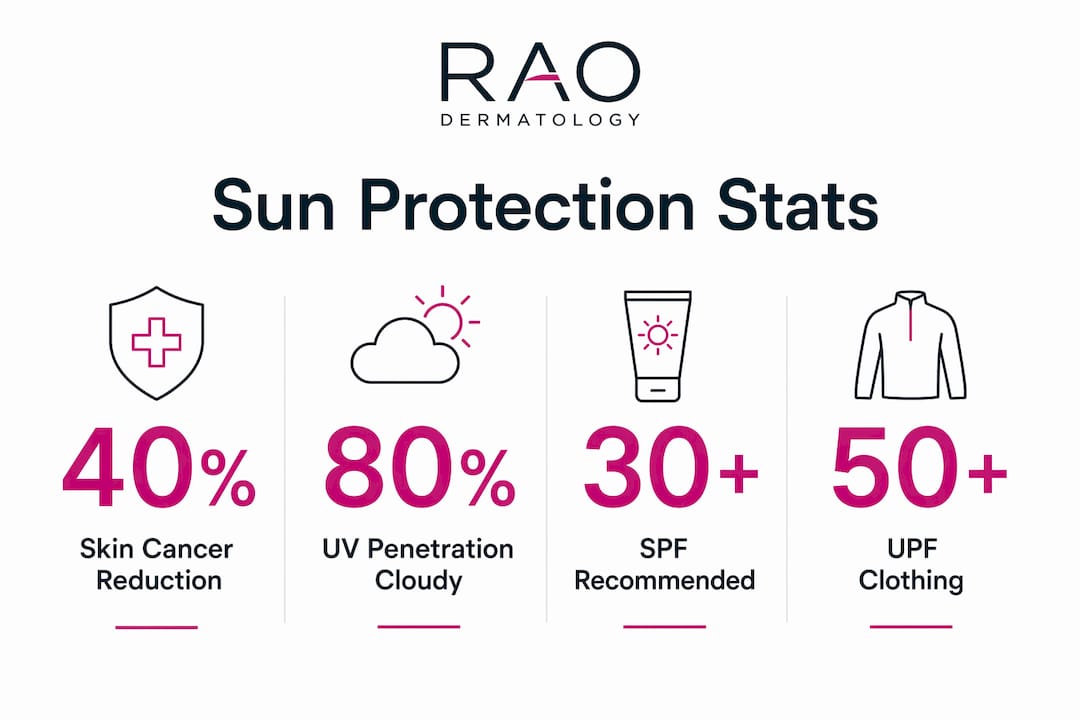
The strongest clinical evidence for sunscreen comes from a long-term community-based randomized controlled trial in Australia. Participants who used sunscreen daily for 4.5 years showed a ~40% lower rate of squamous cell carcinoma compared to controls, with a rate ratio indicating a substantial reduction. Long-term follow-up of the same cohort showed a notably reduced risk for invasive melanoma, a striking signal even accounting for the study’s limitations.
Evidence for basal cell carcinoma is weaker, and that is not a surprise. BCC develops through slow, cumulative pathogenesis over decades, so a trial lasting a few years is unlikely to capture the full effect. Short follow-up windows and heterogeneous study designs explain much of the inconsistency in meta-analyses.
| Evidence type | Finding | Strength |
|---|---|---|
| Australian RCT (4.5 years, daily sunscreen) | ~40% reduction in SCC incidence | Strong (RCT) |
| Long-term follow-up of same cohort | Reduced invasive melanoma risk (HR ~0.27) | Moderate (observational follow-up) |
| RCTs on photoaging | Sunscreen prevents signs of photoaging | Strong (RCT) |
| Meta-analyses on BCC | Mixed results; slower pathogenesis limits short-term trials | Weak to moderate |
| Observational epidemiology (NCI/NCBI) | Cumulative UV exposure consistently linked to SCC and BCC | Strong (consistent across studies) |
The NCI’s Skin Cancer Prevention PDQ summarizes the epidemiologic picture clearly: cumulative sun exposure is a well-established risk factor for keratinocyte carcinomas, and intermittent acute exposure leading to sunburn is more strongly associated with melanoma. The AAD and FDA both cite this body of evidence when recommending broad-spectrum sunscreen as a cancer prevention tool.
One honest limitation: sunscreen prevents sunburns, which can give some people confidence to spend more time outdoors. That behavioral offset is real and worth acknowledging. Protection works when it is used correctly and consistently, not as a license to extend unprotected exposure.
How to choose and use sunscreen correctly
What “broad-spectrum” and SPF actually mean
SPF measures protection against UVB only. An SPF 30 to 50 sunscreen filters out most UVB rays, with SPF 50 providing modestly higher protection than SPF 30. The difference between SPF 30 and SPF 50 is real but modest. What matters more is whether you apply enough and reapply on schedule.
To claim protection against both skin cancer and early aging on its label, a sunscreen must meet the FDA’s broad-spectrum standard, which requires a critical wavelength of at least 370 nm. That threshold confirms meaningful UVA coverage alongside UVB protection. The AAD recommends SPF 30 or higher for daily use, with SPF 50+ for prolonged outdoor exposure or high-altitude settings.
Mineral vs. chemical filters
Zinc oxide provides the broadest UVA1 coverage of any single inorganic filter. Titanium dioxide covers UVB and shorter UVA wavelengths. Both are classified as Generally Recognized As Safe and Effective (GRASE) by the FDA. They sit on top of the skin rather than absorbing into it, which is why they are often recommended for sensitive skin and infants over six months.
Chemical (organic) filters like avobenzone absorb UV energy and convert it to heat. Avobenzone is the primary organic UVA1 filter in many U.S. formulations. Some organic filters raise questions about systemic absorption and potential endocrine effects — oxybenzone in particular. The AAD’s position is clear: the cancer prevention benefit of consistent sunscreen use outweighs theoretical ingredient concerns for most people. If you prefer to avoid chemical filters, a zinc oxide-based mineral formula is a well-supported alternative. For a deeper look at mineral options, chemical-free outdoor skin care resources can help you compare formulations.
How much to apply
SPF testing uses 2 mg/cm² as the standard application density. Most people apply far less than that, which means real-world protection is lower than the label suggests. Two practical rules close that gap:
- Teaspoon rule for the face and neck: about one teaspoon (roughly 5 mL) for the face, ears, and neck combined
- Shot-glass rule for the body: about one shot glass (roughly 30 mL) for all exposed body skin
Pro Tip: Apply sunscreen 15 minutes before going outside so it has time to bind to the skin surface. For mineral formulas, immediate protection is fine, but the habit of pre-application prevents the common mistake of walking out the door unprotected.
Reapplication and water resistance
Water-resistance labels indicate how long SPF holds during swimming or sweating: either 40 or 80 minutes. But towel-drying removes sunscreen regardless of how many minutes have elapsed. Reapply immediately after drying off, and reapply every two hours during outdoor activity even without swimming.
Selection checklist:
- Broad-spectrum (critical wavelength ≥ 370 nm)
- SPF 30+ for daily use; SPF 50+ for beach, snow, or high-altitude settings
- Water resistant (40 or 80 minutes) for outdoor activity
- A texture and finish you will actually use every day
That last point is not a throwaway. The best sunscreen is the one you will use consistently and reapply. A photostable SPF 50 mineral formula that sits unused because you dislike the white cast does less for you than an SPF 30 tinted formula you apply every morning without thinking about it.
For darker skin tones, tinted sunscreens with iron oxides add visible-light protection that untinted formulas miss, which matters for hyperpigmentation management. You can explore SPF selection in skincare further in Raodermatology’s dedicated guide.
What other protection methods work alongside sunscreen?
Sunscreen is one layer, not the whole strategy. Clothing, hats, sunglasses, and shade are often more reliable in high-exposure settings because they do not depend on correct application or reapplication.
Clothing and UPF fabrics
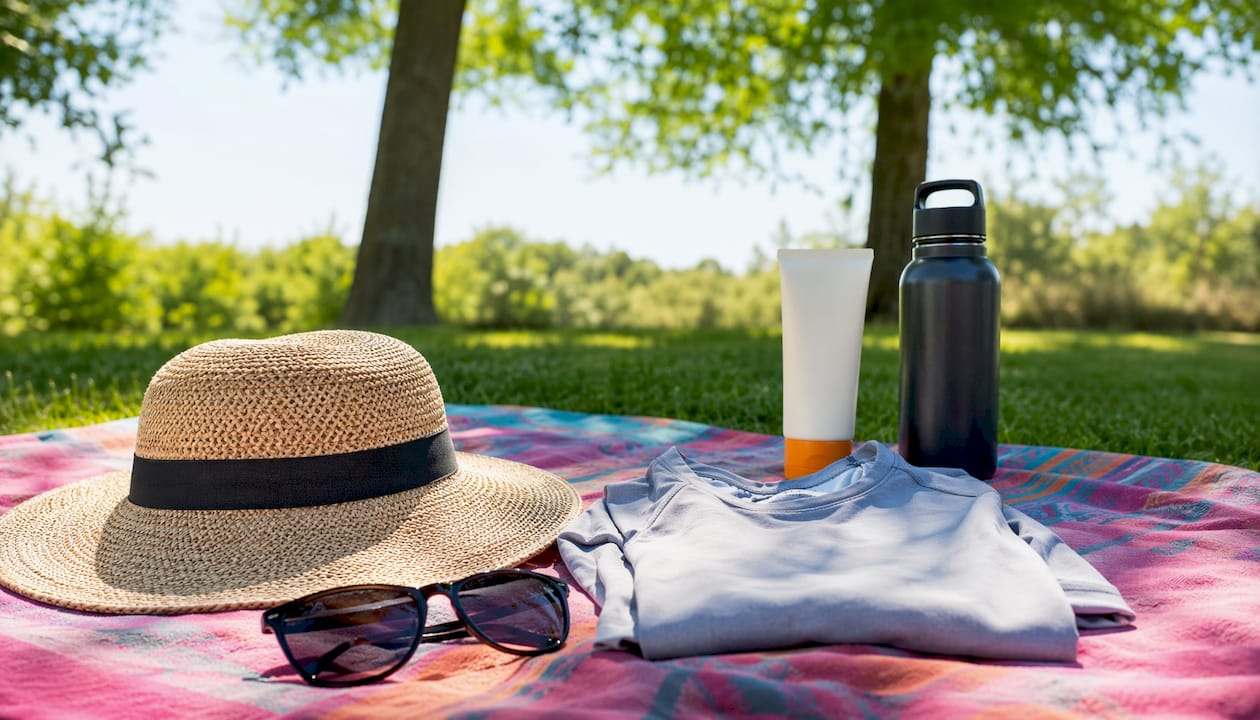
UPF (Ultraviolet Protection Factor) is the clothing equivalent of SPF. A UPF 50 fabric blocks 98% of UV radiation. Several factors raise a fabric’s UPF:
- Tighter weave and heavier weight
- Darker or more saturated colors
- Synthetic fibers like polyester and nylon over loosely woven cotton
- Dry fabric (wet or stretched fabric loses UPF significantly)
A standard white cotton T-shirt has a UPF of roughly 5–7 when dry and can drop further when wet. Purpose-made UPF 50+ swim shirts and long-sleeve sun shirts are a practical upgrade for beach or water settings.
Hats
A wide-brim hat (at least 3 inches all around) shades the face, ears, and back of the neck — areas that sunscreen frequently misses or wears off quickly. Baseball caps leave the ears and neck exposed. For a detailed look at brim size and material choices, hat-based sun protection guides cover the practical tradeoffs well.
Sunglasses
UV-blocking sunglasses protect the eyes and the thin skin around them from both UVA and UVB. Look for labels that specify 99–100% UV400 protection. Wraparound styles reduce peripheral exposure.
Shade and timing
UV intensity peaks between 10 AM and 4 PM. The shadow rule gives you a quick field check: if your shadow is shorter than you are, UV intensity is high and shade plus added protection should be a priority. Reflective surfaces amplify exposure significantly: snow reflects up to 80% of UV radiation, water and sand reflect 10–25%, and altitude increases UV intensity by roughly 4–5% per 1,000 feet of elevation.
Who needs extra protection and when to see a dermatologist?
Some people face a meaningfully higher baseline risk and need a more deliberate approach to photoprotection. Skin cancer risk factors worth knowing include:
- Fair skin, light hair, and light eyes: Skin that burns easily has a twofold increased risk of melanoma compared to skin that never burns; natural red or blond hair carries a two- to fourfold increased risk
- History of severe or repeated sunburns, especially during childhood or adolescence
- Personal or family history of melanoma or other skin cancers
- Many moles or atypical (dysplastic) nevi
- Organ transplant recipients: Immunosuppressive medications dramatically raise SCC risk
- Photosensitizing medications: Certain antibiotics, diuretics, retinoids, and NSAIDs increase UV sensitivity
- Conditions like xeroderma pigmentosum or systemic lupus erythematosus, where UV exposure triggers or worsens disease
When to seek professional evaluation:
A lesion that is new, changing, bleeding, or growing rapidly deserves prompt attention. The ABCDE rule (Asymmetry, Border irregularity, Color variation, Diameter over 6 mm, Evolution) is a useful self-check, but it is not a substitute for a trained eye. Recurrent sunburns despite consistent precautions, reactions to sunscreen ingredients, or concerns about a photosensitizing medication are all good reasons to schedule a dermatology visit.
At a skin cancer screening, a dermatologist performs a full-body visual exam, often with dermoscopy (a magnified, illuminated view of lesion structure), and may recommend a biopsy for any suspicious area. For high-risk patients, personalized counseling on photoprotection strategy, sunscreen selection, and screening intervals makes a real difference.
Practical routines for everyday life, the beach, and outdoor work
Everyday city routine
- Apply broad-spectrum SPF 30+ to your face, neck, ears, and any other exposed skin every morning, before leaving the house.
- If you will be outside for more than two hours, carry your sunscreen and reapply. A midday walk counts.
- Wear UV-blocking sunglasses whenever you are outside, including on overcast days (clouds block visible light, not UV).
- On reflective surfaces like glass-heavy urban streets or near water, UV exposure is higher than it looks.
Beach or pool day
- Apply a generous, even coat of water-resistant SPF 30+ (SPF 50+ preferred) at least 15 minutes before sun exposure.
- Reapply every 80 minutes during water activity, and immediately after towel-drying regardless of elapsed time.
- Seek shade during peak UV hours (10 AM to 4 PM) and wear a wide-brim hat and a UPF swim shirt.
- Reapply to children frequently; their skin is more sensitive and they are typically more active in the water.
Outdoor work or sports
- Lead with clothing: long sleeves in high-UPF fabric, a wide-brim hat, and UV-blocking sunglasses before reaching for sunscreen.
- Apply water-resistant SPF 50+ to all exposed skin and set a timer for reapplication every two hours.
- Schedule shaded rest breaks during peak UV hours when possible.
- At altitude or on snow, treat UV exposure as significantly higher than at sea level and adjust protection accordingly.
The shadow rule applies in every setting: shadow shorter than you means UV is intense. That is the moment to add a layer, find shade, or reapply.
Can antioxidants and diet support sun protection?
Sunscreen and clothing are the primary tools, but the skin’s internal defenses also play a role. UVA radiation generates reactive oxygen species that overwhelm the skin’s natural antioxidant enzymes (superoxide dismutase, catalase) when exposure is heavy. Topical antioxidants applied to the skin can help replenish that deficit, working from within the cell to reduce oxidative damage and remaining active for several days after application.
Vitamins C and E, niacinamide, and polyphenols are the most studied topical antioxidants in this context. They do not replace sunscreen, but they add a secondary layer of protection against the oxidative cascade that UV triggers. Many modern sunscreen formulations already include antioxidant ingredients for this reason.
Dietary antioxidants from fruits, vegetables, and foods rich in carotenoids (tomatoes, leafy greens, carrots) support systemic defense, though the evidence for diet alone reducing UV-induced skin cancer risk is less direct than the evidence for topical protection. Think of dietary antioxidants as background support, not a substitute for SPF.
How to build sun protection into your daily skincare routine
The most effective approach is to make sun protection automatic rather than situational. A few integration principles make that easier:
Morning routine placement: Sunscreen goes on last in a skincare routine, after moisturizer and before makeup. Applying it over other products can dilute it; applying it under a heavy moisturizer reduces its contact with skin. If you use a moisturizer with SPF, be aware that most people do not apply enough of it to reach the labeled SPF.
Separate sunscreen vs. SPF moisturizer: A dedicated sunscreen applied at the correct dose consistently outperforms an SPF moisturizer applied at a typical moisturizer dose. For daily low-exposure days (commuting, office work), a tinted SPF 30+ moisturizer may be practical enough. For any day with meaningful outdoor time, use a dedicated sunscreen.
Makeup with SPF: Powder or setting sprays with SPF can help maintain coverage through the day, but they are not a substitute for a morning application of sunscreen. They work as a top-up, not a foundation.
Consistency over perfection: Applying SPF 30 every single day does more for your skin than applying SPF 50 three days a week. Raodermatology’s practical skincare guidance reinforces this point: adherence is the variable that matters most in long-term skin health.
Key Takeaways
Daily broad-spectrum SPF 30+ sunscreen, combined with protective clothing and shade, is the most evidence-backed strategy for reducing UV-driven skin damage, premature aging, and skin cancer risk.
| Point | Details |
|---|---|
| Broad-spectrum SPF 30+ is the baseline | Choose a sunscreen meeting the FDA’s critical wavelength ≥ 370 nm standard and apply the correct dose (shot-glass rule for the body). |
| Reapplication is non-optional | Reapply every two hours outdoors, or immediately after towel-drying regardless of water-resistance rating. |
| Clothing and shade outperform sunscreen alone | UPF 50+ fabrics, wide-brim hats, and shade during peak hours (10 AM–4 PM) are more reliable in high-exposure settings. |
| High-risk groups need personalized plans | Fair skin, organ transplant status, photosensitizing medications, and a personal or family history of melanoma all justify a dermatologist-led photoprotection strategy. |
| Raodermatology offers expert guidance | Raodermatology provides skin cancer screening, personalized photoprotection counseling, and cosmetic care across California, New Jersey, and New York. |
This article is general health information, not medical advice. For guidance specific to your skin type, risk factors, or medications, consult a board-certified dermatologist.
Sun protection is more straightforward than the marketing makes it seem
Here is what I keep coming back to when patients ask about sunscreen: the ingredient debate has consumed far more attention than it deserves. People spend time researching oxybenzone absorption studies while skipping sunscreen entirely on overcast days, or applying a thin smear and calling it done. The evidence gap is not between mineral and chemical filters; it is between people who apply enough sunscreen consistently and people who do not.
The Australian RCT is the clearest signal we have: daily sunscreen use for 4.5 years cut squamous cell carcinoma rates by roughly 40%. Long-term follow-up demonstrated a reduced risk for invasive melanoma, with a hazard ratio around 0.27, even with its methodological caveats. The biology is coherent: fewer CPDs accumulate, fewer mutations escape repair, fewer abnormal cells survive immune surveillance.
What I think gets underweighted is the clothing-first principle. In occupational or high-exposure settings, a long-sleeve UPF shirt and a wide-brim hat are simply more reliable than sunscreen. Sunscreen under-application is the norm, not the exception. Mechanical barriers do not depend on how much you squeezed out of the tube.
The safety concerns about sunscreen ingredients are worth taking seriously as a research question, but they should not be a reason to avoid sunscreen for cancer prevention. Zinc oxide and titanium dioxide are GRASE-classified and well-tolerated. For anyone who wants to avoid organic filters entirely, those are the go-to options. The risk of skipping protection is concrete and well-documented; the risk of using a well-formulated sunscreen is theoretical and small.
If you are in a high-risk group — fair skin, a history of bad sunburns, a family history of melanoma, or immunosuppression — a conversation with a dermatologist about your specific photoprotection plan is worth more than any article. Personalized screening intervals, tailored product recommendations, and early detection of suspicious lesions are where clinical care adds value that general guidance cannot.
Raodermatology’s skin protection services
Knowing the evidence is one thing. Acting on it with a plan built for your skin is another. Raodermatology offers skin cancer screening and prevention services across its California, New Jersey, and New York locations, with board-certified dermatologists who can assess your personal risk, review your current photoprotection approach, and identify any lesions that need attention.

For patients with photodamage concerns, pigmentation issues, or questions about cosmetic sun care, Raodermatology’s esthetic services include treatments that address the visible effects of UV exposure alongside prevention counseling. Whether you are coming in for a routine full-body skin check or a specific concern, the practice’s 25+ years of experience across medical and cosmetic dermatology means your care is grounded in the same evidence base this article draws from. Book an appointment through raodermatology.com/services to get a personalized photoprotection plan.
Authoritative sources and further reading
These are the primary sources behind the evidence in this article, each worth bookmarking for your own reference.
-
CDC Sun Safety Facts: The Centers for Disease Control and Prevention’s patient-facing guidance on sun safety behaviors, UV exposure, and skin cancer prevention. Practical and regularly updated.
-
FDA Sunscreen Guidance: The FDA’s regulatory framework for sunscreen labeling, including broad-spectrum standards, SPF testing methodology, and water-resistance rules. The authoritative source for what product labels mean.
-
American Academy of Dermatology: Clinical recommendations on sunscreen selection, application, and photoprotection for specific conditions and patient groups. The AAD’s patient resources are among the most evidence-grounded publicly available.
-
NCI Skin Cancer Prevention PDQ (NCBI): The National Cancer Institute’s comprehensive review of UV exposure as a risk factor and the evidence base for preventive interventions. Detailed, well-cited, and updated periodically.
-
PMC: Efficacy and Safety of Sunscreen for Skin Cancer Prevention: The peer-reviewed literature review that summarizes the Australian RCT and other trial data, including discussion of study limitations and evidence strength by cancer type.
-
NCBI Bookshelf: Introduction to Sunscreens and UV Filters: A technical reference on sunscreen chemistry, filter types, SPF testing standards, and formulation tradeoffs. Useful for understanding what is behind the label.
-
Raodermatology Patient Resources: Clinic-level guidance on skin cancer prevention and sun safety, written for patients and grounded in the same public-health evidence base.
FAQ
What is the role of sunscreen in preventing skin cancer?
Sunscreen reduces UV-induced DNA damage that drives skin cancer development. A long-term randomized controlled trial found daily sunscreen use lowered squamous cell carcinoma incidence by about 40%, and long-term follow-up showed a reduced risk for invasive melanoma (hazard ratio ~0.27).
Is it really necessary to use sunscreen every day?
Yes, including on cloudy or overcast days, since up to 80% of UV radiation passes through clouds. Daily application of broad-spectrum SPF 30+ is the standard recommendation from the AAD and FDA for all skin types.
What is the purpose of sun safety beyond sunscreen?
Sun safety covers a layered approach: clothing with UPF ratings, wide-brim hats, UV-blocking sunglasses, and seeking shade during peak UV hours (10 AM–4 PM) all reduce exposure that sunscreen alone cannot fully address, especially in high-exposure or occupational settings.
Do people with darker skin tones need sunscreen?
All skin tones need sun protection. Melanin reduces some UVB effects, but UVA and visible light still cause photoaging and hyperpigmentation in darker skin. Tinted sunscreens with iron oxides provide visible-light protection that standard formulas do not, making them a better fit for many darker phototypes.
When should you see a dermatologist about sun damage?
See a dermatologist if you notice a new, changing, bleeding, or rapidly growing lesion, or if you have multiple risk factors such as fair skin, a family history of melanoma, or immunosuppression. Raodermatology offers full-body skin cancer screenings across its California, New Jersey, and New York locations.
Recommended
Filed under: