
Learn why protecting your skin from sun exposure is vital. Discover essential practices to prevent skin damage and skin cancer.

Sun protection is defined as the set of practices that shield skin cells from ultraviolet radiation, the leading cause of skin cancer and premature aging. Protecting your skin from the sun prevents DNA damage that accumulates silently over years, long before visible harm appears. Skin cancer is the most common cancer in the United States, with an estimated 112,000 new melanoma cases expected in 2026 alone. The American Academy of Dermatology (AAD) and the FDA both recommend daily broad-spectrum sunscreen with SPF 30 or higher as a baseline defense. That recommendation applies to every skin tone, every season, and every lifestyle.
Why protect your skin from sun: what UV rays actually do
Ultraviolet radiation splits into two primary types, and each causes a distinct kind of harm. UVA and UVB rays both penetrate the skin and cause cumulative DNA damage, but they work differently. UVA rays reach deep into the dermis, driving photoaging and pigmentation changes. UVB rays hit the outer skin layers and cause sunburn, the most visible sign of acute damage.
The damage is not limited to beach days or sunny afternoons. Up to 80% of UV radiation penetrates cloud cover, meaning overcast days carry real risk. Window glass blocks most UVB but lets UVA through freely. Driving, sitting near a window at work, or spending time indoors near glass all expose skin to aging rays without any warning signal like a sunburn.
Photoaging is the clinical term for sun-driven skin aging. Chronic UV exposure causes wrinkles, leathery texture, and irregular pigmentation that accumulates over time and affects all skin types. That means the fine lines appearing at 40 often trace back to unprotected sun exposure at 20.
Here is what happens at the cellular level when UV hits unprotected skin:
- DNA strand breaks: UV radiation disrupts the DNA inside skin cells, triggering mutations that can lead to carcinogenesis over time.
- Melanin response: The skin produces melanin as a defense, which is what creates a tan. That tan is a visible signal of damage already done, not a sign of health.
- Oxidative stress: UV generates free radicals that degrade collagen and elastin, accelerating skin aging.
- Immune suppression: Repeated UV exposure weakens the local immune response in skin, reducing the body’s ability to catch and destroy abnormal cells early.
Pro Tip: Apply sunscreen to the backs of your hands and left arm before driving. UVA rays come through the driver’s side window every time you are on the road, and these areas show some of the earliest signs of photoaging.
What are the proven benefits of daily sun protection?

The benefits of sunscreen and consistent sun protection go well beyond avoiding a sunburn. Daily use of broad-spectrum, water-resistant sunscreen with SPF 30 or higher blocks both UVA and UVB rays, reducing the risk of skin cancer and slowing the visible aging process. The AAD and AAFP guidelines are specific: apply sunscreen every day, reapply every two hours during outdoor activity, and combine it with other protective behaviors.
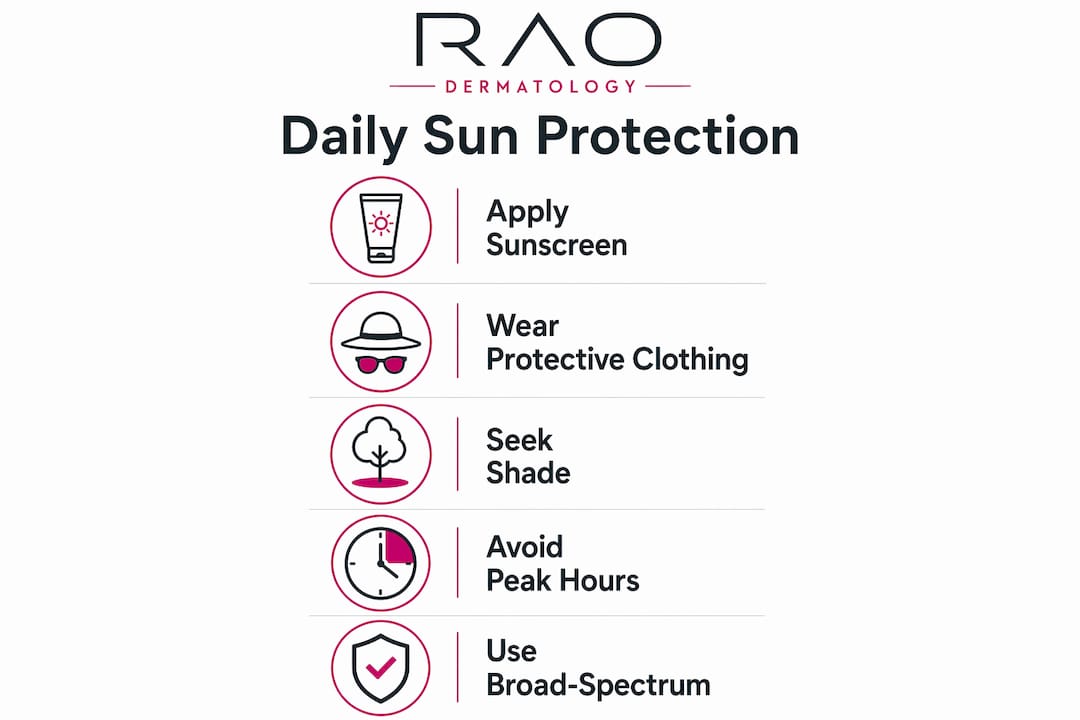
Proper application matters as much as product choice. Dermatologists recommend using one teaspoon of sunscreen for the face and neck, applied to dry skin 15–30 minutes before sun exposure. Water-resistant formulas maintain effectiveness for 40–80 minutes in water, but reapplication after swimming or sweating is non-negotiable.
A complete sun protection routine includes more than sunscreen:
- Avoid peak UV hours. Stay out of direct sun between 10:00 AM and 2:00 PM, when UV intensity is highest.
- Wear protective clothing. Sun-protective clothing is more reliable than regular fabric. Tightly woven, darker materials block more UV radiation than thin or light-colored options.
- Use UV-blocking sunglasses. Eyes and the skin around them are vulnerable to UV damage. Look for lenses labeled UV400 or 100% UV protection.
- Choose the right sunscreen type. Physical sunscreens containing zinc oxide or titanium dioxide provide immediate protection and suit sensitive skin well. Chemical sunscreens absorb UV and convert it to heat, are easier to apply evenly, and work well for daily wear under makeup.
- Add a wide-brimmed hat. A hat with at least a 3-inch brim protects the scalp, ears, and neck, areas that sunscreen often misses.
The table below compares the two main sunscreen types by key characteristics:
| Feature | Physical sunscreen | Chemical sunscreen |
|---|---|---|
| Active ingredients | Zinc oxide, titanium dioxide | Avobenzone, oxybenzone, others |
| How it works | Reflects UV rays off skin surface | Absorbs UV and converts it to heat |
| Onset of protection | Immediate upon application | Requires 15–30 minutes to activate |
| Best for | Sensitive skin, children, water exposure | Daily use, under makeup, athletic wear |
| Texture | Can leave a white cast | Typically lighter and invisible |
Pro Tip: If you find physical sunscreens too heavy for daily wear, look for tinted mineral formulas. The iron oxides in tinted versions also block visible light, which can worsen melasma and pigmentation issues.
For patients at high risk of nonmelanoma skin cancers, oral nicotinamide has been shown to reduce new nonmelanoma skin cancers by 23% over one year. That said, it is not a substitute for sunscreen and protective behaviors. It is a supplemental tool for specific clinical situations.
What myths cause people to skip sun protection?
Misinformation is a measurable public health problem. Over 16 million Americans have increased risky sun behaviors because of misconceptions, many of them spread through social media. The AAD’s 2026 Practice Safe Sun Survey found that 43% of Americans incorrectly believe some sun habits are safe, and 64% of Gen Z report seeing sunscreen misinformation online. That last number matters because younger adults are forming lifelong habits right now.
The most common myths that lead people to skip sun protection include:
- “A base tan protects me.” A tan offers minimal UV protection, roughly equivalent to SPF 3. It does not prevent sunburn or DNA damage.
- “I don’t need sunscreen on cloudy days.” Up to 80% of UV radiation passes through clouds. Overcast skies do not equal safe skies.
- “Sunscreen is only for fair skin.” All skin tones sustain UV damage. Darker skin has more melanin, which offers some natural protection, but it does not eliminate risk.
- “Indoor tanning is safer than the sun.” Tanning beds emit concentrated UV radiation and significantly raise the risk of melanoma.
- “Windows protect me from UV.” Glass blocks UVB but not UVA. Indoor and in-vehicle exposure to UVA is a real and underappreciated risk.
“There is no such thing as a safe tan. Tanning is the skin’s response to injury. Every time skin tans, it signals DNA damage has already occurred. That damage accumulates with every exposure, raising the lifetime risk of skin cancer.” — MSD Manuals on tanning and skin damage
Seeking guidance from a board-certified dermatologist cuts through the noise. Reliable skin cancer prevention tips are available from clinical sources, not social media feeds. The gap between knowing sun protection matters and actually doing it consistently is where misinformation does the most damage.
How should you adapt sun protection to your skin tone and lifestyle?
Sun protection is not one-size-fits-all. Skin tone, daily environment, and activity level all determine which strategies work best and how diligently they need to be applied.
Lighter skin tones produce less melanin and burn faster. People with fair skin may benefit from SPF 50 or higher, especially during extended outdoor time. Darker skin tones have more melanin, which provides some UV absorption, but darker-skinned individuals still face real risks including hyperpigmentation, sun-induced skin damage, and a higher likelihood of late-stage cancer diagnosis because symptoms are often overlooked or detected later. That delayed detection leads to worse outcomes. Protection is not optional for any skin tone.
The table below outlines tailored strategies by skin type and lifestyle:
| Profile | Key risk | Recommended approach |
|---|---|---|
| Fair skin, outdoor lifestyle | High burn and cancer risk | SPF 50+, reapply every 2 hours, full protective clothing |
| Medium skin, daily commuter | UVA exposure through windows | Broad-spectrum SPF 30+ daily, UV-blocking window film for vehicles |
| Darker skin, high sun exposure | Hyperpigmentation, late detection | SPF 30+ daily, regular skin self-exams, annual dermatologist check |
| Athletes and outdoor workers | Prolonged direct UV exposure | Water-resistant SPF 50+, sun-protective clothing, midday shade breaks |
| Indoor workers | UVA through office windows | Daily SPF 30+ moisturizer, UV-blocking window treatments |
Additional strategies for specific situations:
- Outdoor workers and athletes should apply sunscreen before going outside and reapply every two hours, or immediately after sweating heavily. Sun-protective clothing with a UPF rating provides consistent coverage that sunscreen alone cannot guarantee.
- Drivers and commuters face cumulative UVA exposure on the left side of the face and arm. A daily SPF moisturizer applied before leaving home addresses this risk with minimal effort.
- Regular skin self-exams are a critical complement to sun protection. Checking skin monthly for new or changing spots, and scheduling annual professional skin checks, enables early detection when treatment is most effective.
Understanding your personal skin cancer risk factors helps you calibrate how aggressive your protection routine needs to be. A dermatologist can assess your skin type, history, and lifestyle to give you a plan that actually fits your life.
Key Takeaways
Daily, consistent sun protection is the single most effective strategy for preventing skin cancer and premature aging across all skin tones and lifestyles.
| Point | Details |
|---|---|
| UV damage is cumulative | Every unprotected exposure adds up, even on cloudy days or through windows. |
| SPF 30+ is the baseline | Use broad-spectrum, water-resistant sunscreen daily and reapply every two hours outdoors. |
| All skin tones need protection | Melanin reduces but does not eliminate UV risk; darker skin faces delayed diagnosis risks. |
| Misinformation is a real threat | 43% of Americans hold false beliefs about sun safety; rely on board-certified dermatologists. |
| Layered protection works best | Combine sunscreen with protective clothing, hats, sunglasses, and shade during peak hours. |
Sun protection: what 25 years of clinical practice has taught me
Most people understand, at some level, that sun protection matters. What surprises me is how rarely that understanding translates into consistent daily behavior. Patients come in with significant sun damage who have never had a single blistering sunburn. They were not being reckless. They just did not realize that every ordinary day of unprotected exposure was adding up.
The most important shift I have seen in patients who actually protect their skin is treating sunscreen the way they treat brushing their teeth. It is not a beach-day ritual. It is a daily non-negotiable. The patients who make that mental shift are the ones who show up years later with skin that looks and functions the way it should.
The other thing I want to be direct about: skin cancer is largely preventable. The majority of cases trace back to UV exposure. That means most of what we treat in clinic could have been avoided. That is not said to create guilt. It is said because prevention is genuinely within reach for most people, and the tools required are inexpensive and widely available.
Younger patients often feel invincible, and older patients sometimes feel it is too late to start. Both groups are wrong. Starting sun protection at any age reduces future damage. The skin has a remarkable capacity to stabilize when the source of injury is removed. Consistent protection from today forward still matters, regardless of what happened in the past.
— Krunal
Raodermatology’s approach to skin cancer prevention and care
Raodermatology has spent more than 25 years helping patients across California, New Jersey, and New York protect their skin and catch problems early. The practice, founded by Dr. Babar K. Rao, specializes in both the prevention and treatment of skin cancer, combining clinical expertise with personalized care plans built around each patient’s skin type, history, and lifestyle.

Whether you need a baseline skin check, guidance on building a sun protection routine, or evaluation of a concerning spot, Raodermatology’s skin cancer prevention and treatment services are designed to meet you where you are. The practice also offers cosmetic and esthetic services that support long-term skin health alongside medical care. Scheduling a consultation is the most direct step you can take toward protecting your skin with the same level of precision you would apply to any other aspect of your health.
FAQ
What SPF level do dermatologists recommend for daily use?
Dermatologists recommend a broad-spectrum, water-resistant sunscreen with SPF 30 or higher for daily use, applied every morning and reapplied every two hours during outdoor activity.
Does sunscreen need to be reapplied indoors?
Reapplication indoors is generally not needed unless you sit near windows for extended periods. UVA rays penetrate glass, so a morning application of SPF 30+ is advisable for anyone with significant window exposure during the day.
Is sun protection necessary for darker skin tones?
Yes. Darker skin still sustains UV damage, including hyperpigmentation and increased cancer risk, and skin cancer in darker skin tones is more often diagnosed at a later, harder-to-treat stage.
What is the difference between UVA and UVB rays?
UVA rays penetrate deeply, cause photoaging and pigmentation changes, and pass through window glass. UVB rays cause sunburn and are mostly blocked by glass. Both types cause DNA damage and raise skin cancer risk.
How does misinformation affect sun safety behavior?
The AAD’s 2026 survey found that misinformation leads over 16 million Americans to adopt riskier sun habits, with 64% of Gen Z reporting exposure to false sunscreen claims online. Consulting a board-certified dermatologist remains the most reliable way to cut through that noise.
Recommended
- Complete Guide to Sunscreen and Sunblock: Protection, Types, and Benefits | Rao Dermatology
- Skin Cancer Prevention Tips: Your Sun Safety Guide | Rao Dermatology
- The Role of SPF in Skincare: Your 2026 Guide | Rao Dermatology
- Skin Cancer Awareness Month: 5 Expert Tips to Protect Your Skin in 2024 | Rao Dermatology
Filed under: