
Discover effective skin care tips for patients that really work! Learn essential daily habits for healthy, radiant skin backed by clinical research.

Effective skin care tips for patients center on three non-negotiable habits: gentle cleansing, consistent moisturizing, and daily sun protection. These are not suggestions from beauty blogs. They are the foundation of every evidence-based dermatology protocol, from Mayo Clinic guidelines to the clinical recommendations published by Dr. Babar K. Rao and the team at Raodermatology. The right routine does not need to be expensive or complicated. It needs to be consistent, condition-appropriate, and built on ingredients that have real clinical support, including SPF, ceramides, retinoids, and vitamin C.
1. skin care tips for patients: start with the daily essentials
The three steps every patient needs daily are cleansing, moisturizing, and sun protection. Everything else is optional. Getting these three right produces visible skin improvement in 6–12 weeks when applied consistently. That timeline matters because most patients abandon routines too early, before results appear.
Cleansing
Use a mild, fragrance-free cleanser suited to your skin type. Avoid bar soaps with strong surfactants and hot water, both of which strip the skin’s natural lipid barrier. Lukewarm water and a gentle cream or gel cleanser are the right starting point. Avoiding harsh soaps and patting skin dry instead of rubbing strengthens the barrier, reduces inflammation, and lowers infection risk.
Moisturizing
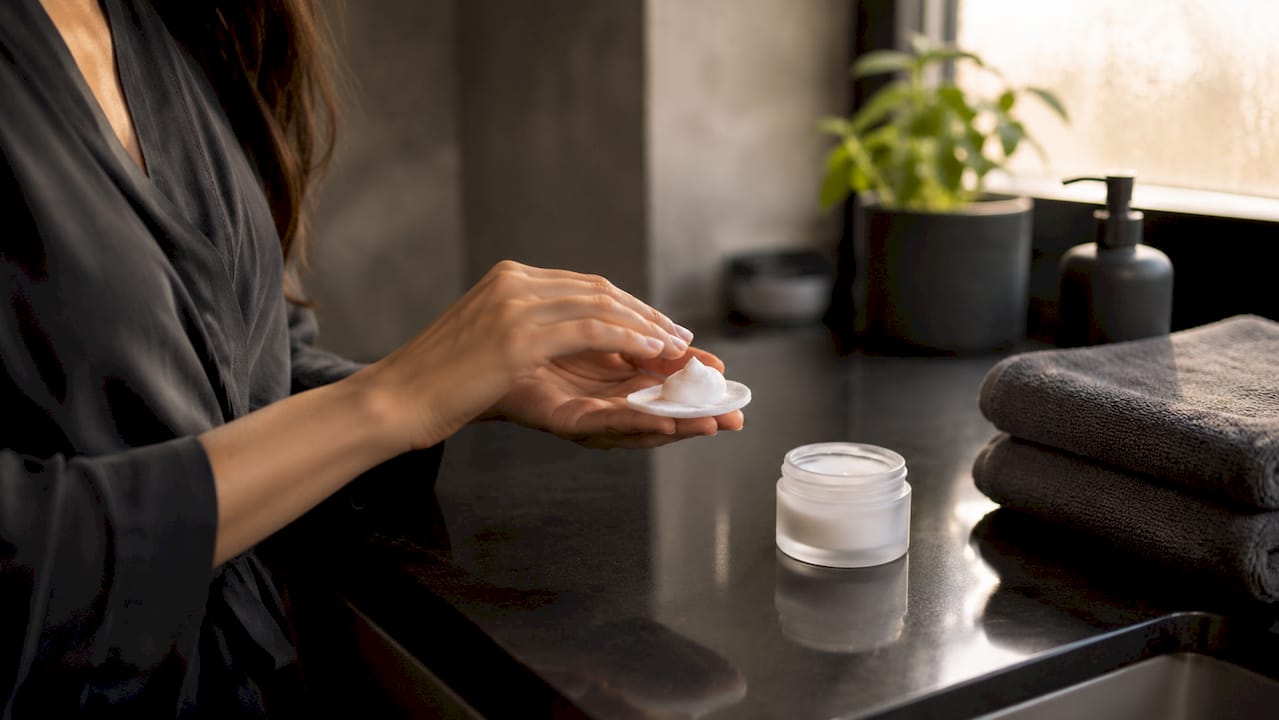
Apply moisturizer within two minutes of washing your face or stepping out of the shower. This “soak and seal” method locks in water before it evaporates. Look for formulas containing ceramides, hyaluronic acid, or glycerin. These ingredients repair the skin barrier rather than just sitting on top of it.
Sun protection
Apply a broad-spectrum sunscreen with SPF 30 or higher every morning, including on cloudy days. Reapply every two hours if you are outdoors. Most people apply far too little, which is the single biggest reason sunscreen underperforms in real life.
Pro Tip: Apply sunscreen as the last step in your morning routine, after moisturizer but before makeup. Use at least a nickel-sized amount for the face alone.
2. how to adjust your routine for sensitive skin or specific conditions
Patient skincare advice cannot be one-size-fits-all. Skin conditions like eczema, diabetes-related dryness, and aging skin each require specific modifications to a standard routine.
For sensitive skin and eczema:
- Avoid products containing fragrances, alcohol, and preservatives like methylisothiazolinone, all of which trigger contact dermatitis.
- Choose products labeled “fragrance-free,” not just “unscented.” Unscented products can still contain masking fragrances.
- Moisturizing twice daily from birth through six months reduces eczema risk by up to 50% in high-risk infants. Early barrier protection is that powerful.
- Use thick creams or ointments rather than thin lotions. Ointments like plain petroleum jelly are the most occlusive and work best for severe dryness.
For diabetic skin:
- Limit bathing to 5–10 minutes using lukewarm water to avoid stripping natural oils. Hot water accelerates moisture loss in skin that is already prone to dryness.
- Apply a thick, fragrance-free moisturizer immediately after patting dry.
- Inspect feet daily for cuts, blisters, or dry patches. Diabetic neuropathy reduces sensation, so visual checks replace what you cannot feel.
For aging skin:
- Retinoids remain the most clinically validated ingredient for reducing fine lines and improving skin texture. Start with a low concentration and apply every other night to build tolerance.
- Add a vitamin C serum in the morning to address uneven tone and support collagen production.
Pro Tip: The fingertip unit (FTU) is the professional standard for applying topical steroids. One FTU, the amount squeezed from the tip of your finger to the first crease, covers an area roughly the size of two adult palms. Using the FTU method prevents both under-treatment and the skin thinning that comes from overuse.
3. common patient mistakes and how to avoid them
Most skin problems patients bring to a dermatologist are self-inflicted through product overuse, not neglect. Combining multiple strong active ingredients causes redness, clogged pores, and barrier damage. The fix is almost always simplification.
The most frequent mistakes:
- Stacking actives: Using retinoids, vitamin C, AHAs, and salicylic acid in the same routine causes irritation. Introduce one new active at a time and wait two weeks before adding another.
- Wrong moisturizer for skin type: Gel moisturizers suit oily skin. Cream or ointment formulas suit dry or eczema-prone skin. Using a lightweight gel on very dry skin provides almost no barrier repair.
- Insufficient sunscreen: SPF 30 sunscreen applied too thinly delivers real-world protection closer to SPF 7–15. The SPF number on the label assumes a specific application thickness most people never reach.
- Stopping topical steroids too soon: Patients often stop at first sign of improvement, leading to rebound flares. Taper only as directed by your dermatologist.
- Skipping moisturizer on oily skin: Oily skin still needs hydration. Skipping moisturizer triggers the skin to produce more oil as compensation.
“The most effective skin care routine is a simple one: cleanser, moisturizer, retinoid, and daily SPF. Complexity is the enemy of consistency.”
The partner resource on common cream application errors reinforces this point with practical examples of how patients misuse even basic products.
4. skin care ingredient comparison: what to use and when
Not all ingredients are equal, and choosing the wrong one for your skin type wastes money and causes problems. Retinoids, vitamin C, and sunscreen are the three core actives that deliver long-term benefits when used consistently. Everything else is secondary.
| Ingredient / Product Type | Best For | Key Benefit | Caution |
|---|---|---|---|
| Micellar water / cream cleanser | Sensitive, dry, or eczema-prone skin | Removes makeup and debris without stripping the barrier | Not sufficient for heavy sunscreen removal alone |
| Surfactant gel cleanser | Oily or acne-prone skin | Clears excess sebum and reduces breakouts | Can over-dry if used twice daily on dry skin |
| Ceramide moisturizer | Eczema, dry, or post-treatment skin | Rebuilds the skin barrier at the lipid level | None; suitable for all skin types |
| Hyaluronic acid serum | All skin types, especially dehydrated skin | Draws water into the skin from the environment | Needs a moisturizer on top to seal in hydration |
| SPF 30 broad-spectrum sunscreen | Daily use for all skin types | Prevents UV damage, photoaging, and skin cancer | Must be applied generously and reapplied every two hours |
| SPF 50 physical (zinc oxide) sunscreen | Sensitive skin, post-procedure skin | Sits on top of skin, less irritating than chemical filters | Can leave a white cast on deeper skin tones |
| Retinoid (retinol or tretinoin) | Aging skin, acne, uneven texture | Increases cell turnover, reduces fine lines | Causes initial dryness; avoid during pregnancy |
| Vitamin C serum | Dull skin, hyperpigmentation, aging | Antioxidant protection, brightening, collagen support | Unstable in light and air; store in a dark bottle |
| Niacinamide | Oily, sensitive, or redness-prone skin | Reduces pore appearance, calms inflammation | Generally well tolerated; pairs well with most actives |
| Salicylic acid | Oily or acne-prone skin | Unclogs pores, reduces blackheads | Avoid combining with retinoids until skin is adapted |
For a step-by-step skin care routine that incorporates these ingredients in the right order, Raodermatology’s published guide walks through each layer from cleanser to SPF.
5. post-treatment skin care: what changes after a procedure
Post-treatment skin care follows different rules than a standard daily routine. After procedures like chemical peels, laser resurfacing, or microneedling, the skin barrier is temporarily compromised. The goal shifts from maintenance to protection and healing.
Avoid all active ingredients, including retinoids, vitamin C, AHAs, and salicylic acid, for at least one week after most procedures. Your dermatologist will specify the exact window. Use only a gentle cleanser, a fragrance-free barrier repair moisturizer with ceramides, and a physical SPF 50 sunscreen. Sun exposure after a procedure can cause permanent hyperpigmentation, particularly in patients with medium to deep skin tones.
Hydration is the primary driver of healing speed. Skin that stays moist heals faster and with less scarring than skin that dries out. Apply moisturizer frequently, every two to three hours if needed, during the first 48–72 hours. Avoid picking, rubbing, or exfoliating the treated area regardless of how it looks or feels.
For patients managing skin cancer treatment or prevention, Raodermatology’s guidance on sun protection practices covers the specific SPF protocols that apply during and after treatment.
6. building a routine you will actually stick to
The best skin care routine is the one you follow every day, not the most sophisticated one on paper. Fewer, gentler products outperform many aggressive ones in real-world patient outcomes. This is not a compromise. It is the clinical recommendation.
Start with a morning routine of three steps: cleanser, moisturizer, SPF. That is it. Add a retinoid at night, three times per week to start, once your skin has adjusted. Introduce any additional actives one at a time, spaced two weeks apart. Track how your skin responds before adding anything new.
Consistency over 6–12 weeks produces measurable results. Patients who switch products every few weeks never give their skin enough time to respond. Commit to a routine, give it time, and adjust based on what you observe rather than what you read in a product review.
A dermatologist-recommended skincare routine from Raodermatology provides a structured framework for building this kind of consistent, evidence-based daily habit.
Key takeaways
Effective patient skin care requires three daily habits, condition-specific adjustments, and the discipline to keep routines simple and consistent.
| Point | Details |
|---|---|
| Three daily non-negotiables | Cleanse gently, moisturize immediately after washing, and apply SPF 30+ every morning. |
| Condition-specific adjustments | Diabetic, eczema-prone, and post-treatment skin each need fragrance-free, barrier-focused products. |
| Sunscreen application matters more than SPF number | Applying too little reduces real-world SPF 30 protection to as low as SPF 7–15. |
| Simplicity beats complexity | One cleanser, one moisturizer, one retinoid, and one SPF outperforms a 10-step routine. |
| Consistency drives results | Visible improvements require 6–12 weeks of daily use before they become measurable. |
What i have learned from watching patients overcomplicate their skin
Patients come in with 12-step routines and skin that looks worse than when they started. That pattern repeats itself constantly. The instinct to do more, buy more, and layer more is understandable. But skin is not a problem you solve by throwing products at it.
The patients who see the best results are almost always the ones who commit to the simplest possible routine and stick with it. A gentle cleanser, a ceramide moisturizer, a retinoid three nights a week, and SPF every morning. That combination, done consistently for three months, outperforms any elaborate protocol I have seen marketed to patients.
The sunscreen issue frustrates me most. Patients spend money on SPF 50 and apply a thin layer that delivers the protection of SPF 10. The number on the bottle is irrelevant if the application is wrong. I would rather see a patient apply SPF 30 generously and reapply it than obsess over SPF 100 and use half the required amount.
The other thing I keep coming back to is how much damage comes from stopping prescribed treatments early. Topical steroids, retinoids, and medicated cleansers all require time and proper tapering. Stopping at the first sign of improvement is one of the most common reasons conditions return worse than before.
Skin care is not complicated. It just requires patience, which is harder to sell than a new serum.
— Krunal
Personalized skin care support from Raodermatology
Self-directed routines work well for maintenance. But when you are managing a diagnosed condition, recovering from a procedure, or trying to prevent skin cancer, you need a plan built around your specific skin.

Raodermatology offers medical and cosmetic dermatology services across California, New Jersey, and New York, with 25+ years of clinical experience behind every recommendation. Whether you need a medical dermatology evaluation for eczema, psoriasis, or dermatitis, or you are exploring esthetic services to complement your daily routine, the practice provides personalized care plans grounded in evidence. Contact Raodermatology to schedule a consultation and get a routine built specifically for your skin.
FAQ
What are the three most important skin care steps for patients?
Gentle cleansing, moisturizing immediately after washing, and applying broad-spectrum SPF 30+ sunscreen daily are the three steps every patient needs. Clinical guidelines confirm that consistent use of these three steps produces visible improvement in 6–12 weeks.
How often should patients apply sunscreen?
Apply sunscreen every morning and reapply every two hours during outdoor exposure. Applying too little reduces real-world protection significantly, so use at least a nickel-sized amount for the face.
What skin care products are best for sensitive skin?
Fragrance-free, alcohol-free cream cleansers and ceramide-based moisturizers are the safest choices for sensitive skin. Avoid products with preservatives like methylisothiazolinone, which commonly trigger contact dermatitis.
How should patients use topical steroids correctly?
Use the fingertip unit method: one FTU covers an area roughly the size of two adult palms. Apply until the skin glistens and taper only as directed by your dermatologist to avoid skin thinning or rebound flares.
When should a patient see a dermatologist about their skin care routine?
See a dermatologist if your skin does not improve after 6–12 weeks of a consistent routine, if you experience persistent redness or irritation, or if you are managing a diagnosed condition like eczema, psoriasis, or diabetic skin changes.
Recommended
- National Healthy Skin Month: Essential Dermatologist-Approved Tips for Year-Round Skin Health | Rao Dermatology
- Professional Skin Rejuvenation Treatments: Reverse Aging Signs Without Surgery | Rao Dermatology
- Skin Care Routine Step by Step for Radiant Skin | Rao Dermatology
- Skin Rejuvenation | Rao Dermatology
Filed under: