
Discover the risks of using Melanotan II, an unapproved synthetic peptide. Learn to recognize health dangers and when to seek medical advice.
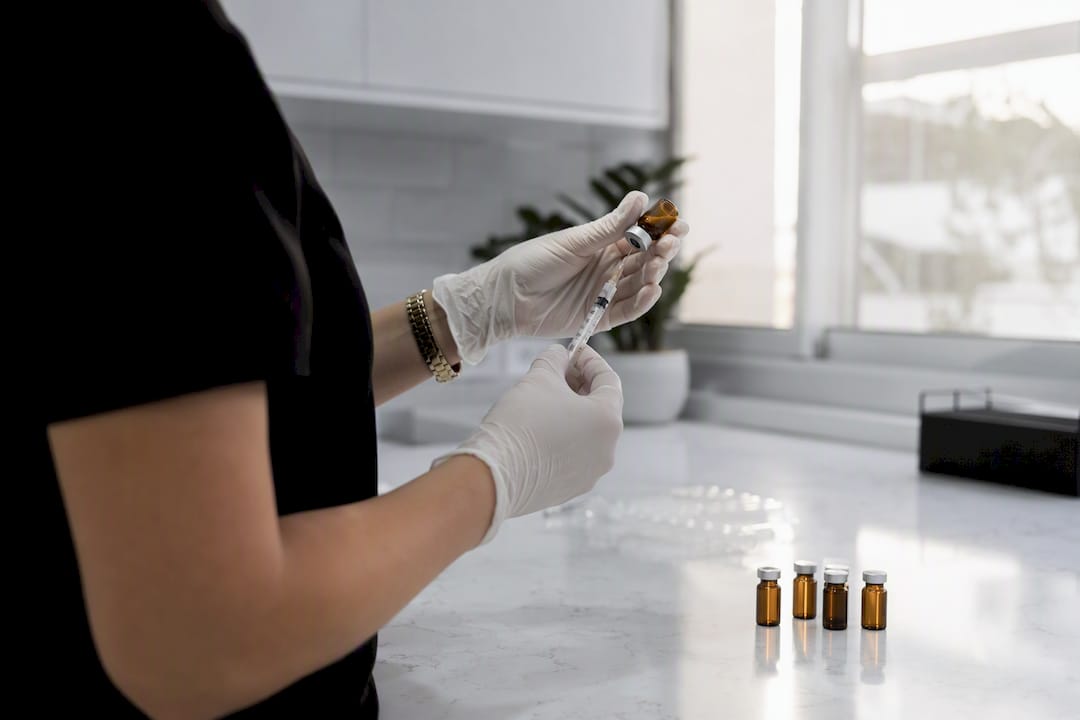
Melanotan II is an unapproved synthetic peptide, and no major health authority endorses it for tanning, sexual enhancement, or any other consumer use. The FDA lists it among unauthorized compounds sold online and has warned about the health risks tied to unregulated products. Peer-reviewed case reports describe rhabdomyolysis and renal infarction following injection. If you’ve used it or you’re noticing new or changing moles, that’s a reason to see a dermatologist, not a reason to panic.
- Bottom line: treat Melanotan II as an unsupervised risk, not a cosmetic shortcut.
- If you have symptoms: seek emergency care for severe hypertension, chest pain, or priapism lasting more than four hours.
- If you’re monitoring skin changes: book a mole check rather than waiting to see what happens.
Key Takeaways
Melanotan II carries documented risks of rhabdomyolysis, renal injury, and mole changes, and no formulation has FDA approval for any use.
| Point | Details |
|---|---|
| Not FDA-approved | No Melanotan II formulation has cleared FDA review for tanning, sexual enhancement, or any other use. |
| Systemic, not local | Its nonselective receptor binding affects skin, blood vessels, and organs, not just pigmentation. |
| Severe cases documented | Case reports describe rhabdomyolysis with CPK near 17,773 IU/L and renal infarction requiring hospitalization. |
| Mole changes need follow-up | New or darkening moles after use warrant a dermatologist visit, not a wait-and-see approach. |
| Safer path exists | Rao Dermatology offers skin cancer screening and cosmetic pigment treatments as a monitored alternative. |
Table of Contents
- What Is Melanotan II?
- How Melanotan II Works in the Body
- What People Use It For, and What the Evidence Actually Shows
- Side Effects and the Risks That Land People in the ER
- Why Melanotan II Isn’t FDA-Approved, and What That Means for Product Quality
- If You’ve Used Melanotan II or Found a Product
- Safer Ways to Get the Look or Result You Actually Want
- Talk to a Dermatologist Before You Gamble on a Gray-Market Peptide
- Sources
- FAQ
What Is Melanotan II?
Melanotan II is a lab-synthesized analogue of alpha-melanocyte-stimulating hormone (α-MSH), the natural hormone that tells your skin to produce more melanin. Researchers developed it decades ago while studying pigmentation and sexual response, but it never cleared the path to becoming an approved drug. The tanning-drug angle stalled, largely because the side-effect profile was too broad and too unpredictable for regulators to sign off on.
That hasn’t stopped a gray market from filling the gap. You’ll find it sold as:
- Lyophilized powder meant to be reconstituted and self-injected
- Prefilled injectable pens marketed under vague “research chemical” labeling
- Nasal sprays claiming to “activate” tanning without needles
Sellers frame it as a shortcut to a base tan or a libido boost. None of that marketing comes with FDA oversight, batch testing, or dosing guidance you can trust.
How Melanotan II Works in the Body
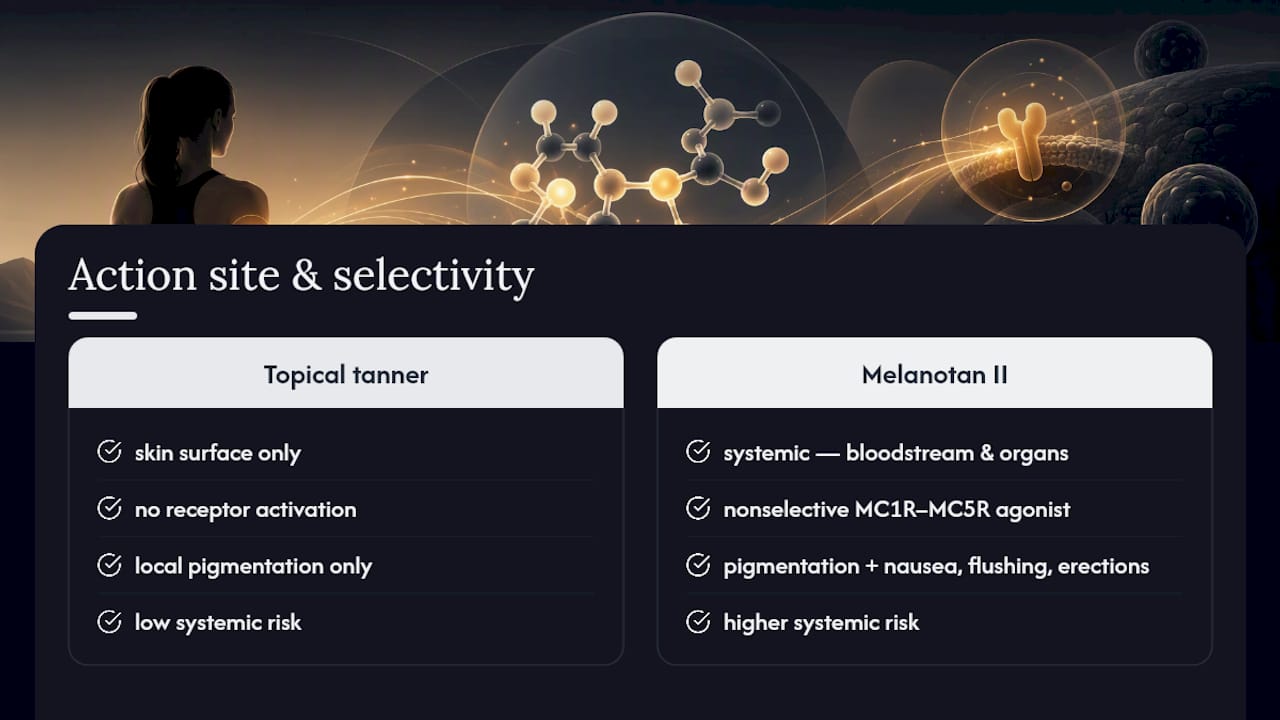
Melanotan II is a nonselective melanocortin receptor agonist. In plain terms, it binds to more than one receptor type at once, and that’s the root of most of its problems.
The melanocortin receptor family runs from MC1R to MC5R, and each one does something different: MC1R drives pigmentation in melanocytes, while other subtypes influence sexual arousal, appetite, and autonomic functions like blood pressure regulation. Melanotan II doesn’t stay in its lane. It activates several of these receptors simultaneously, which is exactly why users report tanning alongside nausea, flushing, and spontaneous erections.
Pro Tip: A topical sunless tanner only reacts with the outer layer of skin. Melanotan II circulates through your bloodstream and touches receptors in your brain, gut, and vascular system, which is the core reason its risk profile looks nothing like a bottle of self-tanner.
What People Use It For, and What the Evidence Actually Shows
Online marketing pushes three main pitches: a base tan without sun exposure, a libido enhancer, and occasionally a weight-loss aid. The evidence behind each claim varies sharply.
- Tanning: Early small studies did observe pigmentation changes after a handful of doses, but sample sizes were limited and none led to FDA approval for cosmetic tanning.
- Sexual stimulation: Some early research recorded spontaneous erections in male participants, a side effect rather than a studied therapeutic outcome.
- Weight loss: Claims here rest largely on anecdote and marketing copy, not controlled trials.
No formulation of Melanotan II carries FDA-approved prescribing information. That absence matters because it means there’s no established dosing standard, no verified purity requirement, and no long-term safety monitoring behind any product sold today.
Side Effects and the Risks That Land People in the ER
The common, almost universal reactions are flushing, nausea, headache, and a strange yawning-and-stretching pattern that many users report shortly after injection. Spontaneous erections are common enough that they show up in nearly every case series. These happen because Melanotan II is hitting melanocortin receptors well beyond the skin, triggering a broad autonomic response your body wasn’t designed to manage from an unregulated injection.
The serious risks are where this stops being a nuisance and starts being dangerous:
- Priapism — a prolonged, painful erection that can cause permanent tissue damage if untreated.
- Rhabdomyolysis — muscle breakdown severe enough to flood the bloodstream with creatine kinase and threaten the kidneys.
- Renal infarction and acute kidney injury — documented in case reports linking Melanotan II to thrombotic or direct toxic effects on renal tissue.
- Hypertensive crisis — dangerous spikes in blood pressure tied to the drug’s sympathomimetic activity.
- New or darkening moles — a change that can mask or mimic early melanoma, complicating skin-cancer surveillance.
One published case documented a patient hospitalized after Melanotan II injection with creatine kinase levels climbing as high as 17,773 IU/L, a level consistent with severe rhabdomyolysis requiring ICU-level fluid resuscitation and renal monitoring. That’s not a mild side effect. That’s an intensive-care admission from a peptide bought online with no prescription behind it.
A separate case report and literature review found that Melanotan II use preceded renal infarction in a patient with no other clear cause, pointing to possible thrombotic or direct toxic mechanisms on kidney tissue that clinicians are still working to fully explain.
Because Melanotan II’s toxicity can present with severe hypertension, rapid heart rate, and agitation, it can look like a sympathomimetic drug overdose in the emergency department, which sometimes delays the right diagnosis. If you experience severe headache, chest pain, confusion, dark urine, decreased urination, or an erection lasting more than four hours after using this product, that’s an emergency room visit, not a wait-and-see situation.
Why Melanotan II Isn’t FDA-Approved, and What That Means for Product Quality
Melanotan II has no FDA approval for any indication, medical or cosmetic, and health regulators in multiple countries have issued consumer warnings about products sold as injectables or nasal sprays. Sitting off an approval list isn’t a neutral status. It means no agency has verified what’s actually in the vial you’re buying.
That gap creates real, physical risk beyond the peptide’s own biology:
- Mislabeling — the concentration on the label frequently doesn’t match what’s inside.
- Contamination — gray-market compounding rarely meets sterile manufacturing standards.
- Immunogenic impurities — leftover byproducts from unregulated synthesis can trigger unpredictable immune reactions.
- No batch consistency — one vial from a seller may differ meaningfully from the next.
Being widely available online is not the same as being vetted. Regulatory and safety literature is explicit that these gray-market products vary in identity, strength, and sterility precisely because no approved manufacturing pathway governs them.
If You’ve Used Melanotan II or Found a Product
Start with the emergencies. Go to the ER or call 911 for severe hypertension, chest pain, confusion, dark urine, reduced urination, or an erection lasting longer than four hours.
If you’re not in crisis but you’ve used the product or found one in your home, work through these steps:
- Stop further doses immediately.
- Photograph any moles or new lesions now, so you have a baseline if things change later.
- Keep the product label, packaging, or a sample if you still have it.
- Schedule a prompt visit with a dermatologist for mole assessment and documentation.
- Contact your local poison control center if you experienced systemic symptoms.
Lab work may be warranted if you had flushing, nausea, or muscle pain after injection. Preserving the actual product matters too. It’s the only way a lab or physician can determine what you were actually exposed to, since label claims and vial contents frequently don’t match.
Safer Ways to Get the Look or Result You Actually Want
If the goal is color, there are options that don’t involve systemic peptide exposure. Topical sunless tanning lotions and professional spray tans work on the skin’s surface only, with none of the receptor-wide effects that make Melanotan II risky.

For genuine pigmentation concerns or chronic skin conditions, a board-certified dermatologist can offer evidence-based treatment options along with a baseline skin exam, something no online seller can provide. Talk to a physician before starting any new procedure, especially if you have a personal or family history of skin cancer.
A dermatology-focused take on the Melanotan II trend
At Rao Dermatology, we see the appeal of a fast tan, but we also see what unmonitored peptide use does to skin surveillance down the line. Safer, evidence-based options exist, and a proper skin exam should always come before any product like this.
Talk to a Dermatologist Before You Gamble on a Gray-Market Peptide
Melanotan II promises a shortcut. Rao Dermatology offers the alternative that actually holds up under scrutiny: in-person skin cancer screening, mole evaluation, and cosmetic pigment treatments delivered by licensed clinicians instead of an anonymous online seller.

If you’ve already used Melanotan II and noticed a new or changing mole, or you’re simply looking for a tanning approach that doesn’t carry systemic risk, scheduling a skin cancer screening gives you a documented baseline and a professional read on what’s normal versus what needs a closer look. Unlike a compounded peptide bought sight unseen, every treatment at Rao Dermatology comes from a licensed provider working within established medical standards. If your interest is cosmetic rather than clinical, our cosmetic dermatology services offer evidence-based pigment options with real oversight behind them. Book a consultation and get an answer from someone trained to give you one.
Sources
- U.S. Food and Drug Administration (FDA)
- Melanotan II injection resulting in systemic toxicity and rhabdomyolysis (PubMed)
- Melanotan II: a possible cause of renal infarction: review of the literature and case report (PMC)
- ProPeptideGuide — Melanotan II
These sources matter because they combine an official regulatory stance, peer-reviewed clinical evidence, and dermatology-specific guidance, rather than marketing claims from the sellers who profit from the product.
This article is general information, not a substitute for advice from a qualified doctor. Consult a qualified healthcare professional about your own circumstances before acting on anything here.
FAQ
How long does it take Melanotan II to start working?
Some users report visible pigmentation changes within a few doses, though timing varies widely and no standardized dosing schedule exists since the product isn’t FDA-approved.
Do you need sun exposure for Melanotan II to work?
Some pigmentation change can occur without sun exposure, but many users combine it with UV exposure, which adds skin cancer risk on top of the peptide’s own systemic effects.
Does Melanotan II make your hair darker?
There’s no solid clinical evidence establishing hair darkening as a typical effect; most documented outcomes center on skin pigmentation and mole changes rather than hair.
What should I do if I notice a new or darker mole after using Melanotan II?
Photograph the mole for a baseline record and schedule a prompt dermatologist evaluation, since Melanotan II is linked to new nevi and can complicate melanoma monitoring.
Recommended
- What Is Melanoma? Signs, Causes, and Treatment | Rao Dermatology
- Skin Cancer Prevention Tips: Your Sun Safety Guide | Rao Dermatology
- Melanoma: A Complete Guide to Skin Cancer Detection, Prevention & Treatment | Rao Dermatology
- Prevent Dark Spots: Daily Hyperpigmentation Prevention Plan | Rao Dermatology
Filed under: