
Discover effective daily strategies for hyperpigmentation prevention. Protect your skin from dark spots with the right care routine.
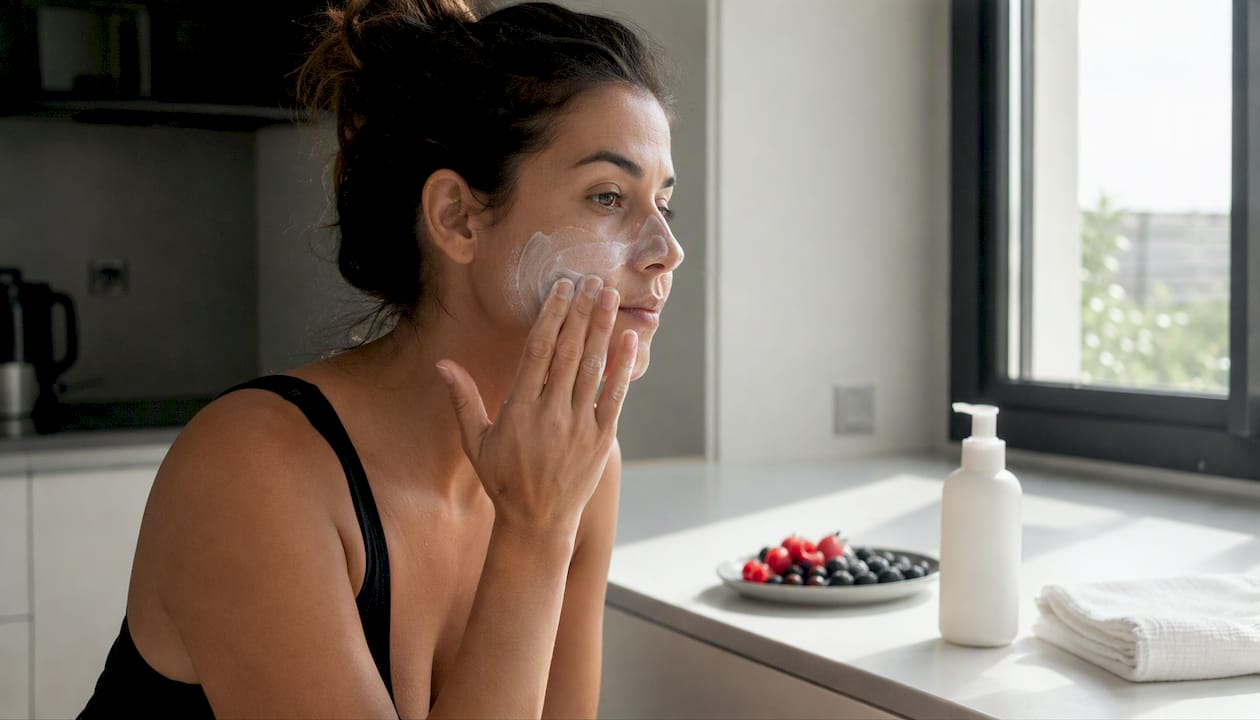
You can dramatically reduce new dark spots by protecting against UV and visible light every single day, applying sunscreen in the right amount, and layering gentle antioxidant and barrier-supportive topicals. That combination addresses the two main pathways that drive hyperpigmentation: UV and high-energy visible (HEV) light triggering reactive oxygen species (ROS) that ramp up melanin production, and skin inflammation from acne, eczema, or trauma that stimulates pigment cells directly.
Your daily prevention checklist:
Morning:
- Gentle cleanse
- Antioxidant serum (vitamin C or niacinamide)
- Moisturizer
- Broad-spectrum sunscreen with high SPF, applying an adequate amount for the face
- Protective clothing or hat when heading outside
Evening:
- Gentle cleanse
- Barrier moisturizer
- Targeted actives (retinoid or brightening agent) as tolerated
One rule that applies morning and night: never pick at blemishes, scabs, or irritated skin. That single habit causes more post-inflammatory hyperpigmentation (PIH) than most people realize.
Key Takeaways
Daily broad-spectrum photoprotection at SPF 50+, applied in the correct amount and reapplied consistently, is the single most effective step for preventing hyperpigmentation across all skin tones.
| Point | Details |
|---|---|
| Sunscreen dose and type | Use an adequate amount of SPF 50+ broad-spectrum sunscreen daily; choose tinted mineral with iron oxides for HEV coverage. |
| Antioxidant layering | Apply vitamin C or niacinamide serum before sunscreen each morning to neutralize residual ROS from UV and visible light. |
| PIH prevention | Control acne and eczema early, never pick at skin, and avoid aggressive at-home exfoliants to prevent inflammation-driven pigment. |
| Timeline for results | Expect 8–12 weeks to assess a topical regimen; existing spots fade over months, not days, and recur if photoprotection lapses. |
| Professional evaluation | See a dermatologist for rapidly changing lesions, persistent pigment despite good photoprotection, or any pigment concern in darker skin tones. Rao Dermatology offers individualized evaluation and treatment across California, New Jersey, and New York. |
Table of Contents
- What is hyperpigmentation and who does it affect?
- Causes and triggers of hyperpigmentation you should know
- Sun protection: the foundation of hyperpigmentation prevention
- Topical adjuncts that complement your sunscreen
- How to prevent PIH: managing inflammation and everyday triggers
- Realistic timelines: what to expect from prevention and fading
- When to see a dermatologist about skin discoloration
- A dermatologist’s evidence summary on antioxidants and HEV protection
- Rao Dermatology’s perspective on consistent, gentle prevention
- Personalized hyperpigmentation care at Rao Dermatology
- Sources
- FAQ
What is hyperpigmentation and who does it affect?
Hyperpigmentation is excess melanin, or uneven melanin distribution, that shows up as patches or spots darker than the surrounding skin. It is not one condition but a category with several distinct presentations.
Common types:
- Melasma: Symmetrical brown or gray-brown patches, most often on the cheeks, forehead, and upper lip. Strongly linked to hormonal shifts (pregnancy, oral contraceptives) and sun exposure.
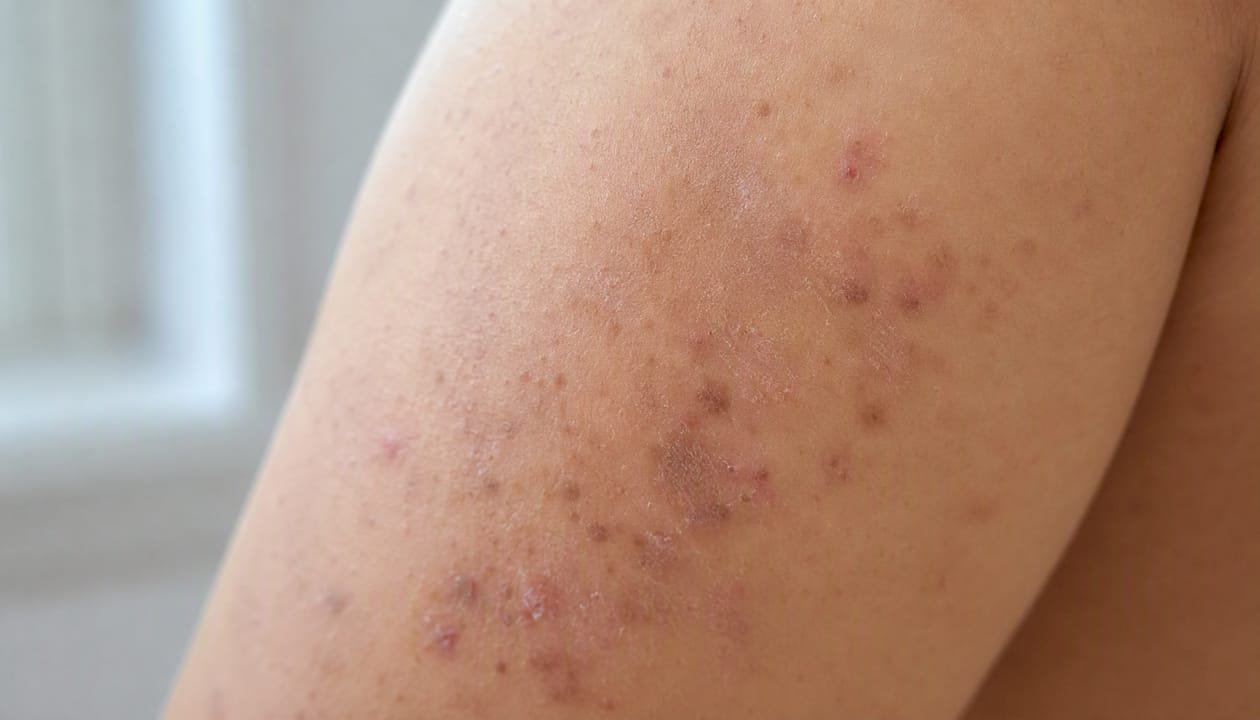
- Post-inflammatory hyperpigmentation (PIH): Dark marks left after acne, eczema, a cut, or any skin injury. The deeper the inflammation, the longer the mark tends to linger.
- Solar lentigines (sun spots/freckles): Flat, well-defined spots from cumulative UV exposure, most common on the face, hands, and forearms.
Anyone can develop UV-driven spots, but people with Fitzpatrick skin types III–VI carry a higher clinical risk for durable, deep pigment and are significantly more prone to PIH after any inflammatory event. Research confirms that visible light and UVA1 together worsen pigmentary disorders, and that people with skin of color often have lower rates of consistent photoprotection use. Because hyperpigmentation tends to recur whenever triggers are reintroduced, prevention is not a one-time fix. It is a maintained habit.
Causes and triggers of hyperpigmentation you should know
Understanding what starts the process makes prevention much more targeted.
External triggers:
- UVB and UVA radiation: The classic drivers. UVA penetrates glass and reaches the dermis; UVB is the primary cause of sunburn and surface pigment changes.
- Visible light and HEV (400–450 nm blue light): An expert panel published in the Journal of the American Academy of Dermatology confirmed that HEV contributes meaningfully to hyperpigmentation in higher Fitzpatrick types, a fact that standard SPF ratings do not capture.
- Infrared radiation: Emerging evidence links chronic heat and infrared exposure to pigment changes, particularly in people who work near heat sources.
- Environmental pollutants: Particulate matter and ozone generate ROS on the skin surface, activating the same melanogenic pathways as UV light.
Internal and hormonal triggers:
- Estrogen and progesterone fluctuations (pregnancy, hormonal contraceptives) are the primary drivers of melasma.
- Genetics determine baseline melanocyte activity and how aggressively skin responds to any trigger.
- Aging reduces skin turnover, so pigment takes longer to clear naturally.
Inflammation as a direct pathway:
Acne, eczema, contact dermatitis, aggressive chemical peels, or even a bad waxing session can all leave PIH. The mechanism is straightforward: inflammation activates melanocytes in the surrounding skin, which produce excess melanin as part of the healing response. UV and HEV light drive a parallel route, generating ROS that activate opsin-3 and other melanogenic signaling pathways.
One underappreciated contributor: indoor light. UV and visible light penetrate standard window glass, and screen-emitted HEV, while lower intensity than sunlight, adds cumulative exposure for people already prone to melasma or PIH. Daily sunscreen applies even on work-from-home days.
Sun protection: the foundation of hyperpigmentation prevention
No topical brightener, no matter how well formulated, can outwork unprotected sun exposure. Photoprotection is first-line prevention, and the details of how you apply it matter as much as which product you choose.
Choosing the right sunscreen
The global 2025 guideline summary on melanin hyperpigmentation disorders recommends broad-spectrum formulas covering UVB, longwave UVA, and HEV, with SPF 50 or higher for anyone managing pigmentary concerns. For HEV protection specifically, tinted mineral sunscreens or products containing iron oxides are the practical choice, because standard chemical filters do not reliably block visible light.
Physical (mineral) vs. chemical filters:
- Zinc oxide and titanium dioxide physically scatter and reflect UV and some visible light. Tinted versions with iron oxides extend that coverage into the HEV range.
- Chemical filters (avobenzone, octinoxate, oxybenzone) absorb UV energy and convert it to heat. Effective for UVA/UVB, but limited HEV coverage.
- For melasma and PIH patients, a tinted mineral formula is the stronger choice. Harvard Health guidance specifically recommends tinted sunscreens or iron-oxide-containing makeup for better visible-light protection.
How much and how often
Most people apply less than the amount needed to achieve the labeled SPF, which undermines protection. The practical target is to apply enough sunscreen to fully cover the face for effective protection. Apply it as the last step of your morning routine, after moisturizer. Reapply sunscreen regularly during prolonged outdoor activity and as needed with regular exposure. For detailed sun safety guidance, Rao Dermatology’s sun safety resource covers application and reapplication in practical terms.
Indoor and behavioral protection
| Spec | Recommendation |
|---|---|
| SPF level | SPF 50+ for pigmentary concerns |
| Formula type | Broad-spectrum; tinted mineral with iron oxides for HEV |
| Amount (face) | ~an appropriate amount sufficient for full facial coverage |
| Reapplication | Every 2 hours outdoors; at least twice daily with regular exposure |
| Indoor use | Daily, even indoors; UV and visible light penetrate windows |
Behavioral measures:
- Wear clothing with high ultraviolet protection for extended outdoor time.
- A wide-brim hat (3 inches or wider) cuts facial UV exposure substantially.
- UV-blocking sunglasses protect the periorbital area, where skin is thin and pigment changes are visible early.
- Avoid peak sun hours (10 AM–4 PM) when UV index is highest.
- For melasma patients, consider window films for home offices or cars where prolonged indoor sun exposure is unavoidable.
Pro Tip: If you wear makeup, choose a tinted foundation or setting powder with iron oxides as your HEV top-up layer. It adds meaningful visible-light protection without requiring a second sunscreen application.
Topical adjuncts that complement your sunscreen
Sunscreen handles the external light load. Topical antioxidants and barrier agents address what gets through.
How antioxidants work alongside sunscreen
A review in Photodermatology, Photoimmunology & Photomedicine concludes that antioxidants can be useful adjuncts to sunscreens by neutralizing those residual ROS before they activate melanogenic pathways. Their effectiveness depends heavily on the molecule, formulation stability, and how well the product penetrates the skin.
Key ingredients and what they do:
- Vitamin C (L-ascorbic acid): Neutralizes ROS, inhibits tyrosinase (the enzyme central to melanin production), and supports collagen. Unstable in water-based formulas; look for stabilized versions or anhydrous formats stored away from light.
- Niacinamide: Reduces transfer of melanosomes from melanocytes to keratinocytes, has anti-inflammatory properties, and is well-tolerated across skin tones, including sensitive and darker skin.
- Polyphenols (green tea extract, resveratrol): Antioxidant and anti-inflammatory activity; often used in combination serums.
- Polypodium leucotomos extract: An oral and topical adjunct with evidence for reducing UV-induced pigmentation; used as a complement, not a replacement, for sunscreen.
- Topical 2-MNG (2-mercaptonicotinoyl glycine): An emerging option. Small randomized trials involving 58 participants total found measurable reductions in HEV-induced pigmentation versus vehicle in Fitzpatrick III–IV subjects. Results are promising but limited by sample size; larger studies are needed before this becomes a standard recommendation.
Layering order and safety by skin tone
Morning sequence: antioxidant serum → moisturizer → sunscreen. Retinoids, acids, and stronger actives belong in the evening routine, where they work without competing with photoprotection.
For darker skin tones (Fitzpatrick IV–VI), avoid high-concentration vitamin C formulas, strong exfoliating acids, or any irritating active that could trigger inflammation and worsen PIH. A barrier-first skincare approach reduces irritation risk and keeps the skin’s natural defenses intact.
| Ingredient category | Mechanism | Evidence level | Suitable for sensitive/darker skin |
|---|---|---|---|
| Vitamin C (L-ascorbic acid) | ROS neutralization, tyrosinase inhibition | Strong; multiple trials | Use lower concentrations; watch for irritation |
| Niacinamide | Melanosome transfer inhibition, anti-inflammatory | Strong; well-replicated | Yes, well-tolerated |
| Polyphenols (green tea, resveratrol) | Antioxidant, anti-inflammatory | Moderate; supportive data | Generally yes |
| Polypodium leucotomos | ROS reduction (oral/topical) | Moderate; adjunctive | Yes |
| Topical 2-MNG | HEV pigmentation reduction | Early; small trials only | Studied in Fitzpatrick III–IV |
How to prevent PIH: managing inflammation and everyday triggers
PIH does not start with melanin. It starts with inflammation. Control the inflammation, and the pigment largely takes care of itself.
Acne management
- Treat breakouts early with topical retinoids, benzoyl peroxide, or prescription therapy under dermatologist supervision. The longer a pimple stays inflamed, the deeper the PIH it leaves.
- Never squeeze or pick. Mechanical trauma extends inflammation and drives pigment deeper into the dermis, where it is far harder to fade.
- Use a gentle face cleansing routine twice daily. Harsh scrubs or high-pH cleansers disrupt the barrier and worsen inflammation.
- Consider early dermatology referral for moderate-to-severe acne. Treating acne before scarring begins is always easier than treating the pigment afterward.
Eczema and dermatitis
- Control flares promptly with emollients and, when prescribed, topical corticosteroids or calcineurin inhibitors.
- Avoid known irritants and allergens. Repeated low-grade inflammation from contact dermatitis is a common, underrecognized PIH trigger.
- For guidance on managing chronic inflammatory skin conditions, Rao Dermatology’s dermatitis resource outlines practical flare-control strategies.
Procedures and hair removal
- Avoid aggressive waxing on inflamed or sensitized skin. Laser hair removal on darker skin tones requires conservative settings and an experienced provider.
- Before any chemical peel or laser procedure, prime the skin with a lightening or anti-inflammatory agent (such as niacinamide or a topical retinoid) for several weeks. This reduces the risk of procedure-induced PIH.
- At-home high-concentration peels are a common source of PIH in darker skin tones. Leave those to a licensed professional.
Actions to avoid across the board:
- Picking, scratching, or rubbing pigmented or inflamed areas
- Harsh physical scrubs on active breakouts
- Skipping sunscreen after any procedure
- Using multiple strong actives simultaneously without a dermatologist’s guidance
Realistic timelines: what to expect from prevention and fading
Prevention works faster than treatment. Once you have consistent photoprotection in place, you stop adding new pigment almost immediately. Existing spots are a different story.
What to expect:
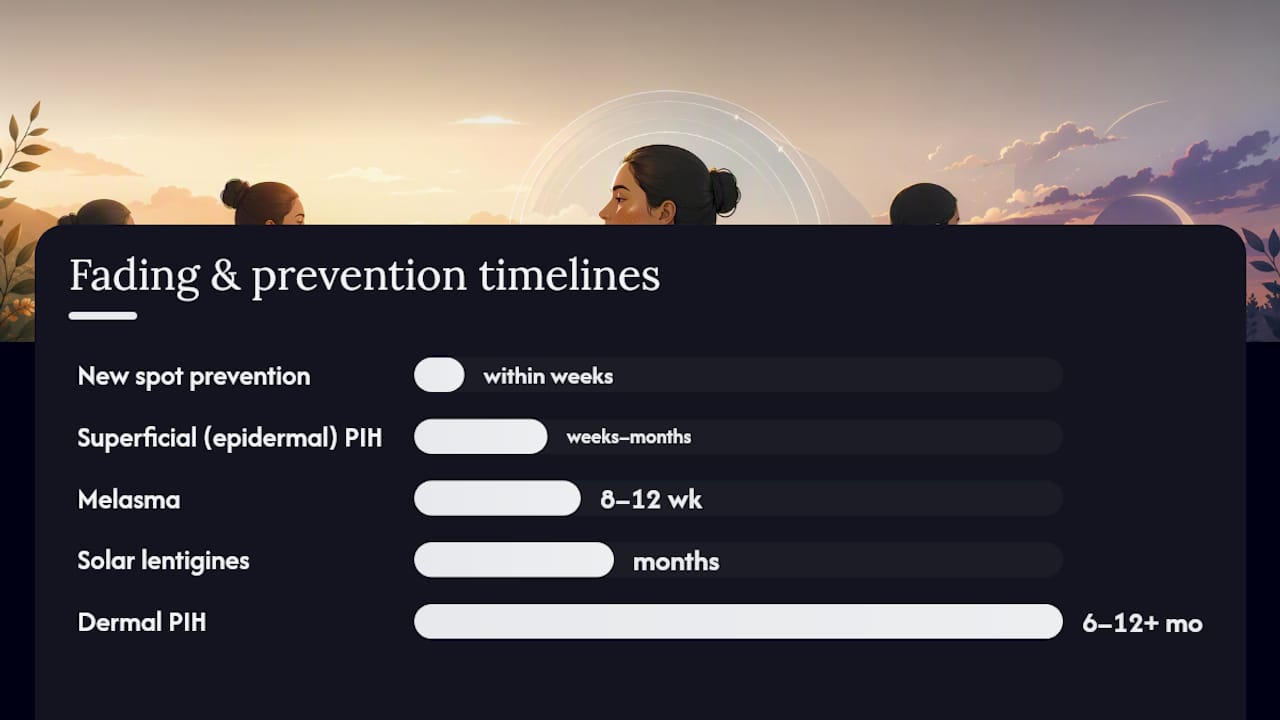
- New spot prevention: Consistent sunscreen use and trigger avoidance start protecting against new pigment formation right away. Within a few weeks of good photoprotection, many patients notice they are not developing new spots after sun exposure.
- Fading existing PIH: Superficial PIH (epidermal) typically fades over weeks to a few months with consistent photoprotection and topical adjuncts. Deeper, dermal PIH can take six months to a year or longer, and sometimes requires professional treatment.
- Melasma: Responds more slowly and is prone to recurrence. Expect 8–12 weeks before judging whether a topical regimen is working. Melasma often requires ongoing maintenance rather than a finite treatment course.
- Solar lentigines: Respond to topical brighteners and professional treatments over months; photoprotection prevents new ones but does not erase existing ones quickly.
Monitor and reassess:
- Photograph spots in consistent lighting every four weeks to track progress objectively.
- Reassess a topical regimen at 8–12 weeks. If there is no visible improvement, the formula, concentration, or approach may need adjustment.
- Recurrence is common when photoprotection lapses. Consistency is the variable that separates people who maintain results from those who cycle through treatments repeatedly.
A multifaceted protocol that combines melanogenesis inhibition, photoprotection, and systemic support consistently outperforms any single intervention for long-term control.
When to see a dermatologist about skin discoloration
Some pigment changes need professional evaluation, not just a better skincare routine.
Red flags that warrant prompt evaluation:
- A spot that is changing in size, shape, or color rapidly
- Pigmented lesions with irregular borders or multiple colors (rule out melanoma)
- Widespread or worsening pigmentation despite three or more months of consistent photoprotection
- Pigment after an injury that deepens or spreads rather than fading
What supervised treatment looks like:
- Prescription topicals: Hydroquinone (used short-term under supervision), topical retinoids, and azelaic acid are first-line prescription options. Combination formulas (hydroquinone + retinoid + low-potency corticosteroid) are used for melasma under close monitoring.
- Chemical peels: Superficial peels (glycolic, lactic, mandelic acid) performed by a licensed professional are effective for epidermal pigment. Medium-depth peels carry higher PIH risk in darker skin tones and require careful patient selection.
- Microneedling and low-fluence lasers: Can be effective for stubborn pigment when performed with conservative settings and appropriate priming. Microneedling for hyperpigmentation is one option the clinic uses with careful skin-tone assessment.
- Skin-tone safety: Aggressive laser settings and medium-to-deep peels in Fitzpatrick IV–VI skin carry real risk of treatment-induced PIH. The standard of care is conservative settings, priming, and staged treatment. The AAD guidance on darker skin tones emphasizes controlling inflammation first and using gentler, maintenance-oriented approaches.
What to bring to your first appointment:
- Photos of the affected areas taken over time, if available
- A list of every product currently in your routine (including sunscreen SPF and formula type)
- A history of known triggers (hormonal changes, procedures, inflammatory conditions)
A dermatologist’s evidence summary on antioxidants and HEV protection
The strongest evidence in hyperpigmentation prevention sits in two places: photoprotection and inflammation control. Everything else is adjunctive.
What the evidence supports:
- SPF 50+ broad-spectrum sunscreen with UVA and HEV coverage is the single most evidence-backed prevention tool. Tinted mineral formulas with iron oxides extend protection into the visible light range that standard sunscreens miss.
- Antioxidants (vitamin C, niacinamide, polyphenols) are well-supported adjuncts. Their job is to neutralize ROS that get through even well-applied sunscreen. Formulation stability is the limiting factor for many vitamin C products.
- The 2-MNG trials are worth watching. Early randomized data shows measurable HEV-pigmentation reduction in Fitzpatrick III–IV subjects, but the total sample across trials was 58 people. Promising, not yet practice-changing.
- For darker skin tones, gentler maintenance strategies consistently outperform aggressive interventions. The AAD’s consensus on skin of color is clear: treat the underlying inflammation first, then address pigment.
Pro Tip: Before any in-office procedure (peel, laser, microneedling), prime the skin for four to six weeks with niacinamide and a low-concentration retinoid. This reduces baseline melanocyte reactivity and measurably lowers the risk of procedure-induced PIH, particularly in Fitzpatrick III–VI patients.
Rao Dermatology’s perspective on consistent, gentle prevention
The patients who see the best long-term results are rarely the ones who pursue the most aggressive treatments. They are the ones who are consistent: daily sunscreen, a gentle routine, and early intervention when something new appears. Prevention is not passive. It is a daily decision.
For anyone dealing with persistent melasma, stubborn PIH, or pigment concerns in darker skin tones, an individualized plan from a board-certified dermatologist makes a real difference. Generic routines rarely account for the nuances of skin tone, trigger history, and tolerance that determine which approach will actually work.
Personalized hyperpigmentation care at Rao Dermatology

Rao Dermatology offers the full spectrum of pigment-related care, from medical evaluation and prescription topicals to licensed esthetician services including supervised chemical peels and microneedling. With locations across California, New Jersey, and New York, and more than 25 years of clinical experience, the practice provides individualized photoprotection counseling, skin-tone-specific treatment planning, and access to advanced diagnostics when a pigmented lesion needs closer evaluation.
If your dark spots are not responding to over-the-counter routines, or if you want a plan built around your specific skin tone and triggers, a dermatology consultation is the clearest next step. Explore Rao Dermatology’s full range of services or book a consultation directly to get a personalized prevention and treatment plan.
Sources
- Melanin Hyperpigmentation Disorders, Management: Global 2025 Guideline Summary
- Photoprotection for skin of all color: Consensus and clinical guidance from an expert panel - Journal of the American Academy of Dermatology
- Topical 2‑MNG reduces HEV‑induced pigmentation in small randomized trials (Frontiers in Pharmacology)
- Skin care secrets for darker skin tones (American Academy of Dermatology)
- Visible light and pigmentation: review (NCBI PMC)
- Demystifying hyperpigmentation: Causes, types, and effective treatments (Harvard Health)
This article is general information, not a substitute for advice from a qualified doctor. Consult a qualified healthcare professional about your own circumstances before acting on anything here.
FAQ
What fades hyperpigmentation the fastest?
Consistent broad-spectrum sunscreen use stops new pigment formation immediately, while topical agents like prescription-strength hydroquinone, retinoids, and azelaic acid accelerate fading of existing spots over weeks to months. Professional treatments such as superficial chemical peels or microneedling can speed results further when performed by a qualified provider.
Why am I so prone to hyperpigmentation?
Genetics, skin tone, and hormonal factors all raise baseline susceptibility. People with Fitzpatrick types III–VI have more reactive melanocytes that respond strongly to UV, HEV light, and any skin inflammation, making them more prone to both sun-driven spots and PIH after acne or injury.
What vitamin deficiency is linked to excessive hyperpigmentation?
Vitamin D deficiency is sometimes associated with uneven skin tone, though hyperpigmentation itself is primarily driven by UV exposure, inflammation, and hormonal factors rather than a single nutritional gap. A dermatologist can assess whether nutritional factors are contributing in your specific case.
How do I prevent dark spots from coming back after treatment?
Recurrence is the main challenge with melasma and PIH. Maintaining daily SPF 50+ sunscreen, avoiding known triggers (hormonal changes, aggressive procedures, picking), and using a maintenance topical (niacinamide, low-dose retinoid) consistently are the steps that separate lasting results from repeated cycles of treatment.
When should I see a dermatologist instead of treating at home?
See a dermatologist if a spot is changing rapidly in size, shape, or color; if pigmentation is worsening despite three or more months of consistent photoprotection; or if you have darker skin and want a procedure-based treatment, since aggressive options carry real PIH risk without proper clinical oversight.
Recommended
- Skin Health Improvement Tips That Actually Work | Rao Dermatology
- Skin Cancer Prevention Tips: Your Sun Safety Guide | Rao Dermatology
- Medical Dermatology Essentials: Prevention, Treatment & Aesthetics | Rao Dermatology
- Microdermabrasion for Age Spots in Manhattan NY: Safe & Effective Treatment | Rao Dermatology
Filed under: