
Discover the vital role of lasers in dermatology. This comprehensive guide empowers you to make informed decisions for your skin treatment.
A patient’s guide to lasers in dermatology

Laser technology has transformed skin care at a pace that even many clinicians find hard to track, leaving patients in California, New Jersey, and New York caught between exciting promises and real uncertainty. Which laser works for your acne scars? Is it safe for your skin tone? How many sessions will you actually need? These are reasonable questions, and too many patients walk into consultations without the knowledge to ask them well. This guide cuts through the noise and gives you the clinical context you need to make confident, informed decisions about laser treatments for your skin.
Table of Contents
- How lasers work in dermatology
- Common uses of lasers in treating skin concerns
- Safety and tailored treatment: lasers for different skin types
- Lasers and melasma: challenges, limitations, and expert guidance
- Choosing a clinic and technology: expert advice for CA, NJ, and NY patients
- The real story: what most articles miss about lasers in dermatology
- Get expert laser care with Rao Dermatology
- Frequently asked questions
Key Takeaways
| Point | Details |
|---|---|
| Laser selection matters | The right laser type is key for safe, effective treatment depending on skin concern and skin type. |
| Safety protocols critical | Board-certified dermatologists and proper screening reduce complications like pigment changes and recurrence. |
| Patient outcomes vary | Laser treatment effectiveness differs by technology, skin type, condition, and patient follow-through. |
| Melasma caution | Lasers are not first-line for melasma and should be used only when other treatments fail. |
| Clinic expertise counts | Seek clinics with fractional nonablative lasers and experience with skin of color for the safest results. |
How lasers work in dermatology
Before you can evaluate your options, it helps to understand the basic principle that makes medical lasers so powerful and so specific. Every laser used in dermatology operates on a concept called selective photothermolysis, which means delivering a precise wavelength of light energy to a target in the skin while leaving surrounding tissue largely unaffected. The “target” in this context is called a chromophore, which is simply a molecule that absorbs a specific wavelength of light. The three main chromophores in skin are melanin (the pigment in your skin and hair), hemoglobin (the protein in blood vessels), and water (found throughout skin tissue).
Each laser is engineered to match its wavelength to one of these chromophores. When the light energy hits its target, it converts to heat, destroying or remodeling the structure without burning everything around it. This precision is what separates modern dermatological lasers from older, far blunter tools. Depending on the laser, the effect can be photothermal (heat-based tissue destruction), photochemical (triggering biological changes), or photomechanical (acoustic shockwaves that break apart pigment particles).
Here is a quick reference for the major laser categories and what they target:
| Laser type | Wavelength | Primary chromophore | Common uses |
|---|---|---|---|
| Nd:YAG | 1064 nm | Hemoglobin, water | Hair removal, vascular lesions, skin of color |
| Alexandrite | 755 nm | Melanin | Hair removal, pigmented lesions |
| KTP (green) | 532 nm | Hemoglobin | Vascular lesions, redness |
| Fraxel (nonablative) | 1550 nm | Water | Acne scars, wrinkles, texture |
| Fractional CO2 | 10,600 nm | Water | Deep resurfacing, scars, wrinkles |
| Pulsed dye | 585/595 nm | Hemoglobin | Rosacea, port wine stains |
“The right wavelength, pulse duration, and fluence together determine whether a laser treatment is safe and effective for any given patient and condition.”
Explore the full range of laser treatment options to see which technologies are available at Rao Dermatology locations.
With the basics in mind, let’s explore how these lasers are used for different skin concerns.
Common uses of lasers in treating skin concerns
Lasers now address a remarkably broad spectrum of skin conditions, both medical and cosmetic. Understanding what each device actually does in clinical practice helps you set realistic expectations before you commit to a treatment plan.
Acne scars are one of the most common reasons patients seek laser treatment, and the research is clear. Fractional CO2 laser achieved a 61 to 67 percent improvement in ECCA scar scores (a validated clinical grading system), while nonablative 1550 nm lasers improved ECCA scores by 30 points across all skin types. The tradeoff is important to understand: ablative lasers like fractional CO2 produce more dramatic results but carry higher risks including longer downtime, redness, and a greater chance of pigment changes. Nonablative options are gentler with a better safety profile, especially for patients with medium to darker skin tones.
Vascular and pigmented lesions respond well to targeted wavelengths. 532 nm and 755 nm lasers show similar overall improvement rates for both pigmented and vascular lesions. The 755 nm alexandrite laser edges out slightly in lesion clearance, while the 532 nm KTP laser tends to be more painful but very effective for superficial redness and broken blood vessels.
Laser hair removal remains one of the most popular and well-validated cosmetic applications. Multiple sessions targeting hair follicles in the active growth phase produce long-term reduction with minimal tissue damage to surrounding skin. Learn more about the laser hair removal service offered at Rao Dermatology.
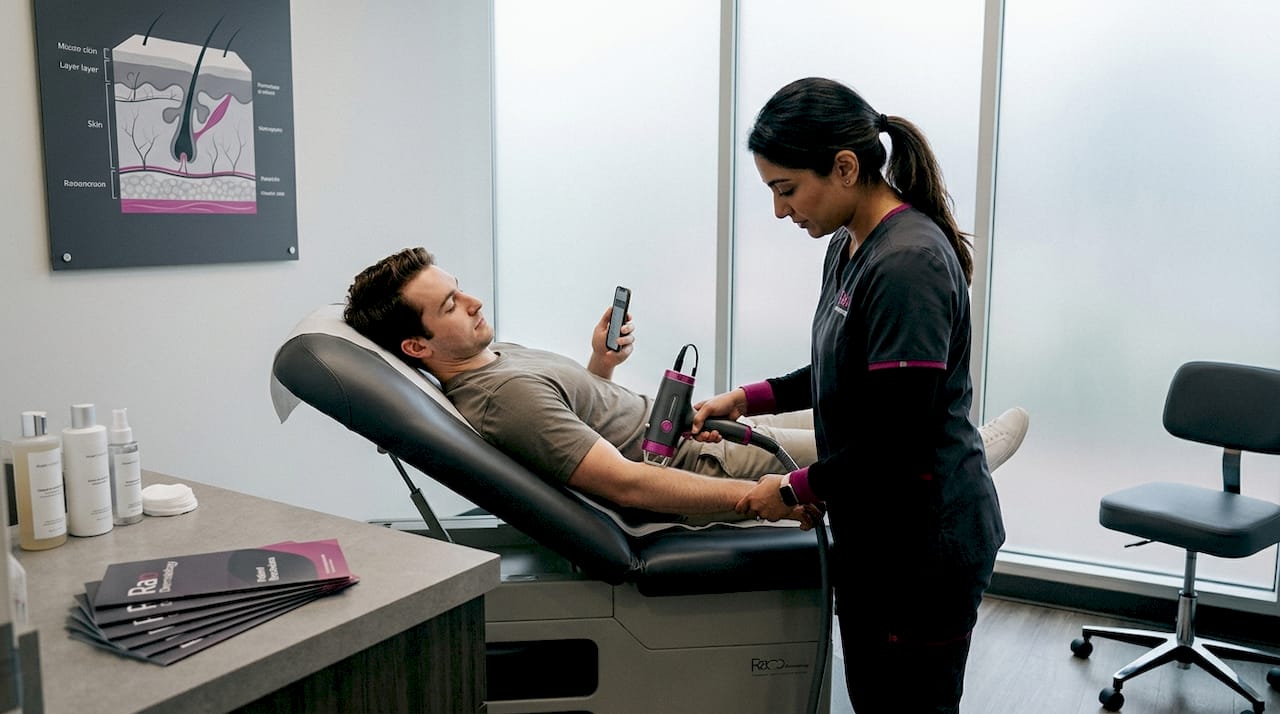
Wrinkle reduction through laser resurfacing works by stimulating collagen remodeling deep in the dermis. Laser therapy for wrinkle reduction is effective for perioral and periorbital lines, forehead creases, and overall skin laxity when combined with the right resurfacing protocol.
A typical treatment sequence for acne scars looks like this:
- Skin evaluation and Fitzpatrick typing to confirm laser eligibility
- Pre-treatment with topical retinoids or hydroquinone to prime the skin
- First fractional laser session with conservative settings
- Four to six week recovery and reassessment
- Second session with adjusted parameters based on initial response
- Optional combination therapy such as microneedling for acne scars to enhance outcomes
Pro Tip: Combining a fractional 1064 nm laser with platelet-rich plasma (PRP) therapy and subcision (a minor procedure to release scar tethering beneath the skin) consistently delivers the best outcomes for moderate to severe acne scarring. This multi-modal approach addresses both the surface texture and the underlying structural causes of the scar.
Knowing the options, it’s essential to consider how patient skin types influence safety and effectiveness.
Safety and tailored treatment: lasers for different skin types
One of the most critical and underappreciated factors in laser dermatology is skin type. The Fitzpatrick scale classifies skin from Type I (very fair, always burns) through Type VI (deeply pigmented, never burns). This classification directly determines which lasers are safe to use and at what settings.
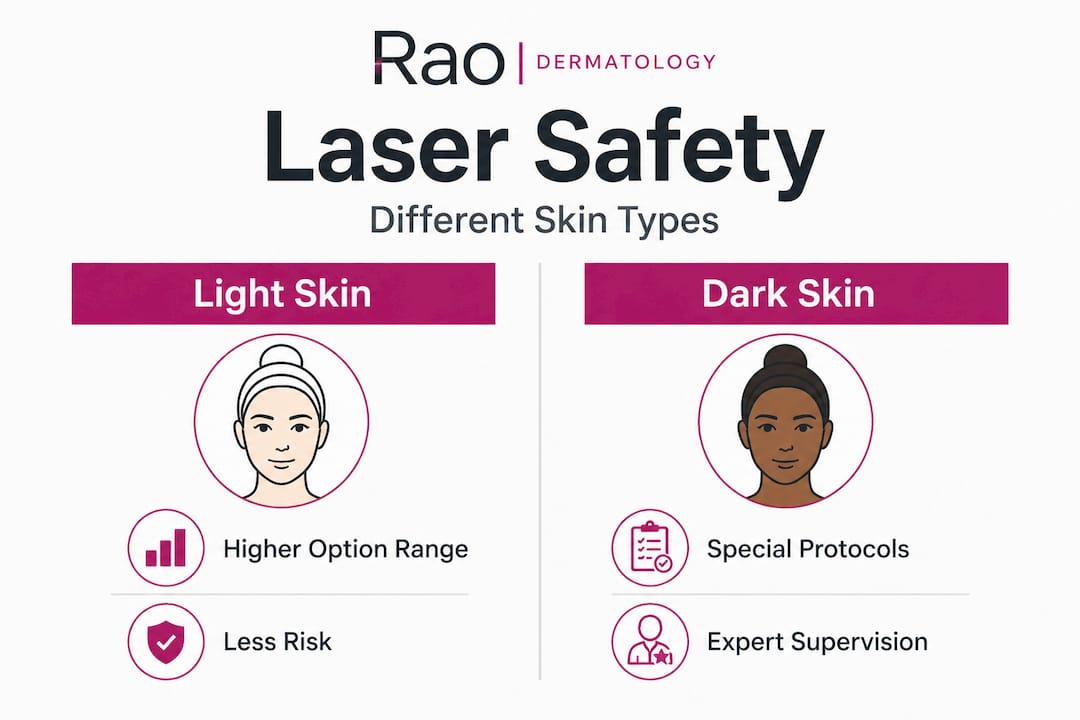
For patients with skin of color (Fitzpatrick Types IV through VI), the risk of post-inflammatory hyperpigmentation (PIH) is significantly elevated with ablative lasers and vascular-targeting devices. In skin of color, nonablative long-wavelength lasers like the 1064 nm Nd:YAG and the 1550 nm fractional laser are strongly preferred. Radiofrequency microneedling is another excellent alternative when laser treatment carries too much pigment risk. Test spots, where a small area is treated and monitored before full treatment, are an essential safety step.
Here are the key safety principles for patients with medium to darker skin tones:
- Always disclose your full skin history, including any previous reactions to heat, sun, or topical treatments
- Request a test spot at least four weeks before full treatment
- Insist on a board-certified dermatologist with documented experience treating skin of color, not just general cosmetic experience
- Ask specifically about pre-treatment skin priming with agents like azelaic acid or niacinamide to reduce PIH risk
- Avoid ablative CO2 lasers as a first-line approach unless your dermatologist has compelling clinical justification
- Be cautious with newer combined devices: dual-wavelength low-power lasers increase photosensitivity risk fourfold in darker skin, while ultra-low fluence picosecond lasers appear to be safer for acne scars without triggering PIH
For patients dealing with uneven skin tone or dark patches, understanding hyperpigmentation management alongside laser therapy is equally important. Some patients with specific pigmentation disorders may also benefit from exploring vitiligo laser options, which use carefully calibrated excimer light to stimulate repigmentation.
Pro Tip: A dermatologist who never asks about your Fitzpatrick skin type before recommending a laser is not the right provider. That question is not optional. It is the foundation of safe laser selection.
Addressing safety is only part of the picture. It is also crucial to understand which conditions lasers are best and least suited for.
Lasers and melasma: challenges, limitations, and expert guidance
Melasma is a chronic, hormonally influenced pigmentation disorder that appears as brown or gray-brown patches, typically on the face. It is frustratingly common among patients with Fitzpatrick Types III through VI, and it is one of the conditions where laser treatment is most misunderstood.
Here is the clinical reality that many patients are not told upfront:
- Lasers are not a first-line treatment for melasma
- Topical agents like hydroquinone, retinoids, and azelaic acid should always be tried first
- Laser-induced heat can actually worsen melasma by stimulating melanocyte activity
- Recurrence after laser treatment is common, sometimes faster and more severe than the original pigmentation
- The risk of PIH following laser treatment is particularly high in darker skin types
Lasers for melasma should only be considered after topical treatments have been tried and failed over a sustained period. When laser therapy is used, the preferred protocol is low-fluence Q-switched Nd:YAG, which minimizes heat delivery while still targeting melanin deposits. This approach reduces, but does not eliminate, the risk of rebound hyperpigmentation.
“With melasma, the decision to use a laser is not just about whether it will work in the short term. It is about whether the skin can tolerate the treatment without triggering a cascade of new pigment that is harder to control than the original problem.”
Patients considering laser therapy for stubborn pigmentation should read about what to expect from laser therapy before their consultation. Being informed about realistic timelines and the possibility of multiple approaches dramatically improves the overall experience and outcome satisfaction.
With these nuances in mind, let’s step back and examine how experts recommend choosing the right clinic and technology.
Choosing a clinic and technology: expert advice for CA, NJ, and NY patients
Patients in California, New Jersey, and New York have access to some of the most advanced dermatology practices in the country, but the abundance of options can make the decision harder, not easier. Marketing promises of “cutting-edge lasers” or “celebrity-approved treatments” are not substitutes for clinical competence and evidence-based protocols.
Here is what you should actually look for when selecting a laser dermatology clinic:
- Board certification: Confirm the treating physician is board-certified in dermatology. This is the single most important credential. Cosmetic laser centers run by non-physician practitioners carry substantially more risk.
- Documented experience with your skin type: Ask how many patients with your Fitzpatrick type the provider has treated. Ask to see before and after photos of similar patients.
- Technology transparency: A trustworthy clinic will explain exactly which laser they plan to use, why they selected it, and what alternatives exist. Vague answers about “our laser system” are a red flag.
- Pre-treatment consultation: Proper assessment includes a detailed skin history, medication review, sun exposure habits, and Fitzpatrick typing. A consultation that takes less than 15 minutes is insufficient.
- Published safety protocols: Board-certified dermatologists who prioritize fractional nonablative technology and follow evidence-based safety guidelines for diverse skin types consistently achieve better outcomes with fewer complications.
- Post-treatment support: Ask what happens if you experience unexpected side effects. Is a physician directly reachable? What is the follow-up protocol?
Pro Tip: When evaluating a clinic, ask specifically whether they use fractional nonablative lasers and whether they have experience treating patients with skin of color. A clinic that confidently answers both questions with clinical specifics rather than marketing language is one worth trusting. See the full list of laser services offered at Rao Dermatology to understand what a well-equipped, physician-led practice looks like.
Now that we have covered the practical details, let’s explore what most articles miss about laser dermatology.
The real story: what most articles miss about lasers in dermatology
After more than 25 years of treating patients across California, New Jersey, and New York, one thing stands out clearly: laser outcomes depend as much on the person holding the device as on the device itself.
Most online articles about laser dermatology focus heavily on technology comparisons. They compare wavelengths, pulse durations, and fluence settings as if the laser operates autonomously. What they understate is the clinical judgment required to select the right settings for a specific patient on a specific day, adjust mid-treatment if the skin responds unexpectedly, and recognize when not to treat at all. That last point matters more than most patients realize.
Research confirms that 1064 nm Nd:YAG with 650-microsecond pulses achieves 90 percent patient satisfaction for acne clearance, and combining it with PRP and subcision produces even better outcomes for scarring. Those numbers assume skilled hands and proper patient selection. The same laser in an undertrained setting produces far less impressive, sometimes harmful, results.
The photosensitivity data is equally instructive. Dual-wavelength low-power lasers can quadruple photosensitivity risk in darker skin, which means a treatment promoted as gentle and innovative can carry serious hidden risks if the clinic is not monitoring for this effect. Managing laser side effects requires both vigilance and experience.
Our honest recommendation is this: do not chase trending technology. Seek clinics with proven protocols, rigorous patient screening, and a track record of safe outcomes across diverse skin types. The newest laser is not always the right laser for you.
Get expert laser care with Rao Dermatology
At Rao Dermatology, we have spent over 25 years building a practice rooted in evidence-based laser medicine, personalized care, and a deep commitment to safety across all skin types.

Our board-certified team at clinics across California, New Jersey, and New York offers the full spectrum of advanced laser therapies, from fractional nonablative resurfacing to laser hair removal and vascular lesion treatment. Every patient receives a thorough consultation, Fitzpatrick skin typing, and a customized treatment plan grounded in the latest clinical research. Whether you are exploring cosmetic dermatology services or looking to address a specific medical skin concern, we are here to guide you with expertise you can trust. Browse all dermatology services or schedule a consultation to take the first step toward clearer, healthier skin.
Frequently asked questions
Are lasers safe for darker skin types?
Yes, but only specific lasers and strict protocols make them safe. Nonablative long-wavelength options like 1064 nm Nd:YAG and 1550 nm fractional lasers minimize the risk of post-inflammatory hyperpigmentation and are the preferred choice for Fitzpatrick Types IV through VI.
What skin conditions are most effectively treated by lasers?
Lasers deliver strong, well-documented results for acne scars, vascular lesions, pigmented lesions, and unwanted hair. Fractional CO2 and 1550 nm lasers are particularly effective for acne scars, while melasma treatment is considerably less predictable and carries higher risks.
What should I ask my dermatologist before starting laser treatment?
Ask about their experience with your specific Fitzpatrick skin type, which laser technology they plan to use and why, whether a test spot is appropriate, and what their protocol is for managing unexpected pigment changes. Board-certified dermatologists with experience in diverse skin should answer these questions with specifics.
Is laser therapy suitable for melasma?
No, lasers are not first-line for melasma and carry a high risk of recurrence and worsening pigmentation, especially in darker skin tones. Low-fluence Q-switched Nd:YAG is the preferred option only after topical treatments have been exhausted.
How soon can I expect results after laser treatment?
Timeline varies significantly by laser type and skin concern. Initial improvements in texture or pigmentation may appear within a few weeks, but optimal scar outcomes typically require a series of treatments spaced four to six weeks apart, with final results visible three to six months after the last session.
Recommended
Filed under: