
Discover the aesthetic skin care workflow to optimize your skin health. Follow our step-by-step guide for radiant results and effective care.

An aesthetic skin care workflow is a structured sequence of planned steps designed to optimize skin health before, during, and after aesthetic treatments. In clinical dermatology, this approach is called a procedure-adapted skin care protocol. Both terms describe the same discipline: organizing your products, timing, and routine around your skin’s healing cycle to get consistent, measurable results. When you follow a defined workflow, you protect your skin barrier, reduce the risk of irritation, and give every treatment the best possible chance to perform.
What is an aesthetic skin care workflow and why does it matter?
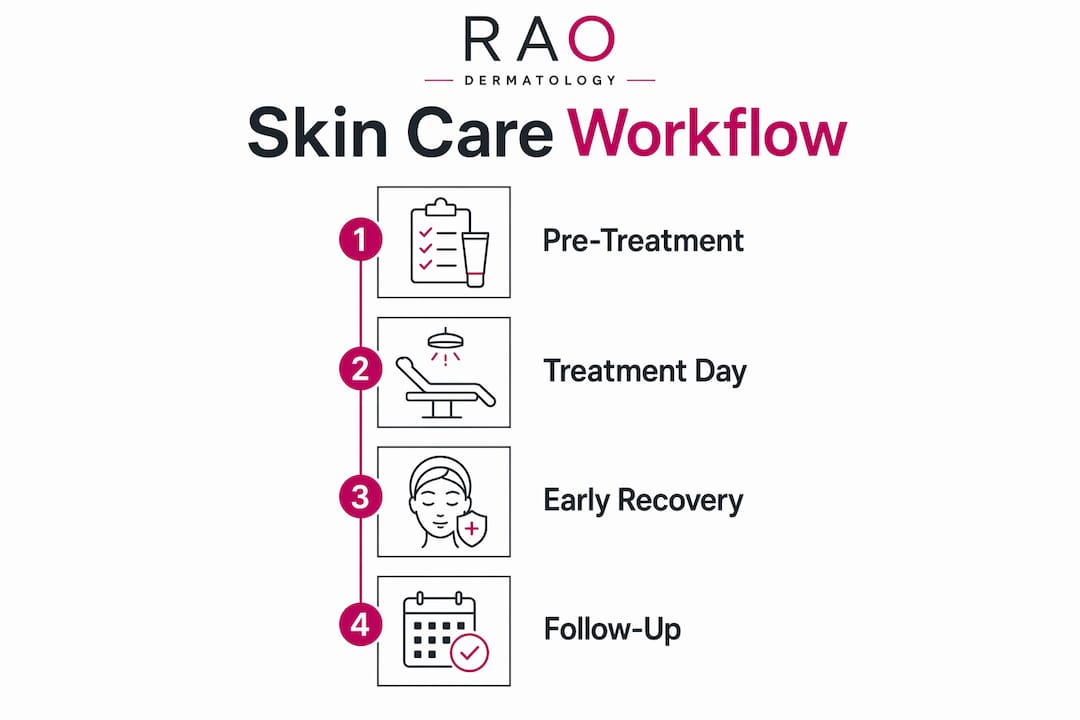
A skin care workflow is not just a product list. It is a phased system that changes based on where you are in your treatment cycle. The four core phases are pre-treatment preparation, treatment day care, early post-treatment recovery, and the follow-up reintroduction period.
Each phase has a specific goal. Pre-treatment (roughly days 14 through 1 before a procedure) focuses on gentle cleansing, barrier support, and removing any actives that could sensitize the skin. Treatment day care means arriving with clean, product-free skin to reduce irritation risk. Early post-treatment care, covering the first 7 days, prioritizes calming and occlusive products that protect the healing barrier. The follow-up phase, from day 8 onward, reintroduces actives like retinoids and vitamin C as the skin recovers.

Barrier-supporting ingredients like ceramides, hyaluronic acid, niacinamide, and panthenol are the workhorses of the recovery phase. These ingredients rebuild the skin’s protective layer without triggering inflammation. Retinoids and acids, by contrast, are held back until the barrier is intact again.
Pro Tip: Write down your current product list and flag anything with retinol, glycolic acid, or benzoyl peroxide. Those are the ingredients you pause before and immediately after any aesthetic procedure.
What are the core phases of a skincare workflow?
Understanding each phase in detail lets you make smarter decisions at every stage of your skin care routine for aesthetics.
Pre-Treatment Phase (Days 14–1)
The goal here is to arrive at your procedure with a calm, intact barrier. Use a gentle, fragrance-free cleanser twice daily. Avoid physical scrubs, chemical exfoliants, and prescription retinoids for at least one week before your appointment. This ingredient ramp-down before treatment prevents guessing and improves how clearly your provider can attribute results to the procedure itself.
Treatment Day
Arrive with clean skin and no makeup, SPF, or active serums applied. Residual products can interfere with device settings or increase the risk of adverse reactions. Your provider will cleanse the skin again, but starting clean reduces variables.
Early Post-Treatment Care (Days 1–7)
The first 48 hours post-procedure are the most critical window. Use only calming, occlusive products during this period. Think plain petrolatum, a ceramide-rich moisturizer, or a gentle barrier cream. Nothing with fragrance, alcohol, or active ingredients. After day 2, you can layer in a simple hyaluronic acid serum if the skin tolerates it.
Follow-Up Phase (Days 8–28+)
Once the barrier shows visible recovery, you can begin reintroducing actives gradually. Start with antioxidants like vitamin C, then add retinoids at a lower frequency than your pre-treatment schedule. Avoiding retinoids and acids during early aftercare reduces irritation and pigment risks, especially for energy-based procedures and patients with deeper skin tones.
How do you build a daily skincare routine for aesthetic treatments?
A reliable daily routine follows a clear order. Thinner, water-based products go on first. Heavier, occlusive products go on last. Sunscreen is always the final step in the morning.
Morning Routine
- Gentle rinse or low-foaming cleanser
- Antioxidant serum (vitamin C or niacinamide)
- Lightweight moisturizer
- Broad-spectrum SPF 30 or higher as the last step
Morning skincare should be minimal but complete. Over-cleansing in the morning strips the oils your skin rebuilt overnight. A gentle rinse is often enough unless you sweat heavily or applied an occlusive product the night before.
Evening Routine
- Oil-based cleanser to remove SPF and makeup
- Water-based cleanser to clear residue
- Toner or essence (optional, hydrating only)
- Treatment serum (vitamin C, niacinamide, or peptides)
- Retinol or prescription retinoid
- Moisturizer
Product Layering and Wait Times
| Product Type | Wait Time Before Next Layer |
|---|---|
| Water-based serum | 30–60 seconds |
| Vitamin C serum | 3–5 minutes |
| Retinol | 15–20 minutes before moisturizer |
| Moisturizer | 1–2 minutes before SPF |
Wait times between products are not optional. Vitamin C and retinoids need contact time with the skin to absorb properly. Applying moisturizer too quickly over retinol dilutes its concentration and reduces effectiveness. Retinol applied at night after cleansing, with a 15–20 minute wait before moisturizer, delivers the most consistent results with the least irritation.
Pro Tip: If your skin feels tight or reactive after retinol, try the “sandwich method”: apply moisturizer first, then retinol, then another thin layer of moisturizer. This slows absorption and cuts irritation without eliminating the benefit.
What mistakes derail an aesthetic skin care workflow?
Most workflow failures come from timing errors, not product choices. These are the most common problems and how to fix them.
- Over-cleansing in the morning. Washing with a foaming cleanser twice daily removes the natural lipids your barrier needs. Switch to a water rinse in the morning unless your skin is oily or you exercised.
- Skipping wait times. Applying products back-to-back without pause prevents proper absorption. Set a timer if you need to build the habit.
- Reintroducing actives too early post-procedure. Using glycolic acid or retinol before the barrier has healed causes redness, peeling, and in some cases, post-inflammatory hyperpigmentation.
- Applying sunscreen incorrectly. SPF must be the last product in your morning routine and applied in a sufficient amount, roughly a quarter teaspoon for the face alone. Mixing it into moisturizer dilutes the protection factor.
- Ignoring skin type adjustments. Oily skin tolerates gel-based moisturizers and lighter serums. Dry or sensitized skin needs richer emollients and fewer actives per session.
“Barrier-first skincare philosophy mirrors operational workflow principles: minimizing variability upfront leads to consistent, effective outcomes.” — How Aesthetic Clinics Create a More Reliable Treatment Workflow
This principle applies directly to your personal routine. When you reduce the number of variables, you can actually tell what is working.
How do you build a reliable, personalized skin care plan?
The most effective personalized skin care plans share one trait: they are documented. Writing down your routine, your products, and your treatment dates gives you a reference point when something changes. You can trace a breakout or reaction back to a specific product or procedure instead of guessing.
Here is how to build a workflow that holds up over time:
- Confirm product availability before your appointment. Running out of your barrier cream on day 2 post-procedure is a real problem. Stock up before your treatment date.
- Review your treatment notes. Know what procedure you had, what depth or intensity was used, and what your provider recommended. This context shapes your product choices for the next 4 weeks.
- Schedule skin assessments every 4–6 weeks. Your skin changes with seasons, hormones, and age. A routine that worked in January may need adjustment by April.
- Document reactions and results. A simple notes app works. Log what you used, when you used it, and how your skin responded. This data is useful for your next provider visit.
Clinics that reduce day-of decisions through pre-confirmed protocols report better patient confidence and more consistent outcomes. The same logic applies at home. When your routine is pre-planned and your products are ready, you make fewer reactive decisions under pressure.
The table below compares a reactive approach to skin care versus a planned workflow approach:
| Approach | Characteristics | Typical Outcome |
|---|---|---|
| Reactive skin care | Products chosen based on current symptoms | Inconsistent results, frequent irritation |
| Planned workflow | Phased routine tied to treatment schedule | Predictable recovery, better treatment results |
For a deeper look at how aesthetic facial treatments connect to your home care routine, Raodermatology’s treatment guides offer procedure-specific context that helps you plan each phase more precisely.
Key takeaways
A structured aesthetic skin care workflow, built around the four phases of pre-treatment, treatment day, early recovery, and active reintroduction, produces more consistent results than any single product choice.
| Point | Details |
|---|---|
| Phase your routine | Divide your workflow into pre-treatment, treatment day, early recovery, and reintroduction stages. |
| Protect the barrier first | Use ceramides, hyaluronic acid, and panthenol during the first 7 days post-procedure before adding actives. |
| Respect wait times | Allow 15–20 minutes after retinol and 3–5 minutes after vitamin C before layering the next product. |
| Document everything | Log your products, treatment dates, and skin reactions to identify patterns and adjust accurately. |
| Simplify the morning routine | A gentle cleanse, antioxidant serum, moisturizer, and SPF 30+ covers everything your skin needs before noon. |
Why i think most people overcomplicate their aesthetic skin care
After working closely with dermatology patients across multiple treatment types, the pattern I see most often is not neglect. It is overcomplication. People arrive post-procedure with a shelf full of serums, each one promising something specific, and they layer all of them within 48 hours of a chemical peel or laser treatment. The skin does not need more ingredients during recovery. It needs fewer.
The clinical evidence is clear: calming and occlusive products in the first 48 hours post-treatment support better recovery than any active ingredient. Yet the instinct to “do more” is hard to override. I understand it. When you have invested in a treatment, you want to accelerate the results. But the barrier needs time, not stimulation.
What actually works is a boring, consistent routine. A gentle cleanser, a ceramide moisturizer, and SPF. That is the post-procedure foundation. Everything else comes later, in a sequence, once the skin signals it is ready. The patients who follow this discipline see cleaner results and fewer setbacks than those who improvise.
My honest recommendation: treat your skin care routine the way a good clinic treats its treatment workflow. Pre-plan it, document it, and resist the urge to add something new when your skin feels off. Stability is the strategy.
— Krunal
How Raodermatology supports your skin care workflow
Building an effective skin care process is easier when you have a clinical team behind you. Raodermatology, founded by Dr. Babar K. Rao with 25+ years of dermatology experience across California, New Jersey, and New York, offers personalized esthetic services designed to complement your home care routine at every phase.

Whether you are preparing for your first aesthetic facial treatment or managing recovery after a procedure, Raodermatology’s licensed estheticians and board-certified dermatologists build custom skin care plans grounded in clinical evidence. From product recommendations to follow-up assessments, the practice connects in-office treatments with the home care steps that make results last. Explore the full range of dermatology services to find the right starting point for your skin goals.
FAQ
What is an aesthetic skin care workflow?
An aesthetic skin care workflow is a phased routine that organizes your product use and timing around aesthetic treatments, from pre-treatment preparation through post-procedure recovery and active reintroduction.
When can i reintroduce retinol after a procedure?
Retinoids should be avoided during the first 7 days post-procedure and reintroduced gradually after the skin barrier shows visible recovery, typically starting around day 8–14 depending on procedure intensity.
What products are safe in the first 48 hours after a treatment?
The first 48 hours call for calming, occlusive, and barrier-focused products only, such as ceramide creams, plain petrolatum, and fragrance-free moisturizers. Active ingredients like acids and retinoids should be avoided entirely during this window.
How long should i wait between skincare products?
Water-based serums need 30–60 seconds between layers, vitamin C serums need 3–5 minutes, and retinol requires a 15–20 minute wait before applying moisturizer to allow proper absorption and reduce irritation.
Does my skin type change how i structure my workflow?
Yes. Oily skin tolerates gel-based formulas and more frequent exfoliation during the maintenance phase, while dry or sensitized skin requires richer emollients and a slower reintroduction of actives after any procedure.
Recommended
Filed under: