
Discover what is hair restoration, explore various methods, and learn about expected results and costs. Make informed choices today!

Hair restoration is the medical process of enhancing hair density or coverage by relocating hair follicles or stimulating growth in thinning or bald areas. The field includes both surgical techniques like Follicular Unit Extraction (FUE) and Follicular Unit Transplantation (FUT), and non-surgical options like platelet-rich plasma (PRP) therapy and low-level laser treatment. Understanding what is hair restoration, how each method works, and what results you can realistically expect helps you make a decision grounded in facts, not fear. Raodermatology’s clinical team works with patients across California, New Jersey, and New York to build personalized treatment plans based on each person’s hair loss pattern and goals.
What is hair restoration and how does it work?
Hair restoration is defined as any medical treatment that improves hair coverage by using the patient’s own biological follicles, either by relocating them or stimulating their natural growth cycle. This separates it from hair replacement, which uses external systems like wigs or hairpieces. Restoration uses biological follicles for permanent regrowth, while replacement adds external coverage without any biological change.
The science behind surgical restoration rests on a principle called donor dominance. Transplanted follicles retain genetic resistance to dihydrotestosterone (DHT), the hormone responsible for androgenetic hair loss. That resistance travels with the follicle to its new location, which is why transplanted hair continues to grow permanently even in areas that were previously bald.
The average scalp holds 100,000–150,000 follicles, and follicles from the back and sides of the head are genetically programmed to resist DHT. Surgeons harvest from this “safe zone” and relocate follicles to thinning or bald areas. Non-surgical methods work differently. PRP therapy draws a small amount of your blood, concentrates the growth factors, and injects them into the scalp to stimulate dormant follicles. Low-level laser therapy uses specific light wavelengths to increase cellular energy in follicles and extend the active growth phase.
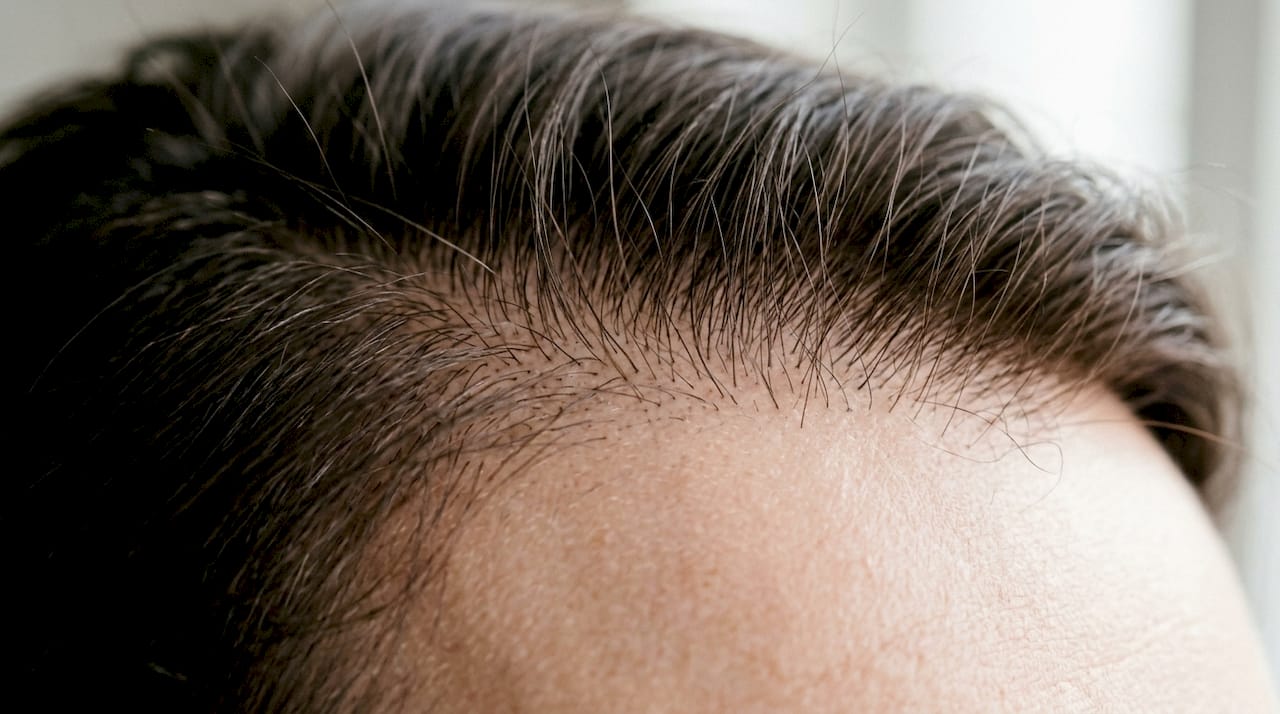
Pro Tip: Ask your dermatologist whether your hair loss is still active before committing to any procedure. Treating active loss without stabilizing it first reduces long-term results significantly.
Typical timelines follow a predictable pattern after a surgical transplant:
- Procedure day: Surgery runs 6–8 hours in a clinical setting under local anesthesia.
- Weeks 2–4: Transplanted hair sheds. This is normal and expected.
- Month 3: New hair growth begins emerging from relocated follicles.
- Months 9–12: Full results become visible as hair thickens and matures.
What are the main hair restoration methods?
Hair restoration techniques fall into two broad categories: surgical and non-surgical. Each has distinct advantages, cost structures, and recovery profiles.
Surgical methods
FUE (Follicular Unit Extraction) removes individual follicular units directly from the donor area using a small punch tool. There is no linear scar, and recovery is faster than FUT. FUE suits patients who prefer shorter haircuts or have limited donor density.
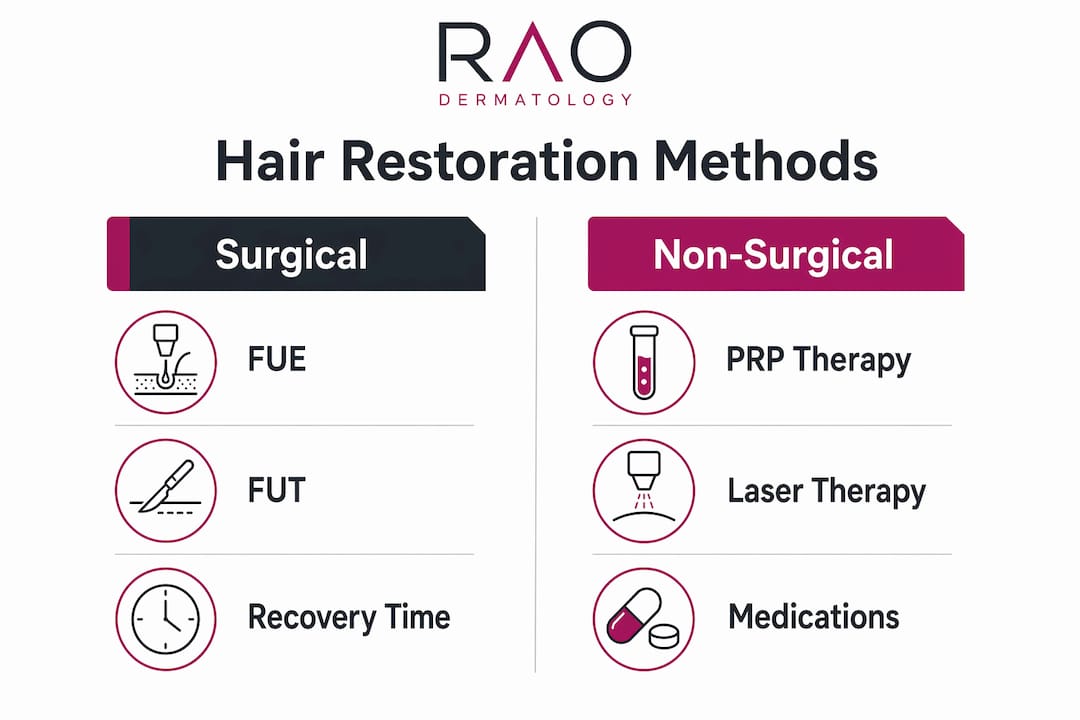
FUT (Follicular Unit Transplantation) removes a strip of scalp from the donor area, which is then dissected into individual grafts. FUT allows surgeons to harvest a larger number of grafts in a single session. It leaves a linear scar but delivers high graft counts for patients with significant hair loss.
Non-surgical methods
PRP therapy concentrates growth factors from your own blood and injects them into the scalp. PRP sessions cost $500–$1,500 each and typically require multiple sessions plus annual maintenance. The results are gradual and work best for early-stage thinning.
Laser therapy uses low-level light to energize follicles. Devices range from clinical units to at-home caps, with costs spanning a few hundred to several thousand dollars. For a detailed breakdown of laser therapy options, Raodermatology’s clinical blog covers the clinical evidence behind each device type.
Medications like FDA-approved minoxidil and finasteride slow loss and support regrowth. They work best as part of a combined plan rather than standalone treatments.
| Method | Invasiveness | Recovery time | Permanence | Approx. cost |
|---|---|---|---|---|
| FUE | Surgical | 7–10 days | Permanent | High |
| FUT | Surgical | 10–14 days | Permanent | High |
| PRP therapy | Minimal | None | Requires maintenance | $500–$1,500/session |
| Laser therapy | Non-invasive | None | Requires ongoing use | Hundreds to thousands |
| Medications | Non-invasive | None | Requires ongoing use | Low to moderate |
A combination of medical and surgical treatments consistently produces better outcomes than either approach alone. Medications stabilize ongoing loss while surgery restores density in areas already thinned.
Who is a good candidate for hair restoration?
Not every patient experiencing hair loss is ready for a transplant. Candidacy depends on several medical and practical factors that a qualified dermatologist evaluates before recommending any procedure.
Diagnosing the cause of hair loss is the first and most critical step. Androgenetic alopecia (pattern baldness) responds well to surgical restoration. Alopecia areata, telogen effluvium, or scalp infections require different treatment entirely. Misdiagnosis leads to ineffective treatment and wasted resources. A board-certified dermatologist rules out reversible causes before any restoration plan begins.
Key evaluation criteria include:
- Donor density: The back and sides of the scalp must have enough healthy follicles to cover the target area without thinning the donor zone.
- Hair loss pattern: Specialists use the Norwood scale to map current and projected loss, which shapes the hairline design.
- Age: Younger patients with active, progressing loss may need to wait or combine surgery with stabilizing medications first.
- Scalp health: Scarring, inflammation, or poor circulation affects graft survival rates.
- Realistic expectations: Patients expecting full density restoration in one session often need recalibration. Most achieve natural coverage, not the hair count of their youth.
Overharvesting the donor area is one of the most serious and irreversible mistakes in hair restoration surgery. Donor follicles are finite. A skilled surgeon plans each session to preserve enough donor density for future procedures if needed.
Pro Tip: Request scalp mapping using the Norwood scale before your procedure. It shows how your hairline will age naturally over time and prevents a design that looks artificial in 10 years.
What can patients expect during and after treatment?
Understanding the full arc of a hair restoration procedure reduces anxiety and sets accurate expectations. Here is what the process typically looks like from procedure day through full recovery.
- Procedure day: You arrive at the clinic, the donor area is shaved and numbed with local anesthesia, and the surgeon extracts and implants grafts over 6–8 hours. You are awake throughout and can watch a film or listen to music.
- Days 1–5: The scalp is tender and slightly swollen. Small scabs form around each graft site. You follow a strict post-care protocol to protect new grafts.
- Weeks 2–4: Transplanted hairs shed. This phase, called shock loss, is temporary and normal. It happens because follicles enter a resting phase after the trauma of relocation.
- Month 3: Fine new hairs begin to emerge. Growth is uneven at first and the texture may differ from your existing hair.
- Months 6–9: Hair thickens noticeably. Most patients see a clear improvement in coverage during this phase.
- Months 9–12: Full results appear as transplanted hair matures to its final thickness and length.
Shock loss surprises many patients who were not warned about it. Knowing it is a predictable, temporary phase prevents unnecessary alarm. Post-procedure care typically includes gentle washing protocols, avoiding direct sun exposure, and refraining from strenuous exercise for two weeks. Combining the recovery period with a PRP treatment plan can accelerate graft survival and improve overall density outcomes.
What are the benefits of hair restoration?
The benefits of hair restoration extend beyond cosmetic improvement. Transplanted hair that comes from DHT-resistant donor follicles grows permanently at its new location. That permanence is the defining advantage over every non-surgical option.
Key benefits include:
- Permanent results: Relocated follicles keep their genetic resistance to balding and continue growing for life.
- Natural appearance: Modern FUE techniques place individual follicular units at angles that match natural hair growth direction, making results indistinguishable from native hair.
- Psychological improvement: Restoring a natural hairline consistently improves self-confidence and reduces social anxiety related to hair loss.
- Low long-term maintenance: Once transplanted hair is established, it requires no special products or ongoing medical treatment to maintain.
Realistic expectations matter here. Transplanted hair does not stop the progression of hair loss in untransplanted areas. Patients who do not use stabilizing medications like minoxidil or finasteride alongside surgery may see continued thinning around the restored zone over time. The best outcomes come from treating hair restoration as one part of a broader, long-term hair health plan.
Key Takeaways
Hair restoration delivers permanent results when the right method is matched to the right patient through accurate diagnosis, careful planning, and realistic expectations.
| Point | Details |
|---|---|
| Donor dominance drives permanence | Transplanted follicles resist DHT and keep growing for life at their new location. |
| Diagnosis comes before treatment | Identifying the cause of hair loss is critical; treating the wrong condition wastes time and money. |
| Methods vary by invasiveness and cost | FUE and FUT are permanent surgical options; PRP and laser therapy require ongoing sessions. |
| Shock loss is normal | Temporary shedding after transplant is expected and resolves within weeks as regrowth begins. |
| Combined plans outperform single treatments | Pairing surgery with medical therapy stabilizes ongoing loss and improves long-term density. |
What I have learned from watching patients go through this process
The patients who get the best results from hair restoration are almost never the ones who rushed into surgery. They are the ones who spent time understanding their loss pattern, stabilized active shedding first, and worked with a specialist who was honest about what surgery could and could not do.
The most common mistake I see is patients fixating on hairline design without thinking about where their hair loss will be in 10 or 15 years. A hairline that looks perfect at 35 can look disconnected and artificial at 50 if the surrounding native hair continues to thin. Using the Norwood scale for scalp mapping before any procedure is not optional. It is the difference between a result that ages well and one that requires corrective work later.
Shock loss also causes more distress than almost any other part of the process. Patients who were not warned about it often panic and assume the procedure failed. Every patient deserves a clear, upfront explanation of what to expect in weeks two through four. That conversation alone reduces post-procedure anxiety dramatically.
My honest advice: choose a board-certified dermatologist or hair restoration specialist with documented experience in both surgical and non-surgical methods. A specialist who only offers one approach will always recommend that approach. You deserve an evaluation that considers your full picture.
— Krunal
Hair restoration services at Raodermatology
Raodermatology brings over 25 years of dermatological expertise to both surgical and non-surgical hair restoration. With locations across California, New Jersey, and New York, the practice offers personalized evaluations that start with accurate diagnosis and end with a treatment plan built around your specific hair loss pattern and goals.

Whether you are exploring PRP therapy, considering a surgical transplant, or simply trying to understand your options, Raodermatology’s clinical team provides the medical foundation you need to make a confident decision. Patients have access to the full range of hair restoration services alongside the broader dermatology treatment options available across all locations. Schedule a consultation to get a clear, honest assessment of what is possible for your hair.
FAQ
What is hair restoration in simple terms?
Hair restoration is a medical process that improves hair coverage by relocating your own follicles to thinning areas or stimulating dormant follicles to regrow. It includes both surgical transplants and non-surgical treatments like PRP and laser therapy.
How long does it take to see results after a hair transplant?
New growth typically begins around month 3, with full results visible between 9 and 12 months after the procedure. Patience is required because transplanted follicles go through a natural resting and regrowth cycle.
Is hair restoration effective for everyone?
Hair restoration works best for patients with androgenetic alopecia and sufficient donor density. It is not effective for all types of hair loss, which is why diagnosing the underlying cause before treatment is critical.
What is the difference between FUE and FUT?
FUE extracts individual follicular units one by one, leaving no linear scar and allowing faster recovery. FUT removes a strip of scalp to harvest a larger number of grafts in one session, making it better suited for patients with extensive hair loss.
Does transplanted hair fall out permanently?
No. The initial shedding after a transplant, called shock loss, is temporary. Transplanted follicles retain their genetic resistance to DHT and resume permanent growth within a few months of the procedure.
Recommended
Filed under: