
Discover why treating sun damage is vital for skin health. Protect your skin, reduce cancer risk, and restore cellular function today!

Sun damage is a biological dysfunction caused by UV radiation that permanently alters how skin cells function, repair, and defend themselves. Up to 80% of visible skin aging results from photoaging rather than the natural aging process. That single fact reframes the entire conversation. Treating sun damage is not a cosmetic luxury. It is a medical necessity that protects your long-term skin health, reduces cancer risk, and restores how your skin behaves at a cellular level. Understanding why treat sun damage matters is the first step toward doing something meaningful about it.
Why does sun damage harm your skin biologically?
Sun damage, known clinically as photoaging, goes far deeper than a tan or a sunburn. UV exposure impairs DNA repair, disrupts collagen production, and weakens the skin’s immune surveillance system. These are not surface-level problems. They are changes at the cellular and metabolic level that accumulate silently over years.
Intrinsic aging is the gradual, genetically programmed slowdown of skin cell renewal. Photoaging is different. It is an accelerated, externally driven dysfunction caused by chronic UV exposure. The two processes look similar on the surface, with wrinkles, sagging, and uneven tone, but photoaging produces far more aggressive collagen breakdown and a much higher risk of abnormal cell growth.
Here is what UV radiation does to your skin biology:
- DNA strand breaks: UVB radiation directly damages the DNA in skin cells, creating mutations that the body’s repair systems struggle to fully correct over time.
- Chronic inflammation: UV exposure triggers a persistent low-grade inflammatory response that degrades collagen and elastin fibers faster than normal aging.
- Collagen and elastin loss: UV radiation activates enzymes called matrix metalloproteinases that break down the structural proteins responsible for skin firmness and elasticity.
- Immune suppression: Chronic UV exposure reduces the density of Langerhans cells, the skin’s front-line immune defenders, raising the risk of abnormal cell changes going undetected.
“Sun damage is a biological dysfunction causing chronic inflammation and altered skin cell metabolism.” Treating it requires a medical approach, not just a cosmetic one.
The distinction between intrinsic aging and photoaging matters because it changes the treatment strategy entirely. Photoaged skin needs active intervention to reduce inflammation, stimulate repair, and monitor for precancerous changes.
What are the most effective treatments for sun-damaged skin?
Treating photoaged skin requires a layered approach that combines daily topical care with periodic procedural interventions. No single product or treatment reverses all the damage. The goal is to reduce chronic inflammation, stimulate collagen production, and improve the skin’s ability to repair itself.
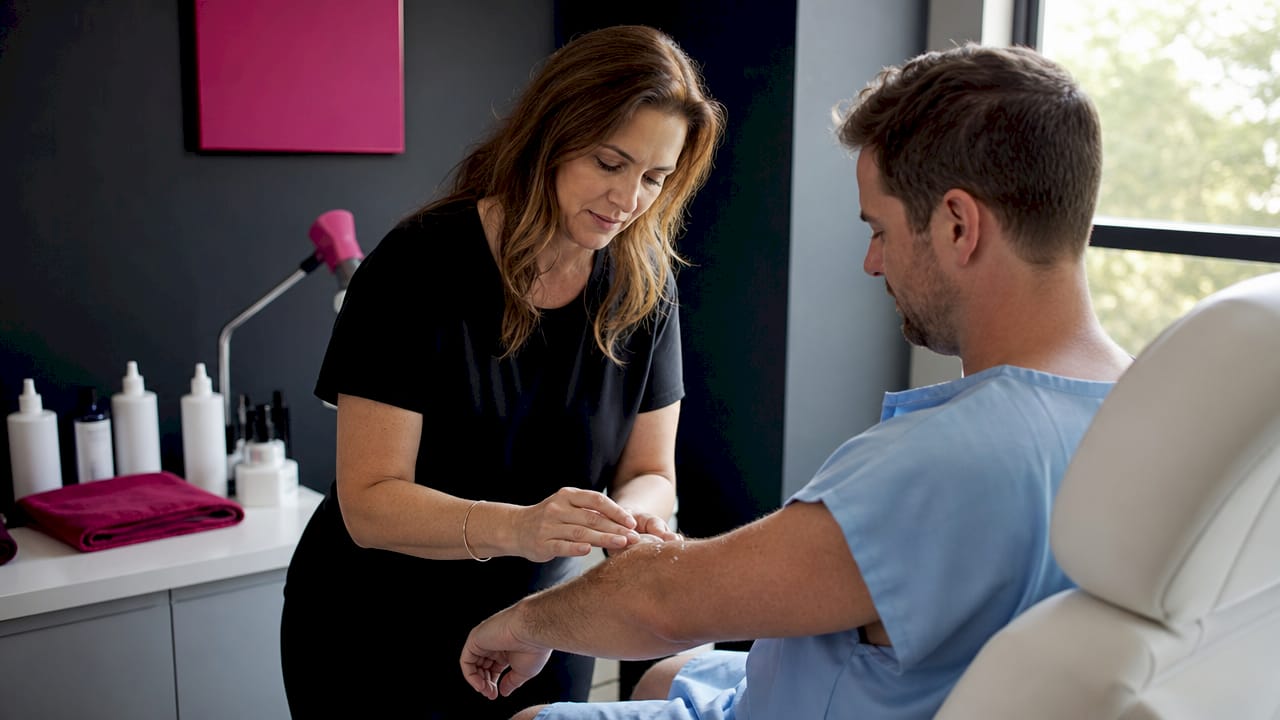
Daily topical regimen
Daily broad-spectrum sunscreen SPF 45+ combined with retinoids, Vitamin C, niacinamide, and peptides forms the foundation of any sun damage skin care plan. Each ingredient targets a different aspect of photoaging. Retinoids accelerate cell turnover and stimulate collagen. Vitamin C neutralizes free radicals and brightens uneven pigmentation. Niacinamide reduces inflammation and strengthens the skin barrier. Peptides signal fibroblasts to produce more collagen.
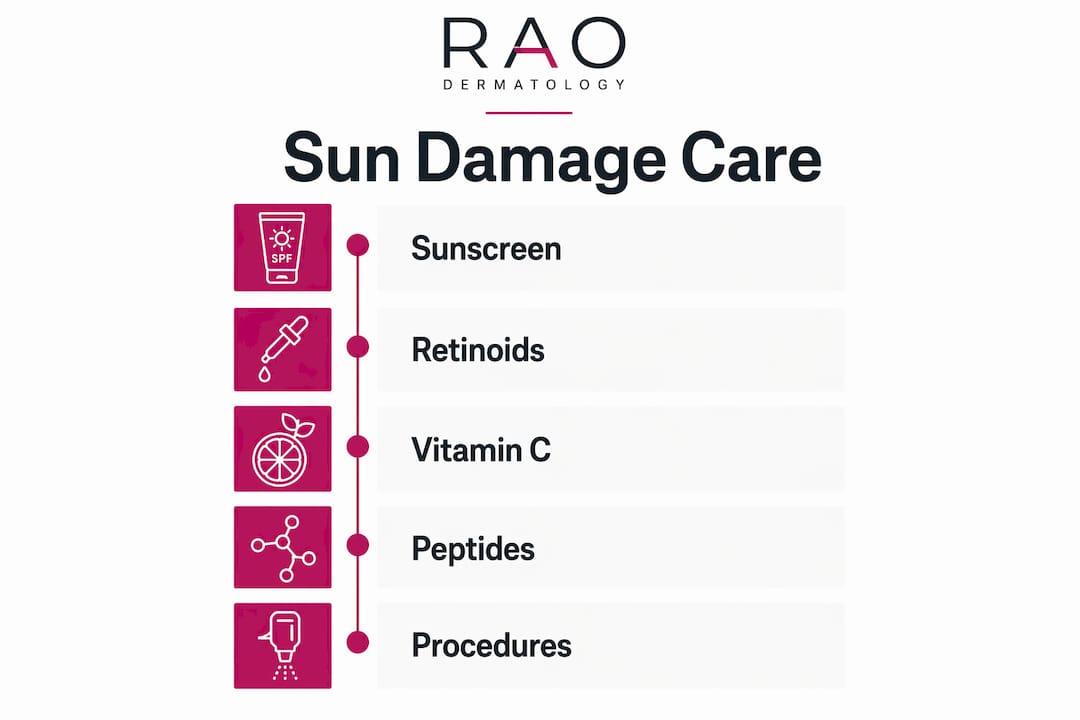
Consistency in routine matters more than using many active ingredients at once. A simple, well-executed daily routine of cleansing, antioxidant serum, moisturizer, and SPF outperforms an overcrowded shelf of products applied inconsistently.
Procedural treatments
- Laser skin resurfacing: Non-ablative and ablative lasers stimulate neocollagenesis through controlled injury to the dermis. Improvements in fine lines and pigmentation accumulate across multiple sessions.
- Microneedling: Creates micro-channels in the skin that trigger a wound-healing response, boosting collagen and elastin production. Effective for texture and mild laxity.
- Chemical peels: Chemical peels improve superficial skin changes including uneven tone and rough texture, though they have limited effect on deep wrinkles or severe structural damage.
- Retinoid creams: Prescription-strength retinoids remain one of the most evidence-backed topical treatments for photoaging, improving cell turnover and collagen density over months of consistent use.
Pro Tip: Schedule aggressive procedural treatments like ablative lasers or deep chemical peels in autumn or winter. Lower UV exposure during those months significantly reduces the risk of post-procedure hyperpigmentation and complications.
One important limit to understand: cellular DNA damage from UV is permanent. Treatments focus on improving skin behavior and reducing chronic inflammation, not erasing what has already happened at the genetic level. That is a realistic and still highly worthwhile goal.
Why is sun protection critical during and after treatment?
Sun protection is not optional during a treatment program. It is the factor that determines whether your treatments work or backfire.
Topical actives like retinoids increase photosensitivity, meaning your skin becomes more vulnerable to UV damage while you are actively trying to repair it. Without strict daily SPF 30–45+ use, you can worsen the very damage you are trying to correct. This is one of the most common and costly mistakes people make when starting a photoaging treatment plan.
Sunscreen does more than prevent sunburn. Daily broad-spectrum SPF use:
- Prevents further collagen degradation caused by UVA radiation
- Reduces the risk of new pigmentation changes and melasma triggered by UV exposure
- Protects against additional DNA strand breaks that raise skin cancer risk
- Preserves the results of procedural treatments by shielding newly stimulated collagen
Effective sun protection habits go beyond applying SPF in the morning. Reapplication every two hours during outdoor exposure, wearing UPF-rated clothing, and seeking shade during peak UV hours (10 a.m. to 4 p.m.) all contribute to meaningful protection. You can read more about building these habits in Raodermatology’s sun safety guide.
Pro Tip: Apply your SPF as the last step of your morning routine, after all serums and moisturizers. Layering SPF over actives ensures full UV-blocking coverage without diluting the sunscreen’s protective film.
What are the long-term benefits of treating sun damage?
Treating photoaged skin delivers measurable improvements in both appearance and biological function. Setting realistic expectations about what those improvements look like helps you stay consistent with your plan.
| Benefit | What to expect |
|---|---|
| Improved skin texture | Smoother surface with reduced rough patches after consistent topical and procedural care |
| More even skin tone | Reduction in dark spots and uneven pigmentation through retinoids, Vitamin C, and laser treatments |
| Reduced fine lines | Gradual improvement in superficial lines as collagen production increases over months |
| Stronger skin barrier | Better hydration retention and reduced sensitivity as the skin’s structure is restored |
| Lower skin cancer risk | Reduced chronic inflammation and improved immune surveillance with consistent SPF and monitoring |
Non-surgical treatments like lasers and microneedling improve texture and pigmentation effectively, but they cannot correct severe skin laxity. For patients with significant structural sagging caused by decades of photoaging, surgical intervention may be the only option that produces meaningful correction.
The most important long-term benefit is not cosmetic. Treating sun damage effectively restores the metabolic and immune functions of the skin, reducing the chronic inflammation that drives both accelerated aging and skin cancer development. That is the outcome worth prioritizing. Raodermatology’s skin rejuvenation services are designed around exactly this goal, combining medical and cosmetic approaches to improve how your skin functions, not just how it looks.
Ongoing sun protection and a consistent skin care routine are non-negotiable after treatment. Without them, photoaging resumes and the gains from procedural work erode within months.
Key Takeaways
Treating sun damage addresses a biological dysfunction, not just a cosmetic concern, making consistent medical care and daily sun protection the two most critical factors in long-term skin health.
| Point | Details |
|---|---|
| Sun damage is biological | UV radiation causes permanent DNA changes, chronic inflammation, and collagen loss that require active treatment. |
| Layered treatment works best | Combine daily SPF 45+, retinoids, and Vitamin C with periodic procedural treatments for the best outcomes. |
| Timing procedural treatments matters | Schedule ablative lasers and deep peels in autumn or winter to reduce hyperpigmentation risk. |
| SPF protects your investment | Retinoids and other actives increase photosensitivity, making daily broad-spectrum sunscreen non-negotiable. |
| Realistic expectations improve adherence | Treatments improve skin function and appearance significantly, but cannot erase existing DNA damage. |
Sun damage is a medical issue, not just a mirror problem
Most people come to a dermatologist asking how to look better. That is a completely valid reason to seek care. But after years of working in this field, what I find most striking is how many patients do not realize that the wrinkles, spots, and rough texture they want to address are actually signs of a deeper biological problem.
Sun damage does not just age your face. It changes how your skin cells communicate, repair themselves, and respond to threats. When I see a patient with significant photoaging, I am not just thinking about pigmentation or fine lines. I am thinking about chronic inflammation, impaired immune surveillance, and the elevated risk of abnormal cell changes that come with it. The difference between medical and cosmetic dermatology is exactly this: one treats the surface, the other treats the system.
The patients who get the best results are the ones who understand that this is ongoing management, not a one-time fix. They commit to daily SPF, they stick with their retinoid even when it causes initial irritation, and they come back for follow-up. Skin type and timing matter enormously in choosing the right treatment sequence. A protocol that works well for one patient can cause post-inflammatory hyperpigmentation in another if the timing or skin preparation is wrong.
My honest advice: do not wait until the damage is severe to seek evaluation. Earlier intervention means more options, better outcomes, and a lower risk of the changes that require surgical correction. The biology does not pause while you decide.
— Krunal
Raodermatology’s approach to sun-damaged skin
Raodermatology brings over 25 years of medical and cosmetic dermatology expertise to patients across California, New Jersey, and New York. The practice combines skin cancer prevention and detection with advanced cosmetic therapies, addressing both the biological risks and visible effects of photoaging in one coordinated care plan.
Whether you are concerned about suspicious spots, uneven pigmentation, or the long-term effects of chronic sun exposure, Raodermatology’s team of experienced dermatologists builds personalized treatment plans grounded in medical evidence. From prescription topical regimens to laser resurfacing and chemical peels, the full range of treatment options is available under one practice. Schedule a consultation to get a clear picture of your skin’s current health and a realistic plan for improving it.
FAQ
Why is treating sun damage more than a cosmetic concern?
Sun damage causes permanent DNA changes, chronic inflammation, and weakened immune surveillance in skin cells. These biological effects raise the risk of skin cancer and accelerate aging well beyond what any cosmetic treatment can address alone.
What is the most important step in any sun damage skin care plan?
Daily broad-spectrum sunscreen SPF 45+ is the single most foundational step. Without it, active treatments like retinoids and laser procedures cannot deliver their full benefit and may worsen photosensitivity.
Can sun damage be fully reversed?
UV-induced DNA damage is permanent at the cellular level. Treatments significantly improve skin texture, tone, and function, but the goal is to restore healthier skin behavior rather than erase all prior damage.
When is the best time to schedule procedural treatments for sun damage?
Autumn and winter are the preferred seasons for aggressive procedural treatments like ablative lasers and deep chemical peels. Lower UV exposure during those months reduces the risk of hyperpigmentation and post-procedure complications.
How do I know if my sun damage needs medical evaluation?
Any new or changing spots, rough patches that do not resolve, or areas of persistent discoloration warrant a professional dermatology evaluation. Early assessment through skin cancer screening is the most reliable way to rule out precancerous changes.
Recommended
Filed under: