
Discover the top laser therapy options to achieve better skin results. Learn how to choose the right treatment for your unique needs!
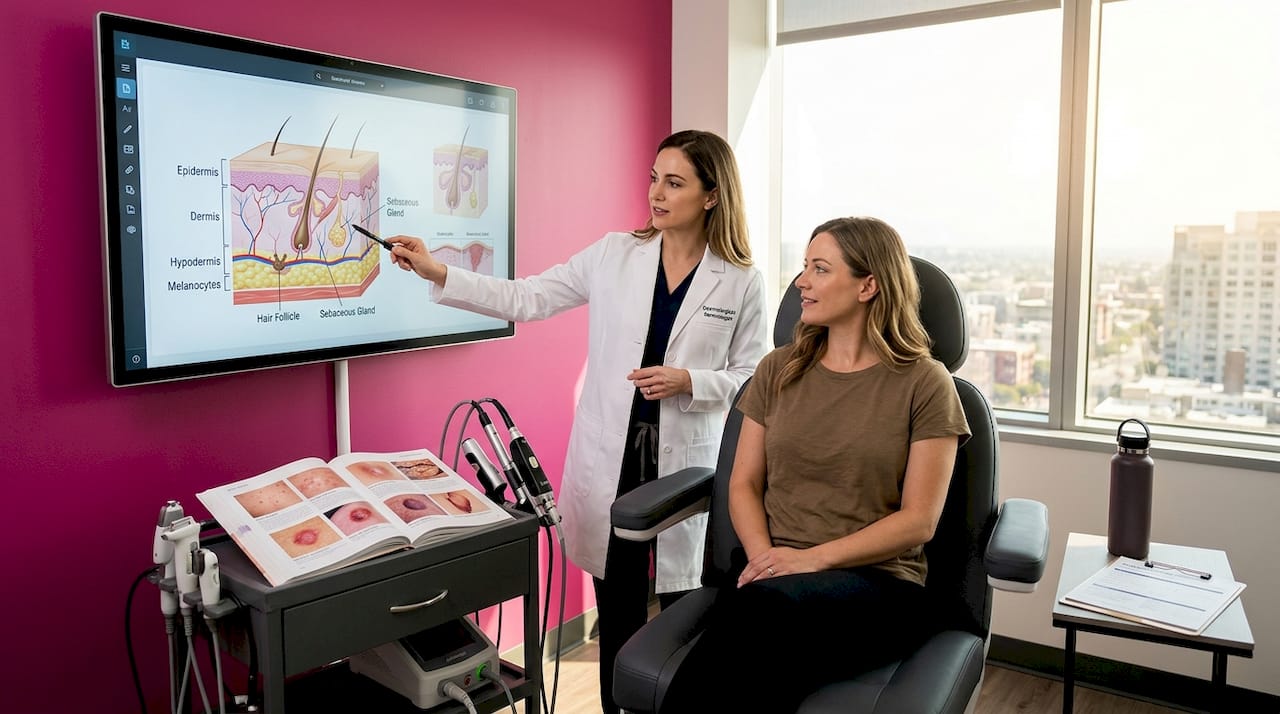
Choosing the right laser treatment feels overwhelming when you’re staring at a list of acronyms, wavelengths, and brand names that all promise the same thing. Whether you’re dealing with rosacea that flares every season, age spots from years of California sun, or acne scars you’ve been covering with foundation for decades, the options are genuinely confusing. At Rao Dermatology, we see this every day across our California, New Jersey, and New York offices. Patients want clarity, not sales pitches. This guide walks you through exactly how to evaluate your options, which lasers actually deliver, and how to match the right treatment to your skin.
Table of Contents
- How to evaluate laser therapies: Safety, skin type, and goals
- Leading laser options: How each type works and who benefits
- Comparing your options: Effectiveness, recovery, and safety
- Choosing your best fit: Personalized picks for common concerns
- Why most patients overlook combination therapies—and what works best
- Explore advanced laser therapies with board-certified experts
- Frequently asked questions
Key Takeaways
| Point | Details |
|---|---|
| Match laser to skin type | Choose a laser that aligns with your skin tone and treatment goals to ensure safety and results. |
| Know downtime and risks | Ablative lasers give dramatic results with longer recovery while non-ablative options need more sessions but involve less risk. |
| Combine for best outcomes | Mixing laser types delivers more comprehensive results than relying on a single device. |
| Choose board-certified experts | Selecting providers with board certification ensures safer and more effective laser treatments. |
How to evaluate laser therapies: Safety, skin type, and goals
Before booking any laser appointment, you need a framework. Skipping this step is how patients end up disappointed or, worse, dealing with side effects that take months to resolve. The most important starting point is your skin type, your specific concern, and how much downtime you can realistically handle.
Match the laser to your skin type. Ablative lasers like CO2 and Er:YAG deliver dramatic results for severe texture issues, deep wrinkles, and significant scarring, but they carry real risk for post-inflammatory hyperpigmentation (PIH) in medium to darker skin tones. Non-ablative options like Fraxel and Clear+Brilliant are gentler, require a series of treatments, and suit a broader range of skin types. Pulsed Dye Lasers (PDL) and Intense Pulsed Light (IPL) handle color and vascular concerns well across many skin types, though darker tones need careful provider selection.
Here are the core criteria to weigh before any consultation:
- Skin tone compatibility: Always ask whether the device is safe for your Fitzpatrick skin type (the dermatological scale from I to VI).
- Target concern: Vascular issues like redness and broken capillaries need different energy than brown spots or wrinkles.
- Downtime tolerance: Ablative lasers give faster results but may require one to two weeks of healing. Non-ablative treatments mean you can often return to work the same day.
- Number of sessions: Some lasers need only one or two treatments; others require a series of three to six sessions spaced weeks apart.
- Provider experience: The device is only as good as the person calibrating it for your skin.
- Combination potential: Many concerns respond better to blended treatments than to one device alone. Ask your dermatologist about sequencing options.
Pro Tip: If you have a medium to dark skin tone and are exploring laser choices for skin tone, ask specifically about Nd:YAG or PDL lasers. These wavelengths are designed to minimize the risk of PIH, which is one of the most frustrating and common post-treatment complications for darker skin.
Now that you know the selection criteria, let’s walk through the leading laser therapy options and what each offers.
Leading laser options: How each type works and who benefits
With the basics in mind, let’s look at the standout laser devices, what they treat best, and who makes an ideal candidate for each.
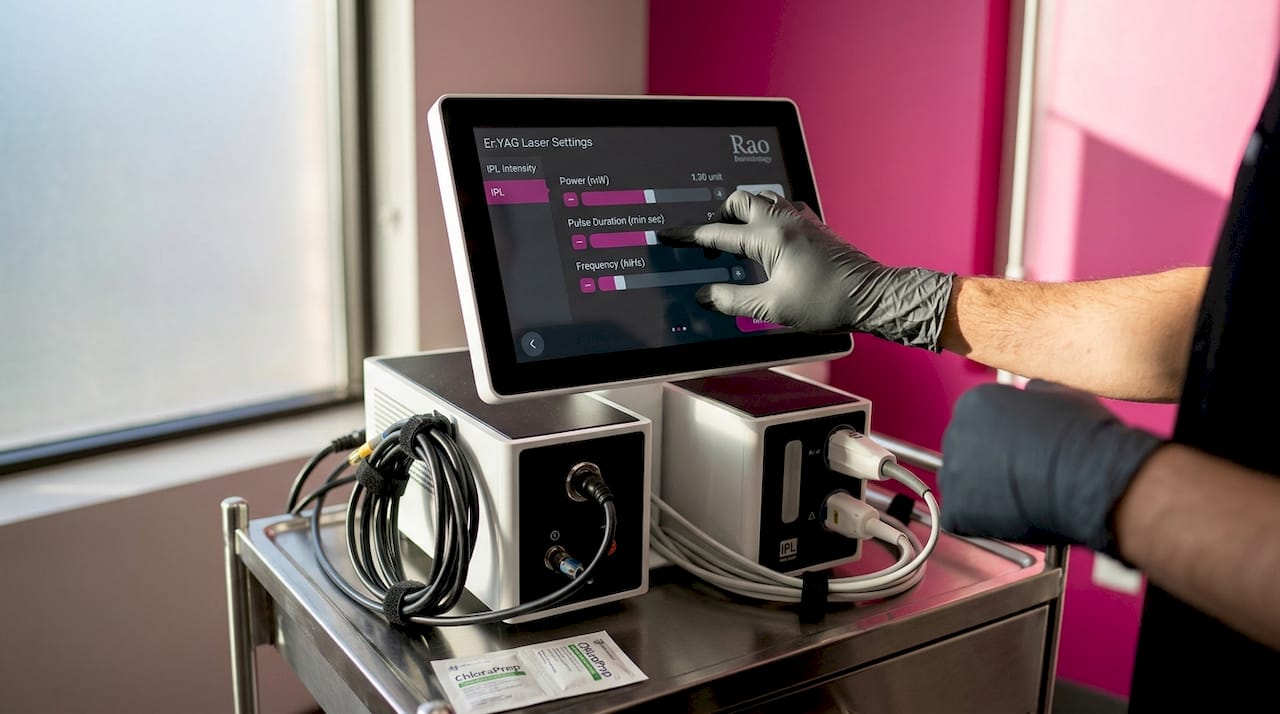
Pulsed Dye Laser (PDL). The PDL is widely considered the gold standard for vascular skin concerns. It emits a concentrated beam of yellow light absorbed by hemoglobin in blood vessels, targeting redness, broken capillaries, rosacea, and even some types of scars. PDL efficacy research shows 55 to 65 percent recovery rates in scar remodeling and strong outcomes for inflammatory vascular conditions. Results often appear after one to two sessions. Because the wavelength targets red pigment rather than melanin, it is safest for lighter to medium skin types, though careful settings can extend use to some medium tones.
Erbium YAG (Er:YAG). This is the resurfacing workhorse for fine lines, mild to moderate acne scars, and uneven texture. It ablates the outer skin layers with precision and less thermal spread than CO2, meaning faster healing and less risk of pigment disruption. A recent meta-analysis on skin rejuvenation shows Er:YAG delivers superior “excellent” response rates compared to IPL across multiple outcome categories, making it a strong choice when texture is the primary issue.
Intense Pulsed Light (IPL). Technically not a laser (it uses broad-spectrum light), IPL is highly versatile for sun spots, diffuse pigmentation, and mild redness. It requires more sessions than ablative lasers, typically three to six, but recovery is minimal. Many patients schedule it on a Friday and return to work Monday. IPL works best on lighter skin tones and can be combined with resurfacing treatments for more skin rejuvenation impact.
CO2 laser. This is the most powerful tool in the resurfacing category. CO2 lasers vaporize damaged skin layers and stimulate significant collagen remodeling, producing the most dramatic improvement in deep wrinkles, pronounced scars, and severely sun-damaged skin. The tradeoff is real: recovery takes one to two weeks or more, and the risk of PIH is highest here, especially in medium to darker skin. For the right candidate on lighter skin with significant concerns, results can be transformative after a single session.
Nd:YAG laser. This laser’s longer wavelength (1064nm) passes deeper into the skin with less melanin absorption at the surface, making it the safest option for more about laser procedures in darker skin tones. It is effective for hair removal, deeper vascular lesions, and certain pigment concerns. If you have Fitzpatrick type IV, V, or VI skin, Nd:YAG is almost always part of the conversation.
Comparing your options: Effectiveness, recovery, and safety
To help narrow your decision, here’s how the top therapies stack up and ways you can combine them for the best results.
| Laser type | Best for | Skin types | Recovery | PIH risk |
|---|---|---|---|---|
| Pulsed Dye Laser (PDL) | Rosacea, redness, vascular | I–III (some IV) | 2–7 days | Low to moderate |
| Erbium YAG | Texture, fine lines, scars | I–IV | 5–10 days | Low to moderate |
| IPL | Sun spots, broad pigment | I–III | 1–2 days | Low |
| CO2 laser | Deep wrinkles, severe scars | I–III | 10–14 days | High |
| Nd:YAG | Hair, pigment, vascular (dark skin) | I–VI | 1–5 days | Very low |
| Fraxel / non-ablative | Overall rejuvenation, texture | I–IV | 2–5 days | Low to moderate |
Combination treatments are rising quickly in popularity because no single device fixes every concern simultaneously. A patient with redness, brown spots, and early textural changes, for example, might benefit from a sequence of PDL to calm vascular issues, followed by IPL for pigmentation, and then a light Er:YAG pass for texture. Understanding laser therapy pros and cons helps you see why no single device wins every category.
For patients with deeper wrinkles who also want to address pigmentation, wrinkle reduction lasers like CO2 or Er:YAG can be sequenced carefully with lighter treatments to optimize both concerns. According to published clinical guidance, combining therapies like IPL plus resurfacing delivers more complete rejuvenation than either approach alone, and image-guided ablation is emerging for precision in medical applications including basal cell carcinoma.
“For patients with darker skin, Nd:YAG and PDL lasers are preferred to reduce the risk of post-procedure pigmentation.”
That is not just a safety caution. It reflects real patient outcomes when the wrong device is used on the wrong skin type, outcomes that can take six to twelve months to fully resolve.
Choosing your best fit: Personalized picks for common concerns
Now, let’s match your specific needs to the ideal laser, so you can make a personalized and safe decision.
-
Rosacea and chronic redness. Pulsed Dye Laser is the first-line choice. It directly targets the blood vessels feeding visible redness and broken capillaries. Most patients see meaningful improvement after two to three sessions with minimal downtime. Maintenance sessions every six to twelve months help keep results stable.
-
Age spots and sun damage. IPL is the practical starting point for broad, diffuse sun damage, especially if you have lighter skin. It requires more sessions but involves almost no downtime. For deeper or denser spots, Er:YAG or Fraxel may accelerate results. Explore age-reversing options if you want a fuller picture of how lasers fit into overall rejuvenation strategies.
-
Deep acne scars and wrinkles. CO2 and Er:YAG lasers produce the most significant structural improvement. CO2 is for patients with the most severe concerns who can commit to real downtime. Er:YAG offers a middle ground with solid resurfacing outcomes and less recovery burden.
-
Hair removal or pigment concerns in darker skin. Nd:YAG is consistently the safest choice. Its wavelength avoids surface melanin interference, making it effective without the PIH risk that ablative or IPL treatments carry. Laser hair removal for dark skin requires a provider experienced with darker tones because settings must be calibrated carefully every single session.
-
Mixed concerns (redness, pigment, texture together). This is where combination protocols shine. Talk to your dermatologist about sequencing multiple devices across several appointments. Research on edge case recommendations confirms that combined approaches produce more complete, longer-lasting outcomes than single-modality treatment.
Pro Tip: If you divide your time between California, New York, and New Jersey, do not assume every clinic uses the same devices or protocols. Before starting a multi-session treatment, confirm that your chosen practice can maintain continuity of care across locations or has a clear referral plan. Laser settings and clinical notes should follow you.
Why most patients overlook combination therapies—and what works best
Here’s an honest take that most laser marketing will not tell you: the search for a single “best” laser is mostly the wrong question.
Patients come in asking for “the CO2 laser” or “the Fraxel treatment” after reading a magazine feature or social media post. They’ve been conditioned to think one breakthrough device will fix everything. But the dermatologists with the strongest clinical outcomes are not loyal to one device. They’re loyal to the patient’s skin and they reach for multiple tools accordingly.
Consider a real-world scenario. A patient in her mid-40s presents with rosacea-driven redness, scattered sunspots from years of New Jersey summers, and mild textural changes around her cheeks. A single CO2 session might address the texture but worsen her redness temporarily and carry PIH risk if her skin skews toward the medium range. A better protocol starts with two PDL sessions to calm vascularity, follows with IPL for pigmentation once the redness is controlled, and finishes with a light Er:YAG pass for texture. The total timeline is longer, but the results are more balanced, safer, and more durable.
Emerging evidence supports this blended approach strongly. Image-guided ablation for precision medical cases is one of the most exciting developments, particularly for treating lesions where accuracy matters as much as cosmetic outcome. This technology is beginning to change how dermatologists approach basal cell carcinoma and other medical dermatology applications.
Understanding how laser combinations work gives you a major advantage going into any consultation. You stop asking “which one is best?” and start asking “which ones work best together for my specific skin?” That shift in thinking leads to significantly better results.
“The real edge in modern dermatology is not choosing one laser—but combining the right ones, tailored for your skin.”
We believe that deeply. And after 25 years of treating patients from Manhattan to the Bay Area, the evidence backs it every time.
Explore advanced laser therapies with board-certified experts
At Rao Dermatology, we know that reading an article is just the first step. What matters next is sitting down with a provider who can look at your skin, understand your goals, and build a protocol that actually makes sense for your life.

Our board-certified dermatologists offer the full spectrum of comprehensive laser therapy services across our California, New Jersey, and New York locations, from medical applications like vascular lesion treatment to advanced cosmetic dermatology care for rejuvenation and tone correction. Our licensed estheticians also provide esthetic laser services for patients seeking lighter-touch, maintenance-level treatments. Every plan we build is personalized, device-agnostic, and grounded in clinical evidence. If you’re ready to stop guessing and start seeing real results, we’re ready to help.
Frequently asked questions
Which laser is safest for darker skin tones?
Nd:YAG and Pulsed Dye Lasers are the safest options for darker skin tones because their wavelengths minimize interaction with surface melanin, significantly reducing post-inflammatory hyperpigmentation risk.
How many sessions are typically needed for visible results?
Most non-ablative lasers require three to six sessions for full results, while ablative lasers like CO2 and Er:YAG typically need only one to two sessions but involve longer recovery periods.
Can I combine lasers for better results?
Yes, combination treatments such as IPL followed by resurfacing are increasingly common and clinically supported as the most effective way to address multiple skin concerns simultaneously.
What qualifies a dermatologist to perform laser treatments?
Board certification in dermatology and documented hands-on experience with a range of laser devices are the two most important qualifiers for safety and consistent outcomes. Always verify credentials before treatment.
Is laser therapy covered by insurance?
Cosmetic laser treatments are generally not covered by insurance, but procedures performed for documented medical reasons, such as treating vascular lesions or certain skin conditions, may qualify for partial coverage depending on your plan.
Recommended
Filed under: