
Explore the common causes of skin cancer, including UV radiation and genetics. Learn to identify your risk and protect your skin effectively.

Excessive UV radiation exposure is the leading cause of skin cancer, damaging DNA in skin cells and triggering the uncontrolled cell growth that defines malignancy. Skin cancer is the most commonly diagnosed cancer in the United States, and most cases trace directly to sun exposure or artificial UV sources like tanning beds. Understanding the common causes of skin cancer gives you the knowledge to recognize your own risk profile, take protective steps, and know when to see a dermatologist. The causes extend beyond sunlight alone, covering genetic factors, environmental chemicals, and even skin areas that never see the sun.
1. UV radiation from sunlight: the primary driver
UV radiation damages DNA in skin cells, causing mutations that can lead to basal cell carcinoma, squamous cell carcinoma, and melanoma. Two types of UV rays reach the skin: UVA and UVB. UVA penetrates deeply and accelerates skin aging and indirect DNA damage. UVB hits the surface and causes the direct DNA breaks most strongly linked to cancer.
Both types work together to raise risk. Chronic, low-level exposure from daily outdoor activity accumulates over decades. Intense, acute exposure that causes sunburn is equally dangerous, particularly during youth.
- UVA rays penetrate clouds and glass, meaning indoor exposure near windows still counts.
- UVB rays are strongest between 10:00 AM and 4:00 PM and drive most sunburns.
- Both types suppress local immune responses in the skin, reducing the body’s ability to catch and destroy mutated cells early.
Pro Tip: Apply broad-spectrum SPF 30 or higher sunscreen every morning, even on overcast days, since UVA passes through cloud cover without triggering a visible burn.
2. Sunburns, especially during youth
Five or more blistering sunburns between ages 15 and 20 increase melanoma risk by 80%. That single statistic reframes how parents and young adults should think about sun protection. A sunburn is not a temporary inconvenience. It is a sign of significant DNA damage that the body may never fully repair.
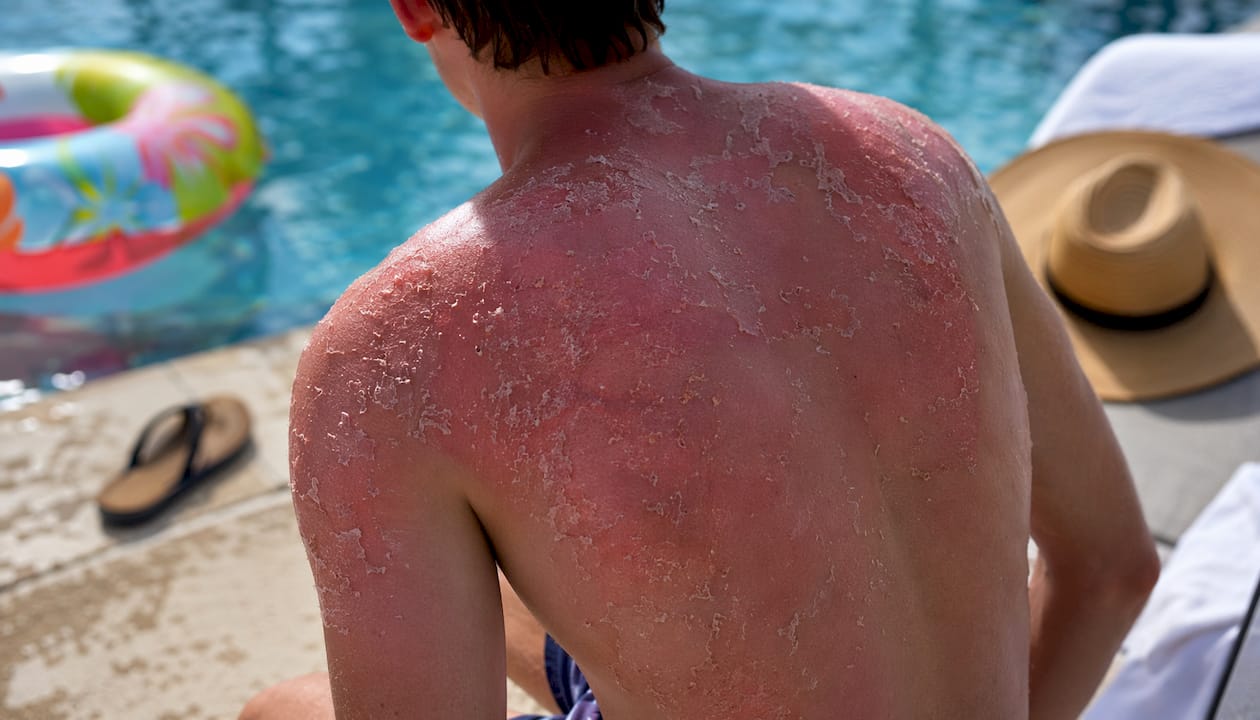
Each blistering burn during adolescence compounds lifetime risk. The skin “remembers” every burn through accumulated mutations. Adults who burned frequently as children carry that elevated risk regardless of how carefully they protect themselves later.
3. Indoor tanning and artificial UV sources
Indoor tanning exposes the skin to UV levels that often exceed midday summer sunlight. Tanning beds and sunlamps are classified as carcinogens by the World Health Organization. They are especially dangerous for people under 35, who show a disproportionately higher rate of early-onset melanoma linked to tanning bed use.
The appeal of a controlled tan creates a false sense of safety. There is no such thing as a safe base tan. Any color change from UV exposure, whether from the sun or a lamp, signals DNA damage.
4. Fair skin, freckling, and light hair color
People with fair skin, red or blond hair, and freckles have lower concentrations of melanin, the pigment that absorbs UV radiation before it reaches deeper skin layers. Less melanin means less natural protection. These individuals burn faster and accumulate UV damage more quickly than those with darker skin tones.
Skin type is not destiny, but it is a clear signal to be more vigilant. Patients with these characteristics benefit from earlier and more frequent dermatological screenings. Raodermatology evaluates each patient’s skin type as part of a personalized risk assessment.
5. Many or atypical moles
Patients with multiple atypical moles carry a significantly elevated melanoma risk and require regular dermatologist-led surveillance. Atypical moles, also called dysplastic nevi, have irregular borders, uneven color, and larger-than-average size. They are not cancer, but they are warning signs that the skin’s cell regulation is already under stress.
Having more than 50 ordinary moles also raises risk. A dermatologist can map and photograph moles over time to detect changes that the naked eye might miss between visits. Self-monitoring alone is not sufficient for this group.
6. Weakened immune system
A suppressed immune system reduces the body’s ability to identify and destroy abnormal skin cells before they multiply. Immunosuppression from organ transplants, HIV, or long-term use of immunosuppressive medications raises skin cancer risk substantially. Organ transplant recipients, in particular, develop squamous cell carcinoma at rates far higher than the general population.
The immune system acts as a continuous surveillance system for the skin. When that system is compromised, cancerous cells that would normally be eliminated can take hold and grow.
7. Family history and genetic conditions
A family history of skin cancer raises your personal risk, particularly for melanoma. Genetic mutations passed through families can reduce the skin’s natural ability to repair UV-induced DNA damage. Skin cancer risk is not limited to older adults. Genetic predispositions and intense childhood sunburns can cause early onset, making clinical surveillance in at-risk families a priority from a young age.
Rare genetic disorders like xeroderma pigmentosum eliminate the skin’s ability to repair UV damage entirely. People with this condition develop skin cancers in childhood without aggressive protection. Even without such extreme conditions, a family history of melanoma warrants a conversation with a dermatologist about screening frequency. You can review a detailed skin cancer risk factors list to understand how genetic factors interact with lifestyle choices.
8. Exposure to arsenic and industrial chemicals
Arsenic, coal tar, and industrial chemicals are established environmental skin cancer triggers. Arsenic exposure, which can occur through contaminated well water, certain pesticides, or occupational contact, is directly linked to squamous cell carcinoma. Coal tar, used historically in roofing and road paving, carries similar carcinogenic properties.
Workers in agriculture, mining, construction, and certain manufacturing industries face elevated exposure to these compounds. Protective equipment and workplace safety protocols reduce risk, but cumulative exposure over a career still matters. Patients in these occupations should disclose their work history to their dermatologist.
9. Geographic and environmental factors
Elevation and latitude both affect UV intensity. At higher altitudes, the atmosphere is thinner and filters less UV radiation. People living in mountainous regions or near the equator receive stronger UV doses year-round. Reflected UV from snow, sand, and water amplifies exposure further.
Outdoor workers, including farmers, construction crews, and landscapers, accumulate UV exposure across thousands of hours over a career. Without consistent protective measures, this chronic exposure creates the same risk profile as repeated recreational sunburning. Geographic location is a fixed factor, but behavior within that environment is not.
10. Repeated skin trauma and chronic scarring
Skin cancer can develop in areas of chronic injury, scarring, or inflammation. Squamous cell carcinoma, in particular, has been documented in long-standing burn scars, chronic wounds, and areas affected by conditions like lupus or lichen sclerosus. The repeated cycle of tissue damage and repair creates conditions where DNA errors can accumulate.
This is a less commonly discussed skin cancer trigger, but it is clinically significant. Any wound that fails to heal, or a scar that changes in texture or appearance, warrants professional evaluation. Dismissing these changes as “just scarring” delays diagnosis.
11. Skin cancer in hidden areas
Skin cancer can develop under fingernails, on the soles of the feet, in the groin, and in the underarms. These are areas that patients rarely examine and that even routine medical checkups can miss. Melanoma under a toenail, for example, is frequently mistaken for a bruise and goes undiagnosed for months.
Physicians must inspect these less obvious areas during skin exams. A full-body exam by a trained dermatologist covers every surface, including sites that never see sunlight. Early skin cancer detection in these hidden locations dramatically improves treatment outcomes.
Pro Tip: During monthly self-exams, use a hand mirror to check the soles of your feet, between your toes, and your scalp. Ask a partner to check your back and the back of your neck.
What to watch for: common visual signs
Knowing what to look for is as important as knowing the causes. Key warning signs include:
- A sore or lesion that does not heal within four weeks
- A flat, scaly patch that is red or brown
- A pearly or waxy bump, often on the face or ears
- A mole that changes in size, shape, or color
- Dark streaks under a fingernail or toenail
- A rough, crusty growth that bleeds easily
High-risk individuals need more frequent exams than the standard annual checkup recommended for the general population. If you have multiple risk factors, ask your dermatologist about a personalized screening schedule. You can also use a structured guide to skin self-examination between professional visits.
Key takeaways
UV radiation is the primary cause of skin cancer, but genetic factors, environmental chemicals, and chronic skin trauma each contribute independently and in combination.
| Point | Details |
|---|---|
| UV radiation drives most cases | Both UVA and UVB damage skin cell DNA, with cumulative and acute exposure both raising risk. |
| Youth sunburns have lasting impact | Five or more blistering burns between ages 15 and 20 raise melanoma risk by 80%. |
| Hidden areas need examination | Skin cancer develops under nails, on soles, and in the groin, areas patients rarely check. |
| Genetic and medical factors multiply risk | Fair skin, atypical moles, family history, and immunosuppression each elevate susceptibility independently. |
| Environmental chemicals are underrecognized | Arsenic, coal tar, and industrial compounds are confirmed skin cancer triggers beyond UV exposure. |
What 25 years of patient care has taught me about skin cancer risk
The patients who surprise me most are not the ones with obvious risk factors. They are the ones who spent their careers indoors, never tanned intentionally, and still developed squamous cell carcinoma on their lower legs or melanoma under a toenail. Skin cancer risk is genuinely multifactorial, and reducing it to “too much sun” misses a significant portion of the people who need to be in a dermatologist’s chair.
What I have seen repeatedly is that patients underestimate the compounding effect of multiple moderate risk factors. A person with fair skin, a history of one or two bad sunburns, and a job that kept them near windows for 30 years may carry more cumulative risk than someone who vacationed in Florida every summer but has darker skin and no family history. Risk is not a single variable. It is a sum.
The other pattern worth naming: people delay. A changing mole sits unexamined for a year because it “doesn’t hurt.” A non-healing sore gets attributed to dry skin. The biology of skin cancer is forgiving in the early stages and unforgiving once it advances. Catching it early is not about being anxious. It is about being informed. Platforms like PRYM Wellness are making it easier for people to take their health seriously between clinical visits, which I think is genuinely useful for building that habit of attention.
The most protective thing anyone can do is combine consistent sun protection with regular professional exams and honest self-monitoring. That combination catches the vast majority of skin cancers at a stage when treatment is straightforward.
— Krunal
Skin cancer care at Raodermatology
Raodermatology offers skin cancer prevention, detection, and treatment across its California, New Jersey, and New York locations, backed by more than 25 years of clinical experience under Dr. Babar K. Rao.

Whether you have identified a new risk factor, noticed a suspicious skin change, or simply want a baseline full-body exam, Raodermatology’s team provides thorough, personalized evaluations. The practice uses advanced diagnostic tools and offers treatment options ranging from topical therapies to surgical excision. Explore the full range of dermatology services and schedule a consultation at the location nearest to you.
FAQ
What is the most common cause of skin cancer?
Excessive UV radiation from the sun is the most common cause of skin cancer. It damages DNA in skin cells, triggering mutations that lead to basal cell carcinoma, squamous cell carcinoma, and melanoma.
Can skin cancer develop in areas that never see the sun?
Yes. Skin cancer has been found under fingernails, on the soles of the feet, in the groin, and in the underarms. Full-body professional exams are necessary to detect cancers in these hidden locations.
How do sunburns in youth affect skin cancer risk later in life?
Five or more blistering sunburns between ages 15 and 20 increase melanoma risk by 80%. DNA damage from early sunburns accumulates and raises lifetime risk regardless of later sun protection habits.
Who needs more frequent skin cancer screenings?
Patients with immunosuppression, genetic conditions, a family history of skin cancer, or many atypical moles require more frequent exams than the standard annual checkup. A dermatologist can recommend a personalized screening schedule based on individual risk factors.
Are tanning beds a real skin cancer risk?
Tanning beds are classified as carcinogens and are directly linked to early-onset melanoma, particularly in people under 35. There is no safe level of UV exposure from artificial tanning devices.
Recommended
Filed under: