
Discover the different types of skin cancer, their risks, signs, and prevention tips. Stay informed to protect your skin health today!
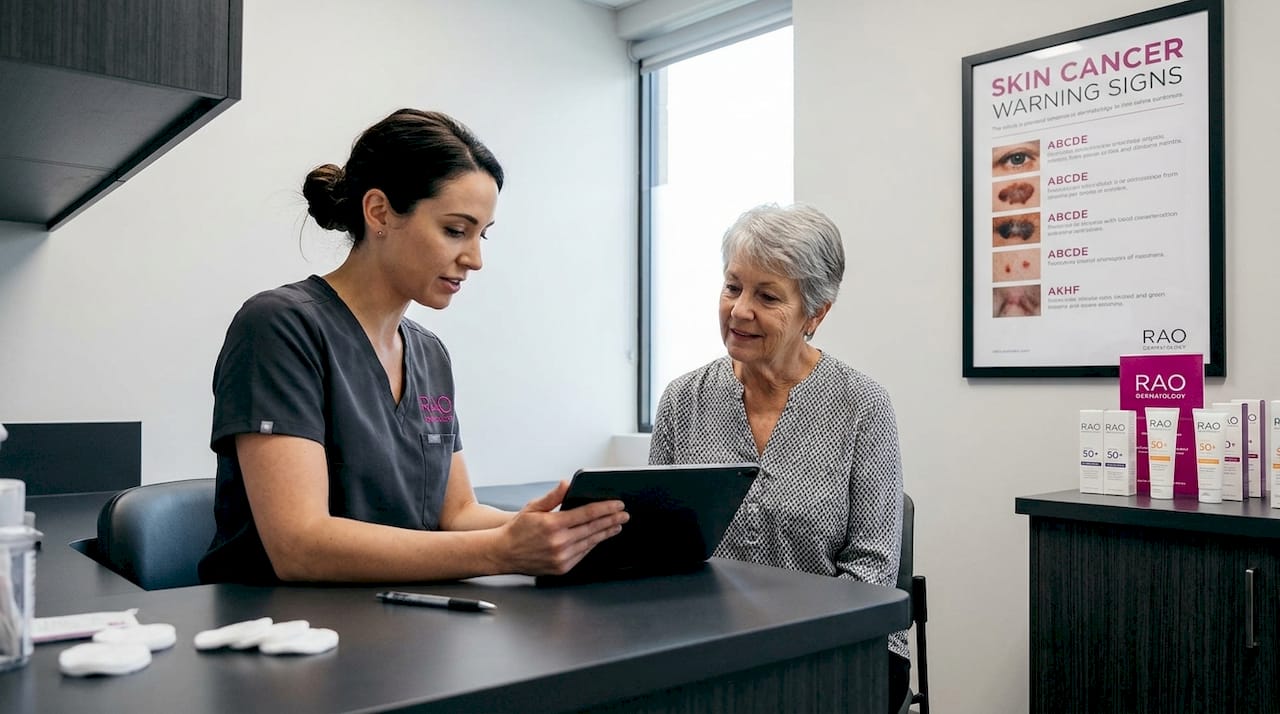
Skin cancer does not care where you live, but where you live can quietly raise your odds. California reports 22.40 new cases per 100,000 residents, New Jersey sits at 21.00, and New York at 17.70, making all three states places where knowing your risk is genuinely important. The problem is that most people lump all skin cancers together, missing the fact that each type looks different, progresses differently, and responds to different treatments. This article breaks down the main types, what to watch for on your own skin, what actually prevents them, and what your treatment options look like today.
Table of Contents
- What are the main types of skin cancer?
- Comparison of skin cancer types: Warning signs and risk factors
- Prevention strategies: What actually works?
- Treatment options for each type: From common to cutting edge
- Why early detection is your best chance—what most guides miss
- How Rao Dermatology can support your skin health
- Frequently asked questions
Key Takeaways
| Point | Details |
|---|---|
| Three main types | Basal cell carcinoma, squamous cell carcinoma, and melanoma are the three main types of skin cancer. |
| Risks vary by state | Skin cancer rates and types differ in California, New Jersey, and New York, with California showing the highest new melanoma cases. |
| Prevention is essential | Sunscreen, protective clothing, and avoiding peak sun hours reduce risk but regular checks are crucial. |
| Early detection matters | Routine skin exams help catch skin cancer early, improving outcomes, even in regions with moderate to high risk. |
| Treatment options | Surgery, immunotherapy, and other treatments vary by type and stage; ask your dermatologist for personalized advice. |
What are the main types of skin cancer?
Skin cancer is not one disease. It is a family of diseases, each originating from different cells in your skin, each with its own behavior and level of danger.
The three main types are basal cell carcinoma (BCC), squamous cell carcinoma (SCC), and melanoma. Here is a quick breakdown of each:
-
Basal cell carcinoma (BCC): The most common of the three. BCC usually appears as a pearly or waxy bump, a flat flesh-colored or brown scar-like lesion, or a bleeding sore that heals and returns. It grows slowly and rarely spreads to other parts of the body, but it can cause significant local damage if left untreated for years.
-
Squamous cell carcinoma (SCC): The second most common type. SCC typically shows up as a firm red nodule, a flat lesion with a scaly, crusted surface, or a new sore or raised area on an old scar. Unlike BCC, SCC has a higher potential to spread to lymph nodes and distant organs, particularly in people who are immunocompromised.
-
Melanoma: The most dangerous of the three. Melanoma develops in the cells that give your skin its color. It often looks like a mole that changes shape, color, or size, but it can also appear as a new dark streak under a nail or a bruise that does not heal. Because melanoma can spread quickly to other organs, early detection is critical.
Less common types include Merkel cell carcinoma, Kaposi sarcoma, and cutaneous T-cell lymphomas. Merkel cell carcinoma is rare but aggressive, often appearing as a flesh-colored or bluish-red nodule, frequently on the face, head, or neck. Kaposi sarcoma produces red or purple patches on the skin and is more common in people with weakened immune systems. Cutaneous T-cell lymphomas affect the skin over a long period and often resemble eczema or psoriasis in their early stages, making diagnosis tricky.
Pro Tip: Actinic keratosis, a rough, scaly patch caused by years of sun exposure, is not cancer itself, but it is a well-established precursor to SCC. If you spot a persistent rough patch that feels like sandpaper, get it checked. Learn more in this actinic keratosis overview before dismissing it as dry skin.
Comparison of skin cancer types: Warning signs and risk factors
With the main types defined, here is how their features and risks compare, especially in California, New Jersey, and New York.
| Type | Typical appearance | Key risk factors | Primary warning sign |
|---|---|---|---|
| BCC | Pearly bump, bleeding sore | Chronic sun exposure, fair skin, age | Sore that heals then returns |
| SCC | Red nodule, scaly flat lesion | UV exposure, actinic keratosis, immunosuppression | Non-healing wound or crusted patch |
| Melanoma | Irregular mole, dark streak | Family history, sunburns, many moles, fair skin | Changing or asymmetric mole |
| Merkel cell | Bluish-red nodule | UV exposure, older age, weakened immunity | Fast-growing painless nodule |
| Kaposi sarcoma | Red or purple patch | HIV/AIDS, immunosuppression | New colored patch on skin or mouth |
California’s high UV index year-round, combined with its large outdoor-active population, puts residents at elevated risk for all three major types. New Jersey and New York residents face significant UV exposure in summer months, and state-level data confirm that all three states have rates above the national average for several skin cancer categories.
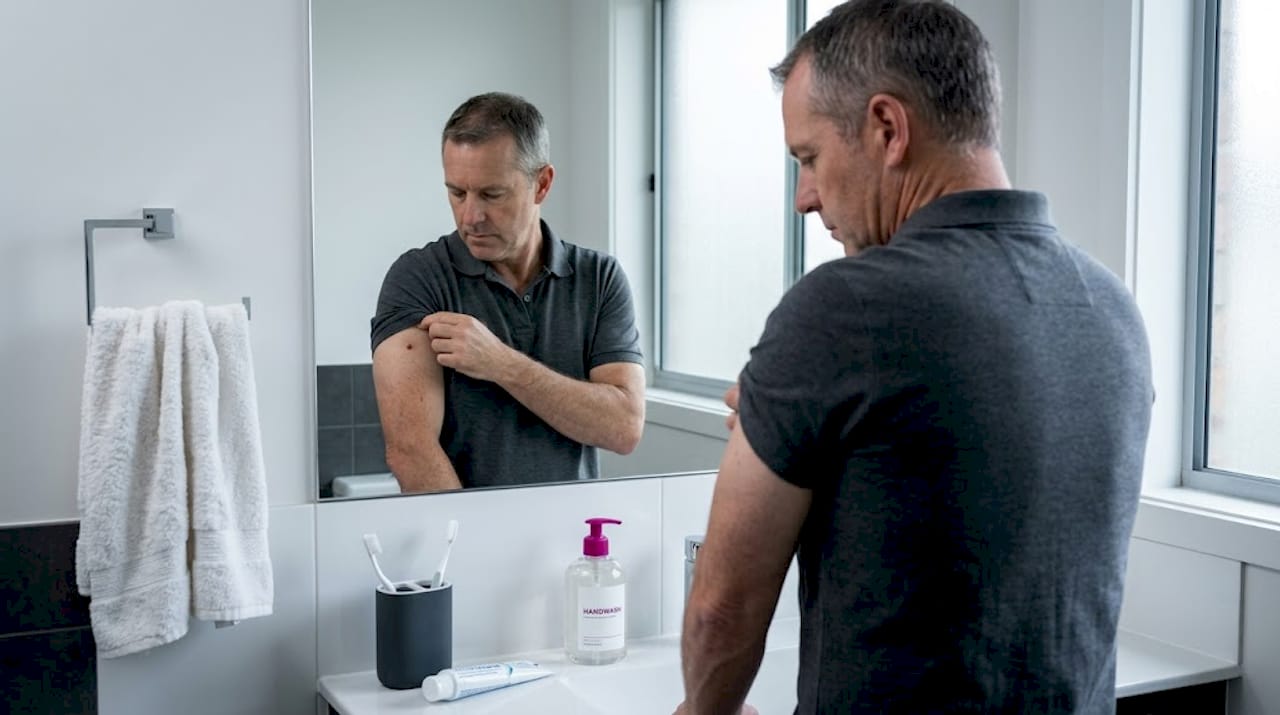
Symptoms to watch for, regardless of your skin tone:
- A mole or spot that changes in size, shape, or color over weeks or months
- A lesion with irregular borders or multiple colors within a single spot
- A sore, pimple, or bump that bleeds easily or does not fully heal within three weeks
- Itching, burning, or tenderness in a spot that has no obvious cause
- A flat patch that is darker than surrounding skin and gradually expands
“In states like California, New Jersey, and New York, where sun exposure is significant and skin cancer rates are measurably above average, catching a suspicious lesion at stage one rather than stage three can be the difference between a quick procedure and a complex, long-term treatment plan. Routine checks are not optional if you are serious about your skin.”
Use this skin cancer detection guide to understand what a professional examination looks for. If you are specifically tracking moles, the melanoma basics resource walks through the ABCDE rule in plain language. And if you are unsure how often to get checked, the annual screening recommendations page clarifies the guidelines by risk level.
Prevention strategies: What actually works?
Once you know your skin cancer risks, you can focus on the most effective ways to prevent them. The good news is that most skin cancers are preventable. The challenge is that prevention requires consistency, not just effort on beach days.
Here are the strategies that have the strongest evidence behind them:
-
Wear broad-spectrum sunscreen every day. Apply at least 1 ounce of SPF 30 or higher sunscreen to all exposed skin, and reapply every two hours when outdoors. SPF 30 blocks about 97% of UVB rays. SPF 50 blocks roughly 98%. The difference is smaller than most people think, which means reapplication matters far more than chasing a higher SPF number.
-
Avoid peak UV hours. UV radiation is most intense between 10 a.m. and 4 p.m. Shifting outdoor activity to early morning or late afternoon is one of the simplest and most underused strategies. This is especially relevant for outdoor workers and athletes in California and New Jersey.
-
Wear protective clothing. Tightly woven fabrics, long sleeves, wide-brim hats, and UV-blocking sunglasses provide physical barriers that no sunscreen can fully replicate. Clothing does not wash off or get missed in application.
-
Eliminate tanning beds entirely. Indoor tanning exposes skin to concentrated UV radiation, significantly increasing BCC, SCC, and melanoma risk. There is no such thing as a safe tan from a tanning bed.
-
Know your family history. If a first-degree relative had melanoma or frequent skin cancers, your risk is meaningfully higher. Consider genetic counseling for skin cancer if you have a strong family history, as it can clarify whether genetic variants are elevating your personal risk.
-
Schedule routine skin checks. Prevention and detection are two different tools. Sunscreen reduces UV damage. A skin check catches what got through anyway.
Pro Tip: Do not treat sunscreen as your only defense. Sunscreen alone, even applied perfectly, does not block 100% of UV radiation. Layering it with shade, clothing, and timing adjustments gives you compounding protection that no single product can match. Check these skin protection tips for a full seasonal approach.
“UV exposure accumulates over a lifetime, not just during vacations. The tan you got at 22 contributed to your risk at 52. If you live in California, New Jersey, or New York and spend meaningful time outdoors year-round, prevention is not a summer project. It is a daily habit.”
Your complete screening guide outlines exactly when and how to schedule professional skin checks based on your personal risk profile.
Treatment options for each type: From common to cutting edge
If prevention falls short, here is what to expect in terms of treatments for each type of skin cancer.
| Type | Standard treatment | Emerging or advanced options |
|---|---|---|
| BCC | Surgical excision, Mohs surgery, cryotherapy | Vismodegib (hedgehog pathway inhibitor), PDT |
| SCC | Excision, Mohs surgery, radiation | Cemiplimab (immunotherapy), PDT for superficial SCC |
| Melanoma | Surgery, immunotherapy, targeted therapy | Combination checkpoint inhibitors, tumor-infiltrating lymphocytes |
| Merkel cell | Surgery, radiation, immunotherapy | Avelumab, pembrolizumab |
For BCC and SCC, surgical removal remains the gold standard. Mohs micrographic surgery is particularly effective for cancers on the face, ears, or nose where tissue preservation matters. The surgeon removes thin layers of tissue and checks each layer under a microscope before removing more, resulting in very high cure rates with minimal scarring.
- BCC treatment paths: Excision or Mohs for localized disease; topical imiquimod or 5-fluorouracil for superficial BCCs; oral hedgehog pathway inhibitors for advanced or inoperable cases
- SCC treatment paths: Excision or Mohs for most cases; radiation when surgery is not possible; systemic immunotherapy with cemiplimab for advanced or metastatic SCC
- Melanoma treatment paths: Surgical excision with wide margins for early-stage disease; combination therapies including immunotherapy and targeted therapy for later stages; radiation or chemotherapy when other options are limited
For people where surgery or standard radiation is not possible, immunotherapy for advanced non-melanoma skin cancers has shown meaningful response rates in recent clinical trials. Photodynamic therapy (PDT) is another option for superficial, non-invasive skin cancers, using light-activated medication to destroy abnormal cells with minimal impact on surrounding healthy tissue.
You can learn more about photodynamic therapy options specifically for actinic keratosis and superficial skin cancers. For more complex melanoma cases, the advanced melanoma care overview explains how our team approaches late-stage cases with current and emerging therapies.
Pro Tip: Before committing to any treatment plan, ask your dermatologist whether you qualify for a clinical trial. For advanced melanoma and rare skin cancers, trials often provide access to therapies not yet widely available, sometimes with better outcomes than standard protocols.
Why early detection is your best chance—what most guides miss
Taking everything into account, here is a practical and sometimes overlooked perspective that can actually shift your long-term outcome.
Most skin cancer content focuses heavily on sunscreen. That is not wrong. It is just incomplete. The uncomfortable reality is that non-melanoma skin cancer mortality has been rising since 2004 even as melanoma mortality declines nationally. Prevention has improved. Detection has not kept pace.
What that means for you practically is this: wearing sunscreen every day while skipping annual skin checks is like eating well but never getting a blood pressure reading. One habit reduces your risk. The other catches the problem before it becomes catastrophic.
Many people assume that if something looks minor, it is minor. But BCC and SCC can quietly expand over years, reaching nerves, bone, or lymph nodes before they ever cause pain. Merkel cell carcinoma can reach an advanced stage within months. Waiting until something “looks serious” is a strategy built on wishful thinking, not biology.
California, New Jersey, and New York residents live in moderate-to-high risk environments. New York’s lower rate likely reflects its denser urban population with more indoor time and greater demographic diversity, not an absence of risk. For people in all three states who spend meaningful time outdoors, the math on annual skin checks is straightforward: the cost of a screening is trivial compared to the cost of treating a cancer caught at stage three versus stage one.
Getting a yearly skin check is the single most actionable item on this list. Everything else on your prevention plan makes it more likely you will never need treatment. A skin check makes sure that if treatment is needed, you get it while it is still simple.
How Rao Dermatology can support your skin health
You now understand how skin cancers differ, what warning signs to watch for, and which prevention and treatment strategies actually move the needle. The next step is making that knowledge personal.

At Rao Dermatology, Dr. Babar K. Rao and our team bring over 25 years of specialized experience to skin cancer prevention, detection, and treatment across California, New Jersey, and New York. Our skin cancer services include full body skin examinations, mole mapping, biopsy evaluation, Mohs surgery coordination, and advanced treatment planning for melanoma and rare skin cancers. Whether you are due for your first screening or managing a complex diagnosis, we tailor every plan to your skin history and risk profile. Explore our full list of services or contact your nearest location to schedule an appointment today.
Frequently asked questions
Which type of skin cancer is most common in California, New Jersey, and New York?
Basal cell carcinoma is the most common type in all three states, but California leads the nation in new melanoma cases, making melanoma awareness especially important there.
What are the first signs of skin cancer?
A new spot, a sore that does not heal within three weeks, or a mole that changes color, size, or shape are the most common early warning signs, particularly if it bleeds or has irregular borders.
How often should you get your skin checked for cancer?
Most dermatologists recommend a full body skin check once a year for average-risk adults, and more frequently if you have fair skin, a personal or family history of skin cancer, or live in a higher-risk state like California or New Jersey.
Is SPF 50 sunscreen much better than SPF 30?
SPF 30 blocks about 97% of UVB rays while SPF 50 blocks roughly 98%, a minimal difference. Pairing either with shade, protective clothing, and consistent reapplication is far more effective than relying on a higher SPF number alone.
Are certain skin cancers more dangerous than others?
Yes. Melanoma is the most dangerous because it can spread rapidly to other organs, while BCC and SCC are far less likely to be life-threatening when caught early, though both require prompt professional treatment to prevent local damage and, in the case of SCC, potential spread.
Recommended
- What Causes Skin Cancer? Understanding Risk Factors and Prevention | Rao Dermatology
- Annual Skin Cancer Screening: Why You Need One Every Year | Rao Dermatology
- Skin Cancer Prevention, Detection & Treatment | Rao Dermatology
- Skin Cancer Awareness Month: 5 Expert Tips to Protect Your Skin in 2024 | Rao Dermatology
- How to prevent skin aging naturally: Guide for women 40+
Filed under: