
Discover what is facial rejuvenation in 2026. Explore the best treatments to restore youthfulness, from Botox to facelifts.
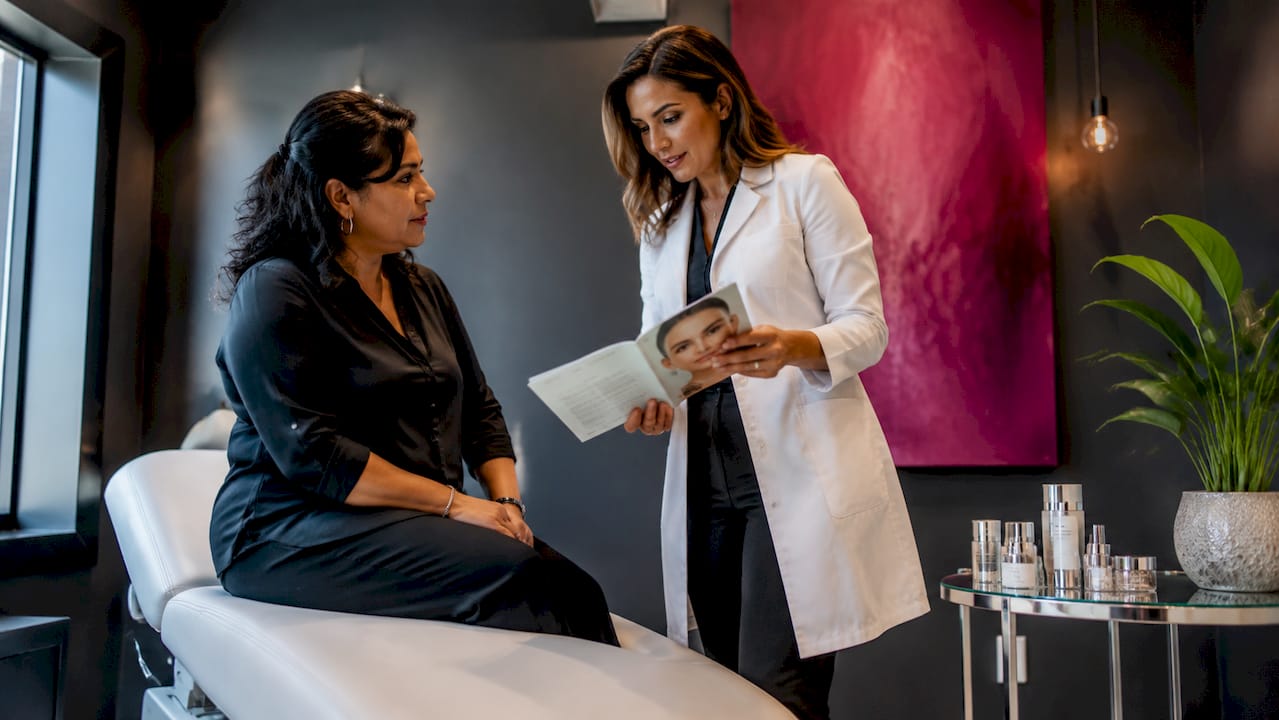
Facial rejuvenation is the process of restoring a youthful appearance through surgical or non-surgical cosmetic procedures that improve skin texture, volume, and facial contour. It covers everything from Botox and dermal fillers to laser resurfacing, chemical peels, and full facelift surgery. The field has expanded significantly, giving patients in 2026 more targeted treatment options than ever before. Whether you want to soften fine lines or address significant sagging, understanding what facial rejuvenation involves is the first step toward making a confident, informed decision.
What is facial rejuvenation and how does it work?
Facial rejuvenation is defined as a category of cosmetic treatments designed to counteract the visible signs of aging by improving skin quality, restoring lost volume, and repositioning facial structures. Aging causes collagen loss, fat redistribution, and skin laxity. These changes show up as wrinkles, hollowed cheeks, jowls, and drooping eyelids. Rejuvenation treatments target one or more of these changes depending on the method used.
Non-surgical options like Botox, dermal fillers, and laser resurfacing work by stimulating collagen production, relaxing facial muscles, or adding volume beneath the skin. Surgical options like facelifts and blepharoplasty (eyelid surgery) physically reposition the deeper layers of facial tissue. Surgical procedures target the SMAS layer, a structural layer below the skin that injectables simply cannot reach. That anatomical distinction explains why surgery produces more dramatic and longer-lasting results for patients with significant sagging.
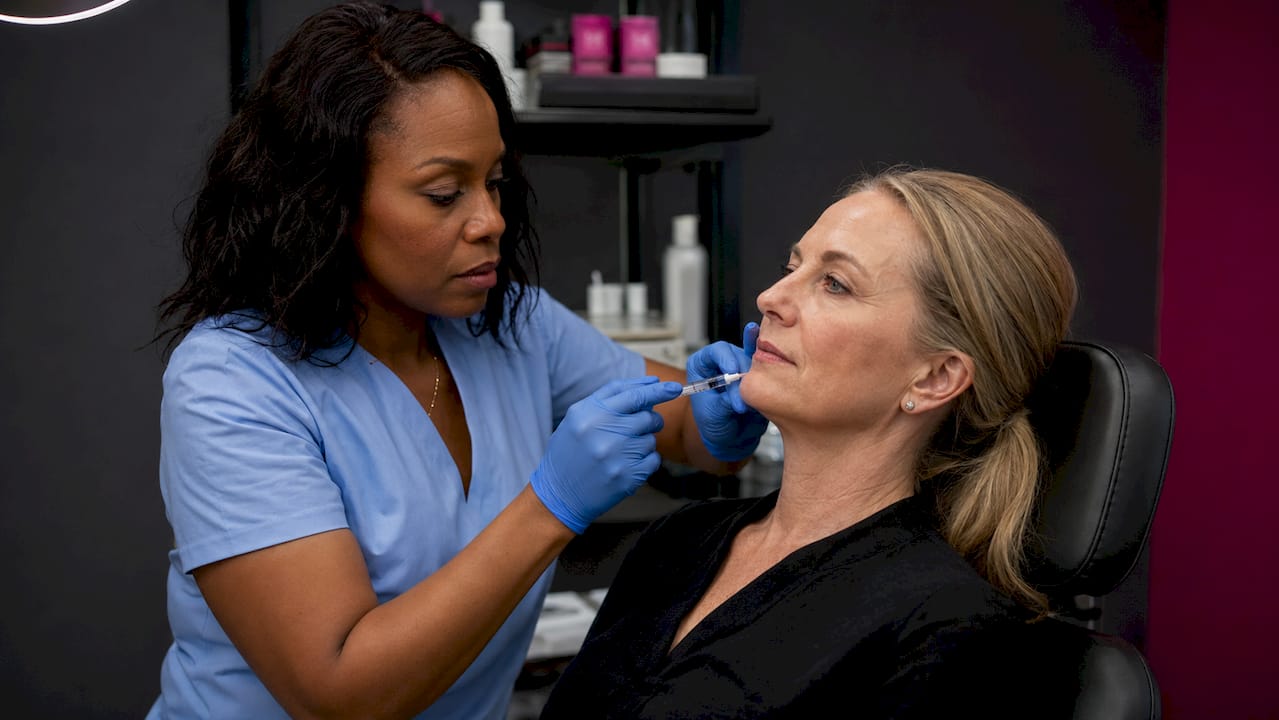
The goal of any facial rejuvenation plan is not to erase every year from your face. It is to restore a refreshed, natural appearance that aligns with how you feel. Treatments are often combined to address multiple concerns at once, such as pairing fillers with laser resurfacing for both volume and skin tone improvement.
What are the main types of facial rejuvenation?
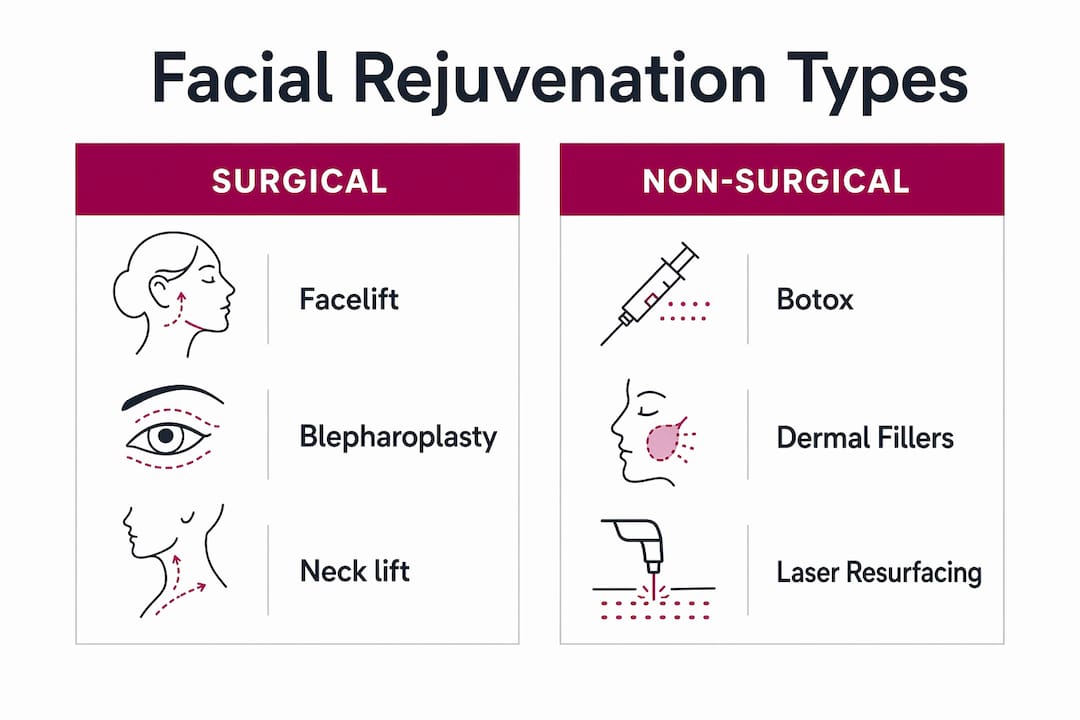
Facial rejuvenation treatments fall into two primary categories: surgical and non-surgical. Each works differently, suits different candidates, and comes with distinct trade-offs in cost, downtime, and longevity.
Surgical facial rejuvenation includes procedures like rhytidectomy (facelift), blepharoplasty, brow lifts, and neck lifts. These procedures physically reposition skin and underlying tissue to correct significant laxity and structural aging. They are best suited for patients with visible jowls, deep sagging, or more than an inch of pinchable skin along the jawline. Surgical results last 7–15 years, making them the most durable option available.
Non-surgical facial rejuvenation includes Botox, dermal fillers, chemical peels, microdermabrasion, laser resurfacing, and radiofrequency treatments. These methods stimulate collagen, relax muscles, or add volume without incisions. They suit patients with mild to moderate aging signs who want results without surgery. Non-surgical treatments require ongoing maintenance every 6–18 months to sustain results.
| Attribute | Surgical | Non-surgical |
|---|---|---|
| Downtime | 2–4 weeks | 1–3 days |
| Longevity | 7–15 years | 6–18 months per cycle |
| Invasiveness | High (incisions, anesthesia) | Low (injections, topical) |
| Best for | Significant laxity, jowls | Mild to moderate aging signs |
| Upfront cost | $8,000–$15,000 | $2,500–$12,000 annually |
Pro Tip: If you are unsure which category fits your concerns, photograph your face in natural light from three angles. If you can pull the skin of your lower face upward and see a clear improvement, surgical lifting may be worth discussing with a board-certified dermatologist or plastic surgeon.
What are the most popular facial rejuvenation techniques?
The most widely used facial rejuvenation techniques each address a specific aging concern. Knowing what each one does helps you ask better questions during a consultation.
- Botox (botulinum toxin): Relaxes the muscles that cause dynamic wrinkles like forehead lines, crow’s feet, and frown lines. Results last 3–4 months. Best for expression-related lines rather than volume loss.
- Dermal fillers (Juvederm, Restylane): Restore volume to cheeks, lips, and under-eye hollows. Fillers cost $650–$1,200 per syringe in 2026, with full-face rejuvenation typically requiring 4–8 syringes. Results last 12–18 months depending on the product used.
- Chemical peels: Remove the outer layer of skin to reduce sun damage, fine lines, and uneven tone. Superficial peels have minimal downtime; deeper peels may require 1–2 weeks of recovery.
- Laser resurfacing (Fraxel, CO2 laser): Targets skin texture, pigmentation, and mild laxity by stimulating collagen remodeling. Results improve over 3–6 months as new collagen forms.
- Microdermabrasion: A gentle exfoliation treatment that improves skin tone and texture with no downtime. Best as a maintenance treatment rather than a primary rejuvenation method.
- Facelift (rhytidectomy): The gold standard for addressing significant facial sagging. Repositions the SMAS layer and removes excess skin for a lifted, refreshed result that lasts a decade or more.
- Blepharoplasty: Corrects drooping eyelids and under-eye bags. Often combined with a facelift or brow lift for a complete upper-face refresh.
Combining treatments produces better results than any single method alone. A common pairing is laser resurfacing with dermal fillers: the laser improves skin quality while fillers restore structural volume. This layered approach is what modern skin rejuvenation programs at specialized dermatology practices are built around.
What do facial rejuvenation treatments cost and how long is recovery?
Cost and recovery time are the two factors that most often determine which treatment a patient chooses. Setting realistic expectations on both fronts prevents disappointment.
The national average for a surgical facelift ranges from $8,000 to $15,000 in 2026. That figure includes surgeon fees, anesthesia, and facility costs. Non-surgical programs cost $2,500–$12,000 annually depending on the combination of treatments used. At first glance, non-surgical looks cheaper. Over a 10-year period, however, cumulative non-surgical costs can exceed the price of a single facelift, making surgery more economical for some patients long-term.
| Treatment | Estimated cost | Recovery time | Longevity |
|---|---|---|---|
| Facelift | $8,000–$15,000 | 2–4 weeks | 7–15 years |
| Blepharoplasty | $3,000–$7,000 | 1–2 weeks | 5–10 years |
| Dermal fillers | $2,500–$8,000/year | 1–3 days | 12–18 months |
| Botox | $300–$600/session | None | 3–4 months |
| Laser resurfacing | $1,000–$5,000 | 3–10 days | 1–3 years |
| Chemical peel | $150–$3,000 | 1–14 days | 6–12 months |
Non-surgical patients are typically social-ready within 24–72 hours. Surgical patients need 2–4 weeks before returning to normal activity, with peak results appearing at 3–6 months. Geographic location, surgeon experience, and procedure complexity all influence final pricing. Practices in New York and California typically charge more than the national average.
Pro Tip: Ask your provider for a multi-year cost projection, not just the price of one session. Seeing the 5-year total for fillers versus a one-time facelift often reframes the decision entirely.
How to choose the right facial rejuvenation treatment
Choosing the right facial rejuvenation approach requires honest self-assessment across four areas: your skin condition, your desired results, your budget, and your tolerance for downtime.
- Assess your aging signs. Mild fine lines and uneven tone respond well to non-surgical options like Botox, peels, and laser treatments. Significant jowling, deep sagging, or excess eyelid skin typically requires surgery to achieve meaningful correction.
- Define your success criteria. A professional consultation focuses on collaboratively defining what success looks like for you specifically, whether that is a sharper jawline, brighter skin, or refreshed eyes. Knowing your goal helps your provider recommend the right path.
- Evaluate your downtime tolerance. If your work or lifestyle cannot accommodate 2–4 weeks of recovery, non-surgical options are the practical starting point. You can always revisit surgery later.
- Consider a preventative strategy. Starting non-surgical maintenance in your 30s or 40s can delay the need for surgery by years. Regular fillers and laser treatments slow the progression of structural aging when started early.
- Match the treatment to your budget over time. Review both the upfront cost and the long-term maintenance commitment. A cosmetic procedure guide from a qualified dermatology practice can help you map out a realistic multi-year plan.
The right choice is not the most expensive or the most aggressive option. No single method is universally best. The best treatment is the one that fits your skin, your schedule, and your goals.
Key takeaways
Facial rejuvenation works best when the treatment type, budget, and recovery tolerance are matched to the individual patient’s specific aging concerns and lifestyle.
| Point | Details |
|---|---|
| Two core categories | Surgical and non-surgical treatments address different degrees of aging and laxity. |
| Longevity vs. maintenance | Surgical results last 7–15 years; non-surgical options require upkeep every 6–18 months. |
| Long-term cost reality | Cumulative non-surgical costs over 10 years can exceed a single facelift investment. |
| Start early with non-surgical | Beginning maintenance in your 30s or 40s can delay the need for invasive surgery. |
| Consultation is the first step | A personalized consultation defines your goals and maps the most appropriate treatment path. |
What I have learned from watching patients choose their path
One thing I have noticed consistently is that patients who do the most research before their consultation tend to make the worst decisions. Not because they are uninformed, but because they arrive with a fixed idea of what they want rather than an open mind about what they need.
The most common mistake is choosing a treatment based on what a friend had done. Skin aging is deeply individual. Two people the same age with similar lifestyles can have completely different structural concerns. One may need volume restoration with fillers. The other may have laxity that only surgery can correct. Treating them the same way produces mediocre results for both.
The second mistake is underestimating the value of a phased approach. Patients who start with non-surgical maintenance in their 30s and 40s often reach their 50s with far less structural correction needed. That is not a coincidence. It reflects the compounding benefit of consistent collagen stimulation and volume preservation over time.
My honest view is that the best facial rejuvenation outcome is one that looks like nothing was done. The goal is not to look younger in an obvious way. It is to look like a well-rested, healthy version of yourself. That requires a provider who listens more than they talk and a patient who is honest about their lifestyle, budget, and expectations.
If you are starting this process, resist the urge to self-diagnose. Book a consultation, bring your questions, and let the clinical assessment guide the conversation. The right treatment plan will not feel like a sales pitch. It will feel like a plan built specifically for you.
— Krunal
Explore facial rejuvenation treatments at Raodermatology
Raodermatology brings 25+ years of expertise in both medical and cosmetic dermatology across California, New Jersey, and New York. Whether you are exploring non-surgical options like fillers and laser resurfacing or considering a more involved procedure, the team at Raodermatology builds treatment plans around your specific goals, skin condition, and lifestyle.
From esthetic and facial services to advanced skin rejuvenation programs, Raodermatology offers the full spectrum of treatments under one practice. Explore the complete range of available services or contact a Raodermatology location near you to schedule a personalized consultation and take the first step toward results that look natural and last.
FAQ
What is facial rejuvenation in simple terms?
Facial rejuvenation is a group of cosmetic treatments that restore a youthful appearance by improving skin texture, restoring volume, and correcting sagging. It includes both surgical procedures like facelifts and non-surgical options like Botox and dermal fillers.
How long do facial rejuvenation results last?
Surgical results typically last 7–15 years, while non-surgical treatments require maintenance every 6–18 months. The longevity depends on the specific procedure, the patient’s age, and their ongoing skin care routine.
Is facial rejuvenation painful?
Most non-surgical treatments involve minimal discomfort, with topical numbing applied before injections or laser procedures. Surgical procedures are performed under anesthesia, and post-operative discomfort is managed with prescribed medication during the 2–4 week recovery period.
Who is a good candidate for facial rejuvenation?
Adults with visible signs of aging, including wrinkles, volume loss, or skin laxity, are generally good candidates. Patients with significant sagging or jowl formation are better suited for surgical options, while those with mild to moderate concerns can benefit from non-surgical treatments.
Can you combine different facial rejuvenation treatments?
Yes. Combining treatments, such as laser resurfacing with dermal fillers, produces more complete results than any single method alone. A qualified dermatologist can design a layered plan that addresses both skin quality and structural volume in a single program.
Recommended
Filed under: