
Discover why people seek anti-aging treatments. From boosting self-confidence to enhancing happiness, explore the motivational benefits today.
Why people seek anti-aging treatments
The short answer: most people pursue age-defying treatments to feel better about themselves, not just to look younger. A multicenter study of 511 patients found the top motivations were:
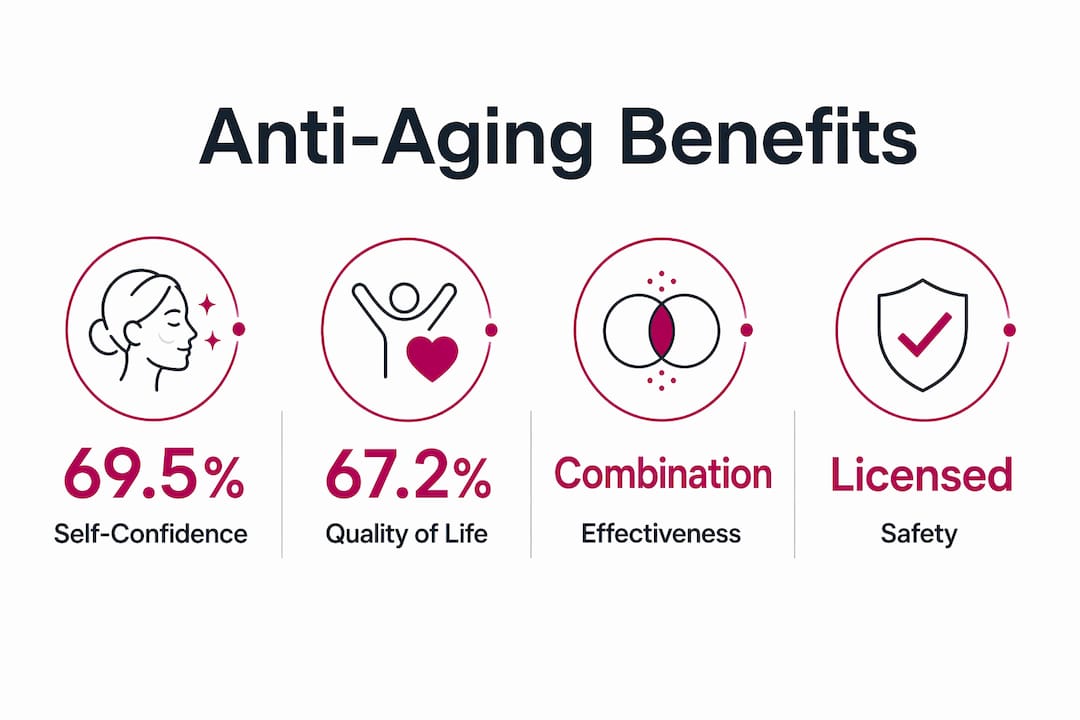
- Boosting self-confidence was the top motivation, with 69.5% of patients citing it as their primary reason for seeking cosmetic procedures.
- Feeling happier or improving quality of life motivated 67.2% of respondents.
- Treating oneself or celebrating a milestone was reported by 61.3%.
- Looking good professionally and preventing worsening of a skin condition were also cited, with more than 53% seeking procedures to prevent worsening of a condition or symptoms.
Age shapes the picture too. Adults under 45 are nearly twice as likely to seek treatments specifically to prevent aging compared to those 45 and older (25.5% vs. 14.7%). Younger patients tend to think in terms of prevention; older patients focus more on correction and quality of life.
What really drives the desire for treatment?

The motivations run deeper than vanity. A systematic review of 21 studies covering more than 9,000 patients found that everyday intrapersonal, social, and behavioral factors, not psychological disorders, drive most people toward cosmetic facial procedures.
Intrapersonal factors dominate. Preventing negative self-appraisals about appearance, and wanting to feel like an authentic version of oneself, are among the strongest internal drivers. Research published in the Journal of the American Academy of Dermatology found that people interested in cosmetic procedures felt more authentic after facial aesthetics treatments, scoring lower on authenticity before treatment (mean 4.96) compared to those not seeking procedures (mean 6.46). Two weeks after a minimally invasive procedure, patients reported feeling significantly more like their true selves.
Social and behavioral factors add another layer. The desire to maintain social standing, fit in professionally, and manage how others perceive you are real motivators, especially as media consumption shapes appearance expectations. Patients who decide independently to pursue treatment, rather than responding to external pressure, consistently report better satisfaction outcomes.
Pro Tip: If you’re considering a procedure, ask yourself honestly whether the motivation comes from within. Research consistently shows that internal motivation predicts better long-term satisfaction than social pressure does.
Common anti-aging treatment types and what they actually do
The term “anti-aging treatment” covers a wide range, from over-the-counter creams to regulated medical procedures. Here is what the main categories involve:
- Neuromodulators (botulinum toxin-A): Temporarily relax muscles that cause dynamic wrinkles like forehead lines and crow’s feet. One of the most studied minimally invasive options.
- Dermal fillers: Restore volume in areas like the cheeks, lips, and under-eye hollows. Often used alongside neuromodulators for broader facial rejuvenation.
- Chemical peels: Remove the outer skin layer to reduce fine lines, uneven tone, and sun damage. Depth ranges from superficial to deep depending on the concern.
- Laser therapies: Target pigmentation, redness, and collagen stimulation. Fractional lasers can address texture and scarring with minimal downtime.
- Professional skin rejuvenation: Combines modalities like microneedling, radiofrequency, and light-based treatments to reverse visible aging signs without surgery.
The combination approach matters. Studies using the validated FACE-Q outcome measure found that combined neuromodulator and filler treatments produced greater improvements in psychological well-being and age appraisal than either treatment used alone. Patients who want both physical and emotional results tend to get more from a coordinated plan than from a single procedure.
Safety, FDA guidance, and what to watch for
Not every product labeled “anti-aging” carries the same weight. The FDA draws a clear line between cosmetic products and drug or device treatments:
- Cosmetics (moisturizers, primers): make skin look better by surface effect. No FDA pre-market approval required.
- Drugs and medical devices (wrinkle removal, collagen stimulation claims): must go through FDA approval for both safety and effectiveness before reaching patients.
That distinction matters when you’re evaluating what a product or procedure can actually deliver. A moisturizer cannot remove wrinkles. A neuromodulator, cleared as a drug, can.
Choosing a licensed dermatologist also reduces risk substantially. FDA-cleared treatments performed by qualified providers minimize adverse effects and support long-term satisfaction. Unregulated or improperly administered procedures carry real risks: infection, scarring, asymmetry, and in some cases, psychological harm.
One psychological risk worth knowing: Body Dysmorphic Disorder (BDD) affects 7–11% of aesthetic patients, and those patients often pursue procedures to fix perceived flaws that others cannot see. Ethical providers screen for BDD before treatment because proceeding without that screening tends to produce dissatisfaction regardless of technical outcome. A good consultation includes a conversation about expectations, not just a treatment menu.
Raodermatology: expert anti-aging care across three states
Patients who want safe, personalized anti-aging care backed by real medical expertise have a clear option on both coasts.
Raodermatology, founded by Dr. Babar K. Rao with 25+ years of dermatological experience, operates across California, New Jersey, and New York. The practice covers both medical and cosmetic dermatology services, from skin cancer detection to minimally invasive facial rejuvenation. Treatments align with FDA standards, and the team includes licensed estheticians alongside board-certified physicians. Patients consistently report increased confidence and satisfaction following care. For anyone ready to move from research to results, a cosmetic dermatology consultation with Raodermatology is a practical first step.
Key Takeaways
Anti-aging treatments are most effective when chosen for internal reasons, performed by licensed providers, and selected based on FDA-cleared evidence rather than marketing claims.
| Point | Details |
|---|---|
| Top motivations | Boosting self-confidence (69.5%), improving quality of life (67.2%), and treating oneself or celebrating (61.3%) are the principal reasons patients seek cosmetic procedures. |
| Prevention peaks before 45 | Adults under 45 are nearly twice as likely to seek treatment to prevent aging (25.5% vs. 14.7%). |
| Combined treatments outperform single ones | Neuromodulators and fillers together show greater psychological well-being improvement than either alone. |
| FDA distinguishes cosmetics from drugs | Only drug and device treatments require FDA approval for safety and effectiveness; cosmetics do not. |
| Raodermatology offers expert care | Dr. Babar K. Rao’s practice provides FDA-aligned, personalized anti-aging treatments across three states. |
FAQ
Why do people seek anti-aging treatments?
The most common reasons are boosting self-confidence (69.5%), improving quality of life (67.2%), treating oneself or celebrating (61.3%), and preventing worsening of a skin condition or symptoms (more than 53%), according to a multicenter study of 511 patients.
Are anti-aging treatments safe?
FDA-cleared treatments performed by licensed dermatologists carry the lowest risk. The FDA requires drug and device treatments to demonstrate both safety and effectiveness before approval, unlike cosmetic products.
What is the most effective anti-aging procedure?
Combined treatments using neuromodulators and dermal fillers show the greatest improvements in psychological well-being and age appraisal, based on FACE-Q patient-reported outcome studies.
Does motivation affect treatment results?
Yes. Patients who pursue procedures for internal reasons, rather than external pressure, report consistently better satisfaction and longer-term benefits.
How do I know if I’m a good candidate?
A consultation with a board-certified dermatologist, including a discussion of expectations and psychological readiness, is the most reliable way to assess candidacy and select the right procedure.
Recommended
Filed under: