
Explore the types of cosmetic injectables in our complete guide. Learn how neuromodulators, fillers, and more can enhance your beauty.

Cosmetic injectables fall into four main categories: neuromodulators (botulinum toxins), dermal fillers, autologous fat injections, and fat-dissolving agents. Each targets a different aspect of facial aging or contouring, and knowing which does what is the first step toward a treatment decision you’ll actually feel confident about.
Here’s a quick orientation before diving into the details:
- Neuromodulators (Botox, Dysport, Jeuveau, Xeomin): relax facial muscles to soften dynamic wrinkles like crow’s feet, forehead lines, and frown lines
- Dermal fillers (Restylane, Sculptra, and others): restore lost volume, smooth static wrinkles, and augment features like lips and cheeks
- Autologous fat injections: use your own harvested fat to add volume, primarily in the cheeks, temples, and lips
- Fat-dissolving injectables (Kybella): break down localized fat deposits, most commonly under the chin
The right choice depends on what you’re treating, not just what you’ve heard of. Botox won’t restore cheek volume, and a filler won’t stop a muscle from creasing your forehead. That distinction shapes everything that follows.
Table of Contents
- What are the main types of cosmetic injectables?
- How do you choose the right injectable for your goals?
- What should you know about safety before getting injectables?
- What do cosmetic injectables cost in the United States?
- Expert insights on maintaining your injectable results
- Raodermatology’s approach to cosmetic injectable treatments
- FAQ
- Key takeaways
What are the main types of cosmetic injectables?
Cosmetic injectables cover a wider range of materials and mechanisms than most people realize. Understanding each category helps you walk into a consultation knowing the right questions to ask.
Neuromodulators: Botox, Dysport, Jeuveau, and Xeomin
All four of these products are FDA-approved botulinum toxin formulations, meaning they work by temporarily blocking nerve signals to targeted muscles. The muscle relaxes, and the overlying skin stops creasing. Results typically last a few months, after which the muscle gradually regains movement and retreatment becomes necessary.
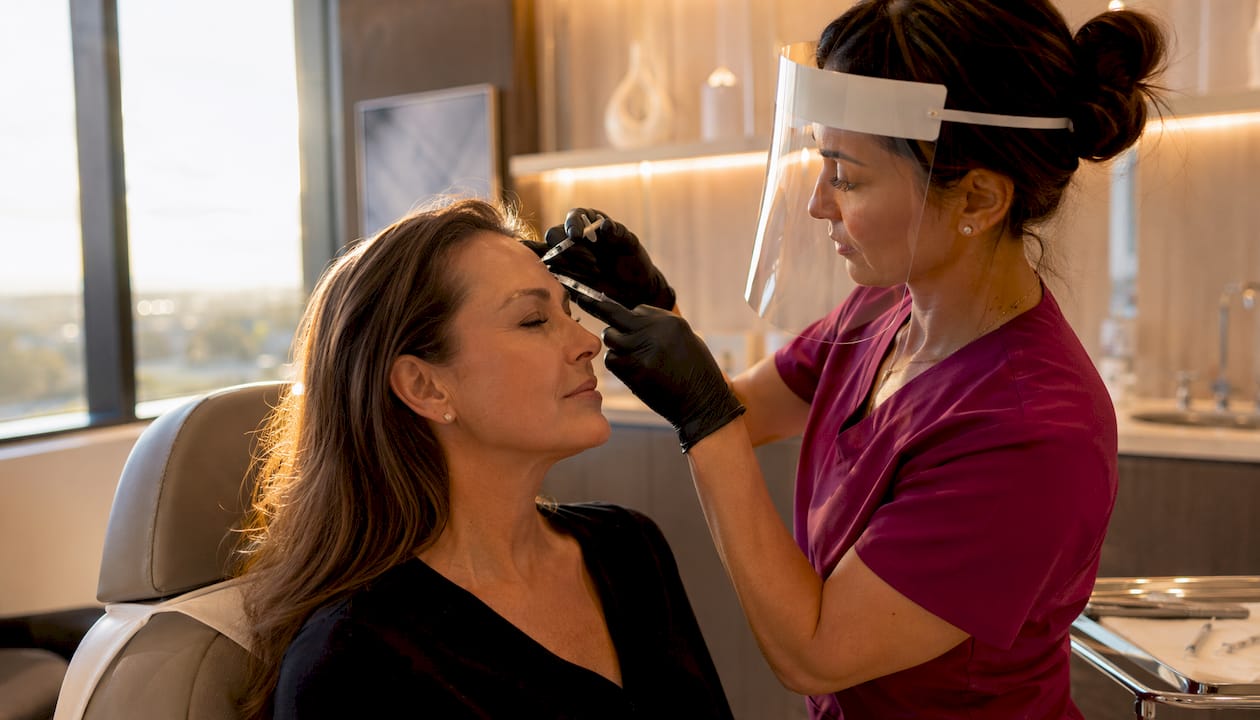
Botox (onabotulinumtoxinA) is the original and most recognized brand, FDA-approved for frown lines, forehead lines, and crow’s feet. Dysport (abobotulinumtoxinA) spreads slightly more than Botox, which some injectors prefer for larger treatment areas. Jeuveau (prabotulinumtoxinA) is a newer formulation approved specifically for glabellar lines. Xeomin (incobotulinumtoxinA) is a “naked” toxin with no accessory proteins, which may reduce the chance of antibody formation over repeated treatments.
Key treatment areas: forehead, glabella (between the brows), crow’s feet, brow lift, lip lines, neck bands, and excessive sweating (hyperhidrosis)
Hyaluronic acid fillers: Restylane and related products
Hyaluronic acid (HA) is a sugar naturally present in skin and connective tissue. When formulated as a gel and injected, it adds volume and attracts water, creating a smoothing and plumping effect. Restylane (Galderma) was the first FDA-approved HA filler in 2003 and remains one of the most widely used. The HA filler category now includes products with varying gel stiffness, allowing injectors to match the product to the treatment depth and area.

Effects from HA fillers last approximately 6–12 months, depending on the specific product and the area treated. One practical advantage: HA fillers are reversible. An enzyme called hyaluronidase can dissolve them if a result is uneven or unwanted.
Key treatment areas: nasolabial folds, lips, cheeks, under-eye hollows, jawline, and perioral lines
Calcium hydroxylapatite: Radiesse
Calcium hydroxylapatite (CaHA) is a mineral found naturally in human bone. As a filler, tiny CaHA spheres are suspended in a gel carrier and injected into deeper tissue planes. Unlike HA fillers, CaHA also stimulates the body’s own collagen production, which extends its volumizing effect beyond the initial injection. Effects last approximately 18 months in facial tissue. Because of its higher viscosity, CaHA is not suited for fine surface lines or the lips.
Key treatment areas: nasolabial folds, marionette lines, cheek volumization, jawline, and the back of the hands
Poly-L-lactic acid: Sculptra
Sculptra works differently from most fillers. Rather than adding immediate volume, poly-L-lactic acid (PLLA) acts as a collagen stimulator, triggering a gradual increase in the skin’s own collagen over several weeks. Results build slowly and can last up to two years, making Sculptra a longer-term investment than most other injectables. It typically requires a series of sessions spaced weeks apart before the full effect becomes visible.
Key treatment areas: cheeks, temples, jawline, and overall facial volumization; not recommended for periocular or perioral areas
Polymethylmethacrylate (PMMA): Bellafill
PMMA microspheres are the only FDA-approved non-absorbable filler for cosmetic use. The microspheres are suspended in bovine collagen gel and injected into the skin, where the collagen carrier is absorbed and the PMMA beads remain permanently, providing ongoing structural support. Effects can last multiple years. Because PMMA is permanent, patient selection and injector precision matter more here than with any reversible option.
Key treatment areas: nasolabial folds and cheek acne scars (FDA-approved indications)
Autologous fat transfer (fat grafting)
Fat grafting uses your own body fat, typically harvested from the abdomen or thighs via liposuction, processed, and then injected into facial areas needing volume. Because the material is your own tissue, there is no risk of allergic reaction. Fat is harvested and injected to restore volume in areas like the cheeks, lips, and temples, with effects that can last one to two years. The main variable is retention: some of the injected fat is reabsorbed by the body, so results can be less predictable than with synthetic fillers.
Key treatment areas: cheeks, temples, lips, under-eye area, and overall facial rejuvenation
Kybella: the fat-dissolving injectable
Kybella (deoxycholic acid) is an FDA-approved injectable that destroys fat cell membranes on contact, permanently eliminating treated fat cells. It is primarily used for submental fat, the fullness under the chin commonly called a “double chin.” Most patients need multiple sessions spaced about a month apart. Once the fat cells are destroyed, they do not regenerate, so results are long-lasting as long as body weight stays stable.
Key treatment areas: under the chin (submental fat)
| Injectable type | Main material | Typical duration | Primary use |
|---|---|---|---|
| Botox / Dysport / Jeuveau / Xeomin | Botulinum toxin | 3–4 months | Dynamic wrinkles, muscle relaxation |
| Hyaluronic acid fillers (e.g., Restylane) | HA gel | 6–12 months | Volume, lip/cheek augmentation |
| Calcium hydroxylapatite (Radiesse) | CaHA mineral spheres | ~18 months | Deep folds, collagen stimulation |
| Poly-L-lactic acid (Sculptra) | PLLA polymer | Up to two years | Gradual collagen rebuilding |
| PMMA (Bellafill) | Synthetic microspheres | — | Nasolabial folds, acne scars |
| Autologous fat transfer | Patient’s own fat | one to two years | Facial volumization |
| Kybella | Deoxycholic acid | Long-lasting | Submental fat reduction |
How do you choose the right injectable for your goals?
Choosing the right injectable comes down to matching the treatment to the problem. Neuromodulators address dynamic wrinkles, the ones caused by repeated muscle movement. Fillers address static wrinkles and volume loss, changes that are visible even when your face is at rest. Getting that distinction right before you book a treatment saves you from spending money on something that won’t move the needle for your specific concern.
A few decision criteria worth thinking through before your consultation:
- Wrinkle type: forehead lines and crow’s feet that appear when you move your face respond to neuromodulators; lines visible at rest respond to fillers
- Volume loss: sunken cheeks, hollowed temples, or thinning lips call for a volumizing filler, not a neuromodulator
- Treatment timeline: Sculptra requires patience (weeks to see results); HA fillers show results immediately
- Reversibility preference: if you want a safety net, HA fillers are the only category that can be dissolved
- Budget and maintenance: shorter-lasting products cost less per session but require more frequent retreatment
- Combining treatments: combining Botox and fillers often produces better overall results than either alone, since they address different mechanisms of aging
The single most important factor in any of this is who performs the injection. Safety depends more on injector expertise and clinical judgment than on the brand name of the product. A board-certified dermatologist or plastic surgeon with detailed anatomical knowledge minimizes the risk of complications like vascular occlusion, uneven results, or nodule formation.
Pro Tip: Ask your provider which specific product they recommend and why, not just what category. An injector who can explain the rationale for choosing one HA filler over another, or why they prefer a particular neuromodulator for your anatomy, is demonstrating the clinical depth that separates skilled practitioners from those who simply follow a menu.
What should you know about safety before getting injectables?
Cosmetic injectables are medical procedures, not spa treatments. That framing matters because the risks, though manageable with the right provider, are real. Botulinum toxin products are among the most powerful neurotoxins known, and their safe use depends entirely on proper formulation, dosing, and administration by a licensed professional.
Common side effects across most injectable types include bruising, swelling, redness, and mild discomfort at the injection site. These typically resolve within a few days. More serious complications, including vascular occlusion (where filler blocks a blood vessel), infection, or tissue necrosis, are rare but possible and are almost always linked to inadequate provider training or improper technique.
Key safety practices to follow:
- Use only FDA-approved products for every treatment; unapproved versions of known brands have been distributed in the U.S. and carry unverifiable safety profiles
- Choose a provider with board certification in dermatology or plastic surgery
- Disclose all medications, supplements, and medical history before treatment, since blood thinners increase bruising risk
- Avoid injectable silicone entirely; the FDA has not approved liquid silicone for cosmetic injection, and its use carries risks including disfigurement
- Ask about the provider’s protocol for managing complications, including access to hyaluronidase for HA filler emergencies
Pro Tip: Never purchase botulinum toxin products or fillers online for self-injection. Unregulated products sold online pose serious risks including botulism and severe allergic reactions. The formulation, dosing, and sterility of these products cannot be verified outside a licensed clinical setting.
The post-treatment period matters too. Following your provider’s aftercare instructions, avoiding strenuous exercise for 24 hours after neuromodulator injections, and not rubbing the treated area all reduce the chance of product migration or uneven settling.
What do cosmetic injectables cost in the United States?
Pricing for cosmetic injectables varies widely, and the range reflects real differences in provider skill, geographic market, and product type. Botox typically costs $300–$600 per treatment; dermal fillers run $600–$1,200 per syringe in U.S. markets. A full facial treatment using multiple syringes or combining neuromodulators with fillers can run considerably higher.
Factors that influence what you’ll pay:
- Provider credentials: board-certified specialists in major metro areas charge more than general practitioners or medical spas, and that premium usually reflects training and experience
- Geographic location: prices in New York City, Los Angeles, and San Francisco run higher than in smaller markets
- Product type: longer-lasting products like Sculptra or Bellafill often cost more per session but require fewer retreatments over time
- Treatment complexity: a single area treated with one product costs less than a multi-area plan combining neuromodulators and fillers
Health insurance does not cover cosmetic injectables. Some practices offer financing or package pricing for patients planning multiple sessions, which can reduce the per-treatment cost for ongoing maintenance.
The lowest price is rarely the best value. An injector charging significantly below market rate may be using diluted product, unlicensed staff, or non-FDA-approved materials. When the procedure involves your face, the cost of correcting a complication almost always exceeds what you saved upfront.
Expert insights on maintaining your injectable results
Most cosmetic injectables are biodegradable, which means results fade as the body gradually breaks down the material. Sustaining your results requires planning for regular retreatment, not just a one-time appointment. Neuromodulators typically need retreatment every few months; HA fillers every several months; Sculptra’s collagen-stimulating effects can hold for a couple of years before a touch-up is warranted.
Expert tips for getting the most from your treatments:
- Schedule follow-up appointments before results fully fade; treating a partially maintained result requires less product than starting from scratch
- Keep a record of which products were used, how much, and where, so future injectors can build on prior work rather than guess
- Protect your skin from UV exposure between treatments; sun damage accelerates the breakdown of both collagen and filler material
- Consult a provider who offers personalized skin care guidance alongside injectable treatments, since topical skincare and injectables work better together than either does alone
- Avoid unlicensed injectors and any provider who cannot name the specific FDA-approved product they are using
Safety note: The FDA has not approved liquid silicone or silicone gel for injection anywhere in the body for cosmetic purposes. Its use carries documented risks including foreign body reactions, migration, and in severe cases, death. Any provider offering silicone injections for cosmetic contouring is operating outside FDA-approved practice.
Raodermatology’s team, with 25+ years of experience across locations in California, New Jersey, and New York, brings the kind of clinical depth that makes a real difference in both outcomes and safety. Injector skill and anatomical knowledge are what separate a natural-looking result from one that needs correcting.
Raodermatology’s approach to cosmetic injectable treatments
Choosing a provider for cosmetic injectables is as consequential as choosing the injectable itself. Raodermatology offers cosmetic dermatology services across multiple locations, with board-certified expertise and a treatment philosophy built around what each patient actually needs, not a one-size approach.

Where many medical spas offer a limited menu of popular treatments, Raodermatology’s clinical team evaluates the full picture: your skin condition, facial anatomy, treatment history, and goals. That means you get a recommendation grounded in 25+ years of dermatologic practice, not a sales conversation. Whether you’re considering your first neuromodulator treatment or exploring longer-lasting options like Sculptra or fat grafting, the starting point is a real consultation with a provider who can explain the tradeoffs honestly.
Ready to find out which injectable is right for your specific concerns? Book a consultation with Raodermatology and get a treatment plan built around your anatomy, not a trend.
FAQ
What are the different types of cosmetic injectables?
The main types are neuromodulators (Botox, Dysport, Jeuveau, Xeomin), dermal fillers (hyaluronic acid, calcium hydroxylapatite, poly-L-lactic acid, PMMA), autologous fat injections, and fat-dissolving agents like Kybella. Each addresses a different concern, from muscle-driven wrinkles to volume loss to localized fat.
What are the most popular face injections?
Botox is the most widely recognized, used to relax muscles and reduce dynamic wrinkles. Hyaluronic acid fillers like Restylane rank among the most popular dermal fillers for adding volume and smoothing static lines.
How long do cosmetic injectables last?
Duration varies by product: neuromodulators last 3–4 months, HA fillers 6–12 months, calcium hydroxylapatite approximately 18 months, and Sculptra up to two years. Kybella results are long-lasting since treated fat cells do not regenerate.
Are cosmetic injectables safe?
FDA-approved injectables administered by a board-certified provider are considered safe for most adults. The main risks, including bruising, vascular occlusion, or infection, are rare and largely tied to provider inexperience or the use of non-approved products.
Can you combine different types of injectables?
Yes, and combining neuromodulators with dermal fillers often produces better results than either alone, since they address different mechanisms of facial aging. A qualified provider can design a plan that uses each product where it performs best.
Key takeaways
Neuromodulators and dermal fillers treat fundamentally different problems, and matching the injectable to the concern, not the brand name, is what produces results worth keeping.
| Point | Details |
|---|---|
| Match treatment to concern | Neuromodulators treat dynamic wrinkles; fillers address volume loss and static lines. |
| Duration varies widely | Results range from 3–4 months (neuromodulators) to up to 2 years (Sculptra) depending on product. |
| Injector skill is the top safety factor | Board-certified providers minimize risks like vascular occlusion and uneven results. |
| FDA approval is non-negotiable | Only use products approved by the FDA; unapproved injectables carry unverifiable safety risks. |
| Raodermatology offers expert guidance | With 25+ years of experience across California, New Jersey, and New York, Raodermatology provides board-certified cosmetic injectable consultations. |
Recommended
- Dermal Fillers Manhattan NY: Complete Guide to Injectable Treatments | Rao Dermatology
- How to Select Cosmetic Procedures: Your Expert Guide | Rao Dermatology
- Examples of Aesthetic Treatments: 2026 Guide | Rao Dermatology
- Combining BOTOX and Dermal Fillers: Complete Guide to Enhanced Anti-Aging Results | Rao Dermatology
Filed under: