
Discover the real benefits of dermatology visits, from early skin cancer detection to personalized treatment plans for healthier skin.
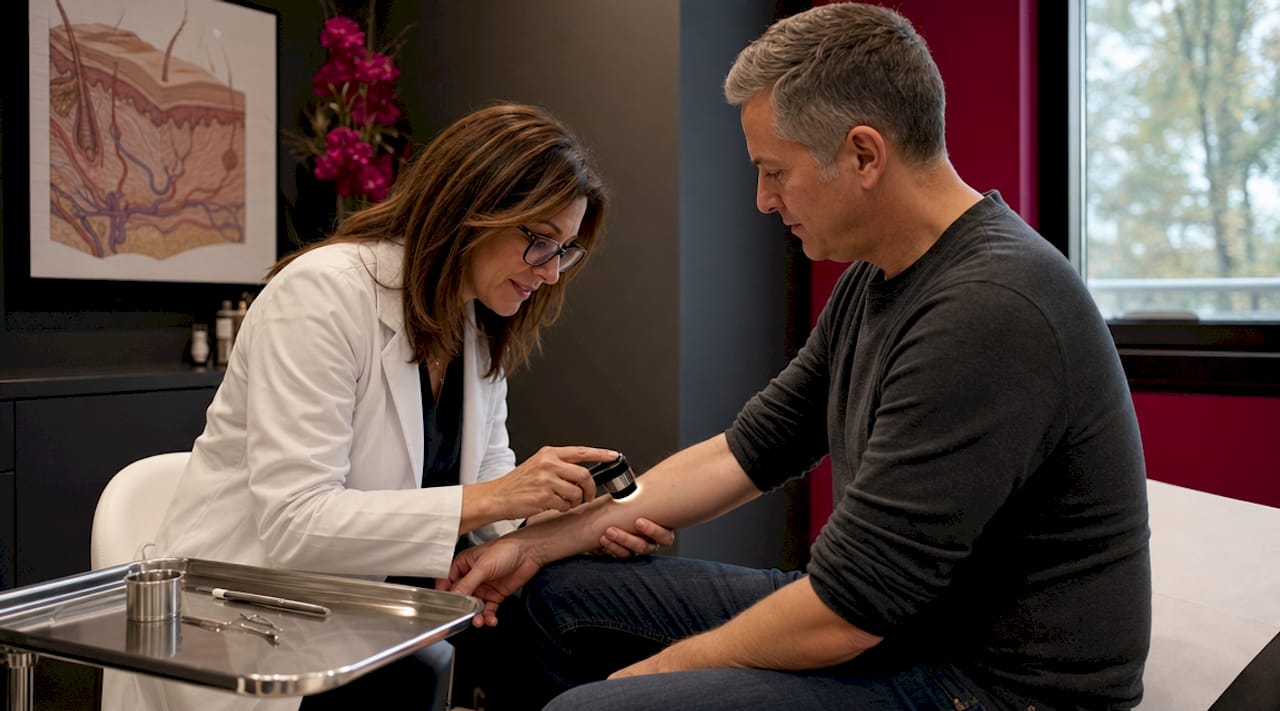
Regular dermatology visits are defined as scheduled evaluations by a board-certified dermatologist to assess, diagnose, and treat conditions affecting the skin, hair, and nails. The benefits of dermatology visits extend well beyond cosmetic concerns. They include early detection of melanoma and other skin cancers, prescription-grade treatment for acne, psoriasis, and eczema, and personalized guidance that no over-the-counter product or smartphone app can replicate. Dr. Babar K. Rao and the team at Raodermatology have spent 25-plus years demonstrating that proactive skin care is one of the most direct investments you can make in your long-term health.
1. Benefits of dermatology visits: early skin cancer detection
Skin cancer is the most common cancer in the United States, and catching it early is the single most consequential reason to see a dermatologist. The difference between a Stage I and Stage IV melanoma diagnosis is not just treatment complexity. It is survival probability.
The USPSTF does not recommend routine whole-body exams for the general asymptomatic population. Screening frequency is individualized based on your personal risk profile, including family history, skin type, prior skin cancers, and lesion count. This means your dermatologist is not running a one-size-fits-all checklist. They are building a surveillance plan specific to you.
Key warning signs that should prompt an immediate visit include:
- A mole or spot that changes in Asymmetry, Border, Color, Diameter, or Evolution (the ABCDEs of melanoma)
- Any lesion that persists beyond one to two months without improvement
- A new growth that bleeds, itches, or crusts repeatedly
- Any spot that simply looks different from your other moles
Pro Tip: Take monthly photos of any moles or spots you are monitoring. Consistent lighting and the same angle make it far easier for your dermatologist to assess change over time. Raodermatology’s guide on skin self-examination walks you through exactly how to do this.
2. Advanced technology that makes detection more accurate
Dermatologists today use tools that go far beyond the naked eye. Dermoscopy, a handheld magnification device with polarized light, reveals subsurface skin structures invisible during a standard visual exam. Combined with 3D total body photography, it creates a powerful surveillance system for high-risk patients.
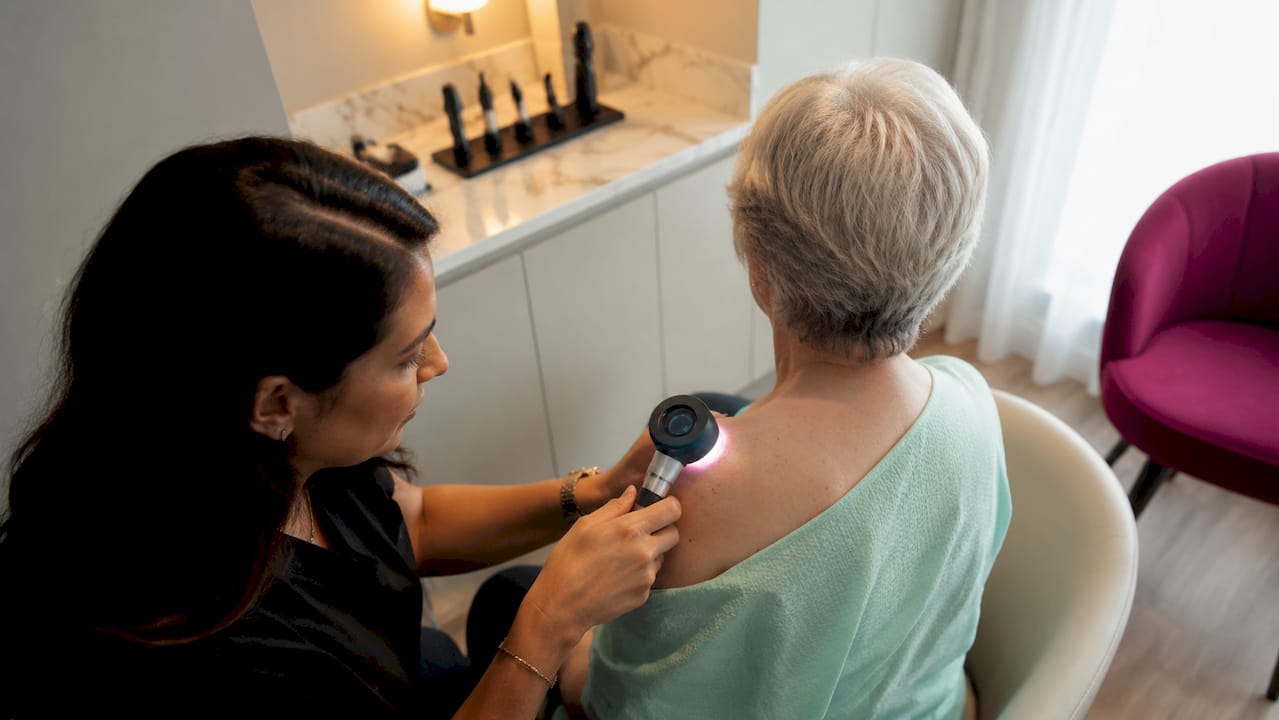
A study of 1,274 high-risk patients found that 3D photography with dermoscopy diagnosed 86 melanomas with a number-needed-to-excise ratio of just 3.26 to 1. That ratio means for every three biopsies performed, one confirmed melanoma was found. This is a remarkably precise outcome that reduces unnecessary procedures while catching cancers early.
Smartphone apps marketed for skin cancer screening do not come close to this standard. Apps are not recommended for clinical screening because they cannot perform biopsies, assess lesion depth, or account for the full clinical picture. A dermatologist visit provides what no algorithm currently can: definitive diagnosis backed by biopsy when needed.
3. Risk-based screening intervals and follow-up care
Not everyone needs to see a dermatologist on the same schedule. High-risk individuals, including those with a personal or family history of melanoma, more than 50 moles, or significant sun damage, benefit from dermatologist checks every 6 to 12 months combined with self-exams every 3 to 4 months.
After a skin cancer diagnosis, the schedule becomes even more structured. Patients treated for basal cell carcinoma should receive full skin exams every 6 to 12 months for five years following treatment, per National Comprehensive Cancer Network guidelines. This ongoing surveillance catches recurrences and new primaries before they advance.
The practical takeaway is that your dermatologist does not just treat what is in front of them today. They build a longitudinal record of your skin that makes future evaluations faster, more accurate, and more meaningful. Learn more about how screening intervals work for different risk categories.
4. Effective treatment for common skin conditions
Dermatologists treat more than cancer. They are the specialists best equipped to manage a wide range of chronic and acute skin conditions that significantly affect quality of life. Conditions routinely treated at practices like Raodermatology include:
- Acne: Prescription retinoids, oral antibiotics, isotretinoin, and hormonal therapies that OTC products cannot match
- Eczema and atopic dermatitis: Topical corticosteroids, calcineurin inhibitors, and newer biologics like dupilumab
- Psoriasis: Phototherapy, methotrexate, and targeted biologics that clear plaques and reduce systemic inflammation
- Hair loss (alopecia): Diagnosis-specific treatments ranging from minoxidil to platelet-rich plasma therapy
- Nail disorders: Fungal infections, psoriatic nail disease, and structural abnormalities requiring specialist evaluation
- Rosacea: Topical and oral therapies combined with laser treatments to reduce redness and visible vessels
The advantage of seeing a dermatologist for these conditions is not just access to stronger medications. It is accurate diagnosis. Eczema and psoriasis can look nearly identical to an untrained eye but require completely different treatment protocols. Misdiagnosis leads to months of ineffective treatment and unnecessary suffering.
Pro Tip: If an OTC treatment has not produced visible improvement within four to six weeks, that is your signal to book a dermatology appointment. Chronic skin conditions rarely resolve on their own and often worsen without targeted intervention.
5. Cosmetic and preventive benefits of regular skin care consultations
The cosmetic benefits of dermatology visits are often underestimated by people who think of dermatology as purely medical. A board-certified dermatologist or licensed esthetician can assess your skin type, identify early signs of photoaging, and recommend treatments that are calibrated to your biology, not just your budget.
Cosmetic services available at practices like Raodermatology include skin rejuvenation treatments such as chemical peels, laser resurfacing, and microneedling. Dermal fillers and neuromodulators address volume loss and dynamic wrinkles. These are not vanity procedures. Photoaging is a marker of cumulative UV damage, and the same sun exposure that causes wrinkles also causes skin cancer.
Preventive guidance from a dermatologist is equally valuable. A professional skin assessment identifies your Fitzpatrick skin type, which determines how aggressively you burn, how much melanin you produce, and which sunscreen formulations will actually protect you. Broad-spectrum SPF 30 or higher applied daily is the single most evidence-supported anti-aging intervention available. Your dermatologist can tell you exactly which product formulation works for your skin, whether that is a mineral sunscreen for sensitive skin or a tinted formula for daily wear.
Diet and lifestyle also shape skin health in ways that complement professional care. Research on how diet affects skin shows that anti-inflammatory eating patterns support the outcomes dermatologists work to achieve in the clinic.
6. Personalized risk assessment and long-term skin health management
One of the most underappreciated advantages of skin checkups is the creation of a personalized risk profile. At your first visit, a dermatologist documents your skin type, total mole count, any atypical lesions, and your personal and family history. This baseline becomes the reference point for every future visit.
For patients with indeterminate lesions, clinical photography is standard practice. Photos taken at each visit allow the dermatologist to compare lesion appearance over months or years, catching subtle changes that would be invisible without documentation. This longitudinal record also improves communication when you see a new provider or require a referral.
Teledermatology is expanding access to this kind of personalized care. Teledermatology is reliable for diagnosing most malignant lesions, making it a practical option for patients in areas with limited specialist access or those managing follow-up between in-person visits. Raodermatology’s multi-location presence across California, New Jersey, and New York means most patients can access in-person care without long delays.
The long-term benefit of continuity with a single dermatology practice is significant. Your provider knows your history, tracks your lesions, and adjusts your care plan as your risk profile changes with age, sun exposure, and health status.
7. Addressing skin concerns specific to your gender and age
Skin needs change across a lifetime, and a dermatologist accounts for those changes in ways that generic skin care advice cannot. Hormonal fluctuations in adolescence, pregnancy, and menopause each alter sebum production, pigmentation, and skin barrier function. Men and women also have structurally different skin, with men’s skin being approximately 25% thicker on average and more prone to certain types of irritation and sun damage.
Research on gender-specific skin care confirms that men benefit from formulations and routines distinct from those designed for women. A dermatologist can prescribe or recommend products calibrated to these biological differences rather than relying on marketing categories.
For older adults, the importance of dermatology visits increases. Actinic keratoses, precancerous lesions caused by decades of UV exposure, appear most commonly after age 40. Early treatment with cryotherapy, topical fluorouracil, or photodynamic therapy prevents progression to squamous cell carcinoma. A dermatologist is the only provider trained to distinguish an actinic keratosis from a seborrheic keratosis or an early squamous cell carcinoma with clinical confidence.
Key takeaways
Regular dermatology visits deliver measurable health outcomes across skin cancer prevention, chronic condition management, cosmetic care, and personalized risk monitoring that no self-directed skin care routine can fully replace.
| Point | Details |
|---|---|
| Early cancer detection | Dermatologists identify melanoma and other skin cancers at stages when treatment is most effective. |
| Risk-based screening | High-risk patients benefit from visits every 6 to 12 months, not a fixed annual schedule. |
| Advanced diagnostic tools | 3D total body photography and dermoscopy improve melanoma detection and reduce unnecessary biopsies. |
| Condition management | Prescription therapies for acne, psoriasis, and eczema outperform any OTC alternative. |
| Personalized care plans | Longitudinal monitoring and clinical photography create a skin health record that improves over time. |
Why I think most people wait too long to see a dermatologist
Most patients I encounter at Raodermatology come in after months of watching a spot change or a rash worsen. The common reasoning is that it is probably nothing. That reasoning costs people. Early-stage melanoma has a five-year survival rate above 98%. Late-stage melanoma does not. The math on timing is not subtle.
What surprises many patients is how much a single visit accomplishes. You leave with a documented baseline, a clear understanding of your personal risk, and a concrete plan. That is not a minor administrative outcome. It is the foundation of every good skin health decision you make afterward.
The other misconception I hear often is that dermatology visits are only for people with obvious problems. The reality is that dermatology visits benefit anyone with risk factors, even when nothing looks alarming yet. Atypical moles, a history of blistering sunburns, or a family member with melanoma are all reasons to establish care before something changes. Timing your visit based on lesion evolution rather than waiting for a crisis is the approach that consistently produces better outcomes.
Technology is also changing what a visit can accomplish. Mole mapping, sequential dermoscopy, and teledermatology follow-up are making surveillance more precise and more accessible than it has ever been. Patients who engage with these tools early get more from every appointment.
— Krunal
How Raodermatology helps you get the most from every visit
Raodermatology offers a full spectrum of skin cancer prevention and treatment services across its California, New Jersey, and New York locations, backed by Dr. Babar K. Rao’s 25-plus years of clinical expertise. Whether you need a baseline skin cancer screening, ongoing management of a chronic condition like psoriasis, or a cosmetic consultation with a licensed esthetician, the practice delivers care calibrated to your individual risk profile and skin type.

The practice’s medical dermatology services include advanced diagnostics, biopsy, and treatment planning for conditions ranging from actinic keratoses to complex inflammatory skin diseases. Booking a visit is the most direct step you can take toward understanding your skin’s current health and protecting it long-term. Contact Raodermatology to schedule your evaluation at a location convenient to you.
FAQ
How often should I see a dermatologist?
Visit frequency depends on your personal risk profile. High-risk individuals benefit from dermatologist evaluations every 6 to 12 months, while lower-risk patients may need less frequent visits based on their dermatologist’s assessment.
What triggers the need for an unscheduled dermatology visit?
Any mole or spot that changes in asymmetry, border, color, diameter, or appearance warrants prompt evaluation. Lesions that do not resolve within one to two months should also be assessed by a dermatologist rather than monitored at home.
Can a smartphone app replace a dermatology visit for skin cancer screening?
No. Smartphone apps are not recommended for clinical skin cancer screening because they cannot perform biopsies or provide a definitive diagnosis. Apps are unreliable compared to in-person dermatologist evaluation, which remains the standard of care.
What should I expect at my first dermatology visit?
Your dermatologist will document your skin type, mole count, and personal and family history to establish a baseline. For any concerning lesions, clinical photography or dermoscopy may be used to support diagnosis and future monitoring.
Are cosmetic dermatology visits medically worthwhile?
Yes. Cosmetic assessments identify early photoaging and UV damage that correlate with skin cancer risk. Treatments like chemical peels and laser resurfacing address the same cumulative sun damage that drives precancerous lesion development, making them both aesthetic and preventive in value.
Recommended
- Discover the benefits of seeing a dermatologist | Rao Dermatology
- Essential Questions to Ask Your Dermatologist During Your Next Visit | Rao Dermatology
- Essential Guide to Skin Self-Examination: What to Look for Between Dermatology Visits | Rao Dermatology
- Why Regular Dermatologist Visits Are Essential for Healthy Skin | Rao Dermatology
Filed under: