
Discover what eczema is, its symptoms, causes, and effective treatments. Learn how to manage this common skin condition effectively.
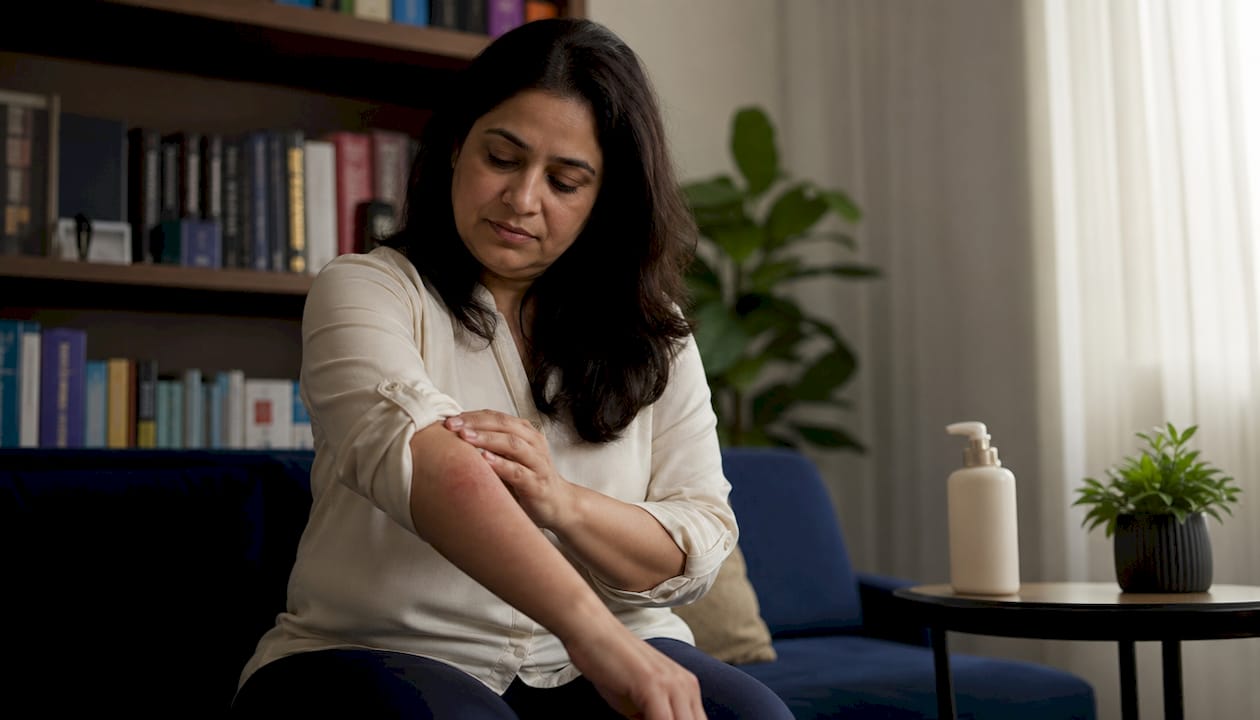
Eczema is defined as a group of inflammatory skin diseases that cause dry, itchy, and inflamed patches of skin, collectively known in medical settings as dermatitis. Eczema affects 16.5 million adults in the U.S., with 7.7 million of those cases classified as moderate to severe. That scale means this condition is far from rare. It is chronic for most people, meaning symptoms cycle through flares and calmer periods rather than disappearing permanently. Managing eczema well requires understanding what drives it, how to recognize it, and which treatments actually work.
What is eczema and what are its main types?
Eczema is not a single disease. It is an umbrella term covering several distinct inflammatory skin conditions, each with its own triggers and presentation. Knowing which type you have directly shapes which treatment will work best.
Atopic dermatitis is the most common form. It tends to start in childhood, often runs in families, and frequently appears alongside asthma or hay fever. Skin becomes intensely itchy, dry, and prone to cracking, especially in the folds of the elbows, knees, and neck. For a deeper look at this specific variant, Raodermatology’s guide to atopic dermatitis symptoms covers the condition in full detail.

Contact dermatitis splits into two subtypes. Allergic contact dermatitis occurs when the immune system reacts to a substance like nickel, latex, or fragrance. Irritant contact dermatitis results from repeated exposure to chemicals, soaps, or detergents that strip the skin barrier without triggering an immune response.
Other recognized types include:
- Dyshidrotic eczema: Small, intensely itchy blisters on the palms, fingers, and soles of the feet, often triggered by stress or seasonal allergens.
- Nummular eczema: Coin-shaped patches of irritated skin, more common in adults, often linked to dry skin or insect bites.
- Stasis dermatitis: Develops on the lower legs when poor circulation causes fluid to pool under the skin, leading to swelling, discoloration, and itching.
| Type | Primary trigger | Most affected area |
|---|---|---|
| Atopic dermatitis | Genetic and immune factors | Elbow folds, knees, face |
| Contact dermatitis | Allergens or irritants | Hands, face, neck |
| Dyshidrotic eczema | Stress, allergens | Palms, fingers, soles |
| Nummular eczema | Dry skin, injury | Arms, legs, torso |
| Stasis dermatitis | Poor circulation | Lower legs |
What causes eczema and who is at risk?
Eczema does not have a single cause. It results from a combination of genetic, immune, and environmental factors working together to compromise the skin barrier.
Genetic factors increase eczema risk by approximately 75% when a family member is affected. That hereditary link is one of the strongest predictors of who develops the condition. Mutations in the gene that produces filaggrin, a protein critical to skin barrier function, are especially common in people with atopic dermatitis.
The immune system also plays a central role. In people with eczema, the immune response overreacts to ordinary substances, triggering inflammation even when no real threat exists. This immune dysfunction explains why eczema so often coexists with other allergic conditions like asthma and hay fever.
Environmental triggers can set off a flare even in people who have been symptom-free for months. Common triggers include:
- Harsh soaps, detergents, and cleaning products
- Wool or synthetic fabrics worn directly against skin
- Extreme heat, cold, or low humidity
- Airborne allergens like dust mites, pet dander, and pollen
- Stress, which activates inflammatory pathways in the skin
Pro Tip: Keep a simple trigger diary for two weeks. Note what you ate, wore, and did before each flare. Patterns emerge faster than most people expect, and that information is invaluable when you see a dermatologist.
Eczema in children is particularly common, with many cases appearing before age five. Some children outgrow it, but a significant number carry it into adulthood, especially those with the atopic triad of eczema, asthma, and allergic rhinitis.
What are the symptoms of eczema on different skin tones?
Eczema symptoms follow a recognizable pattern, but their appearance varies significantly depending on skin tone. Recognizing that variation prevents delayed diagnosis.
The classic symptoms include intense itching, dry and scaly skin, thickened patches, and in severe cases, oozing or crusting. The itch is often the first sign. Eczema itch frequently precedes visible lesions, making early recognition critical. Treating the itch before a rash forms can prevent a full flare from developing.
On lighter skin tones, affected areas typically appear red or pink. On medium and darker skin tones, eczema can appear violet or purple, and this color difference has historically led to underdiagnosis in people of color. The condition is just as common across all skin tones, but the visual cues differ enough that standard descriptions can mislead.
Common areas where eczema appears include:
- The inner folds of the elbows and knees
- The face, particularly around the eyes and mouth
- The hands and wrists
- The neck and upper chest
- The scalp in some cases
Pro Tip: If your skin feels persistently itchy in a specific spot before any rash appears, treat it as an early warning. Apply a fragrance-free moisturizer immediately and avoid scratching. Breaking the itch-scratch cycle early shortens flare duration.
Eczema symptoms also change with age. Infants often develop patches on the cheeks and scalp. Older children tend to see flares in skin folds. Adults frequently experience hand eczema or widespread patches that shift location over time.
What are the current eczema treatment options?
Eczema treatment has expanded significantly in recent years. Patients now have access to a range of topical, biologic, and emerging therapies that go well beyond older corticosteroid creams.
Topical corticosteroids remain a first-line treatment for mild to moderate flares. They reduce inflammation quickly, but long-term use on sensitive areas like the face carries risks including skin thinning. Non-steroidal alternatives now fill that gap. Tapinarof cream 1% and roflumilast cream 0.15% are both recommended for atopic dermatitis management per 2025 American Academy of Dermatology guidelines, with clinical trials showing effectiveness over 4–12 week periods. These options are particularly useful for patients who need long-term topical control without steroid-related side effects.
For moderate to severe cases, biologic therapies have changed the treatment picture entirely. FDA-approved biologics now include dupilumab for patients as young as six months, lebrikizumab and tralokinumab for ages 12 and older, and nemolizumab, approved in late 2024, which specifically targets pruritus. Each biologic works by blocking specific immune signals that drive eczema inflammation. That targeted approach produces results that broad immunosuppressants cannot match.
| Treatment category | Examples | Best suited for |
|---|---|---|
| Topical corticosteroids | Low to high potency creams | Mild to moderate flares |
| Non-steroidal topicals | Tapinarof, roflumilast | Long-term maintenance |
| Biologics | Dupilumab, lebrikizumab | Moderate to severe cases |
| Topical probiotics | Roseomonas mucosa | Emerging adjunct therapy |
Emerging research points to the skin microbiome as a promising treatment target. Topical probiotics using Roseomonas mucosa have shown safe and measurable improvement in eczema symptoms in early studies. This approach works by restoring the balance of beneficial bacteria on the skin surface rather than suppressing the immune system.
Pro Tip: Never stop a prescribed treatment the moment your skin clears. Patients who discontinue therapy early are at high risk of relapse. Ask your dermatologist about a maintenance plan before you taper off.
For a detailed comparison of eczema and psoriasis therapies, Raodermatology’s breakdown of eczema vs. psoriasis treatments is a useful reference.
How can you manage eczema effectively in daily life?
Long-term eczema control depends more on daily habits than on any single medication. The goal is to keep the skin barrier strong enough to resist triggers before they cause a flare.
-
Moisturize immediately after bathing. Apply a thick, fragrance-free cream or ointment within three minutes of getting out of the shower. This locks in moisture before the skin surface dries out. Ceramide-containing moisturizers are particularly effective because they replenish the lipids naturally missing in eczema-prone skin.
-
Identify and avoid your personal triggers. Common triggers vary by person. What causes a flare for one patient may be harmless for another. Work with a dermatologist to pinpoint yours through patch testing or an elimination approach.
-
Choose skin-safe clothing and laundry products. Wear soft, breathable fabrics like cotton. Wash new clothes before wearing them. Use fragrance-free, dye-free detergents and skip fabric softeners entirely.
-
Address the mental health side. Eczema carries a significant psychosocial burden, including frustration, exhaustion, and emotional distress. These are not minor side effects. Chronic sleep disruption from nighttime itching alone affects quality of life in measurable ways. Talking to a counselor or joining a patient support group is a legitimate part of treatment.
-
See a dermatologist before self-treating. Over-the-counter products can help mild cases, but moderate to severe eczema needs professional evaluation. A dermatologist can confirm the type, rule out other conditions, and prescribe therapies that are not available without a prescription.
Eczema is chronic and lifelong for many adults. Accepting that reality and building a sustainable skincare routine around it is the most effective long-term strategy. Raodermatology’s practical guide to managing and treating eczema offers additional expert tips for building that routine.
Key Takeaways
Eczema is a chronic inflammatory skin condition that requires consistent daily management, not a one-time cure, and responds best to a combination of targeted therapies and trigger avoidance.
| Point | Details |
|---|---|
| Eczema is not one disease | It covers multiple types including atopic dermatitis, contact dermatitis, and dyshidrotic eczema. |
| Genetics and immunity drive risk | A family history raises risk by approximately 75%; immune dysfunction amplifies environmental triggers. |
| Symptoms vary by skin tone | Eczema appears red on lighter skin and violet or purple on darker skin, affecting diagnosis accuracy. |
| New treatments expand options | Biologics like dupilumab and non-steroidal topicals like tapinarof now offer alternatives to steroids. |
| Daily routine is the foundation | Consistent moisturizing and trigger avoidance prevent flares more reliably than reactive treatment alone. |
What I have learned from watching patients manage eczema over time
The patients who manage eczema best are not the ones with the mildest cases. They are the ones who stop waiting for a cure and start building a system.
I have seen people with severe atopic dermatitis achieve years of clear skin through disciplined routines and the right biologic. I have also seen patients with mild eczema suffer repeatedly because they only treated flares and never addressed the underlying skin barrier. The difference is mindset, not severity.
The part that frustrates me most is how often the psychosocial burden goes unaddressed. Chronic itch disrupts sleep. Visible skin changes affect confidence. Patients feel embarrassed to mention these things in a clinical appointment because they seem secondary to the rash. They are not secondary. They are part of the same disease, and they deserve the same attention.
The advances in biologic therapy over the past several years have genuinely changed what is possible for moderate to severe cases. But the fundamentals still matter more than any single drug. A patient who moisturizes twice daily, avoids their known triggers, and stays consistent with maintenance therapy will outperform one who relies on biologics alone and skips the basics.
Eczema is manageable. That is not a consolation. It is a clinical fact backed by decades of evidence and a growing toolkit of therapies. The work is in the consistency, not in finding a miracle treatment.
— Krunal
Eczema care at Raodermatology
Raodermatology brings over 25 years of dermatology experience to eczema diagnosis and treatment across locations in New Jersey, New York, and California.

Whether you are dealing with a first flare or years of uncontrolled symptoms, a personalized evaluation makes a real difference. The practice offers access to the latest FDA-approved biologics, non-steroidal topical therapies, and evidence-based skincare guidance tailored to your skin type and triggers. Explore the full range of eczema and skin condition services available at Raodermatology and take the first step toward consistent, long-term skin health.
FAQ
What is the most common type of eczema?
Atopic dermatitis is the most common type of eczema. It typically begins in childhood, runs in families, and frequently coexists with asthma and hay fever.
Can eczema be cured permanently?
Eczema has no permanent cure for most people. It is a chronic condition that cycles through flares and remissions, requiring ongoing management rather than a single course of treatment.
How do I know if my eczema is mild or severe?
Mild eczema involves small, localized patches with manageable itching. Moderate to severe eczema covers larger areas, disrupts sleep, and does not respond adequately to over-the-counter treatments. A dermatologist can formally assess severity and recommend appropriate therapy.
Are biologics safe for children with eczema?
Dupilumab is FDA-approved for children as young as six months old. Lebrikizumab, tralokinumab, and nemolizumab are approved for patients aged 12 and older. A pediatric dermatologist determines which option fits the child’s specific case.
What is the best daily skincare routine for eczema?
Apply a thick, fragrance-free moisturizer within three minutes of bathing every day. Use gentle, dye-free cleansers, wear soft cotton fabrics, and avoid known triggers. Consistency in this routine is the strongest predictor of long-term eczema control.
Recommended
- Eczema: Complete Guide to Symptoms, Types, Causes, and Treatment Options | Rao Dermatology
- What Is Eczema? Complete Guide to Causes, Symptoms & Effective Treatment Options | Rao Dermatology
- Effective Eczema Treatment and Management: Expert Tips from NYC Dermatologists | Rao Dermatology
- Psoriasis vs Eczema: Key Differences in Symptoms, Causes & Treatment Options | Rao Dermatology
Filed under: