
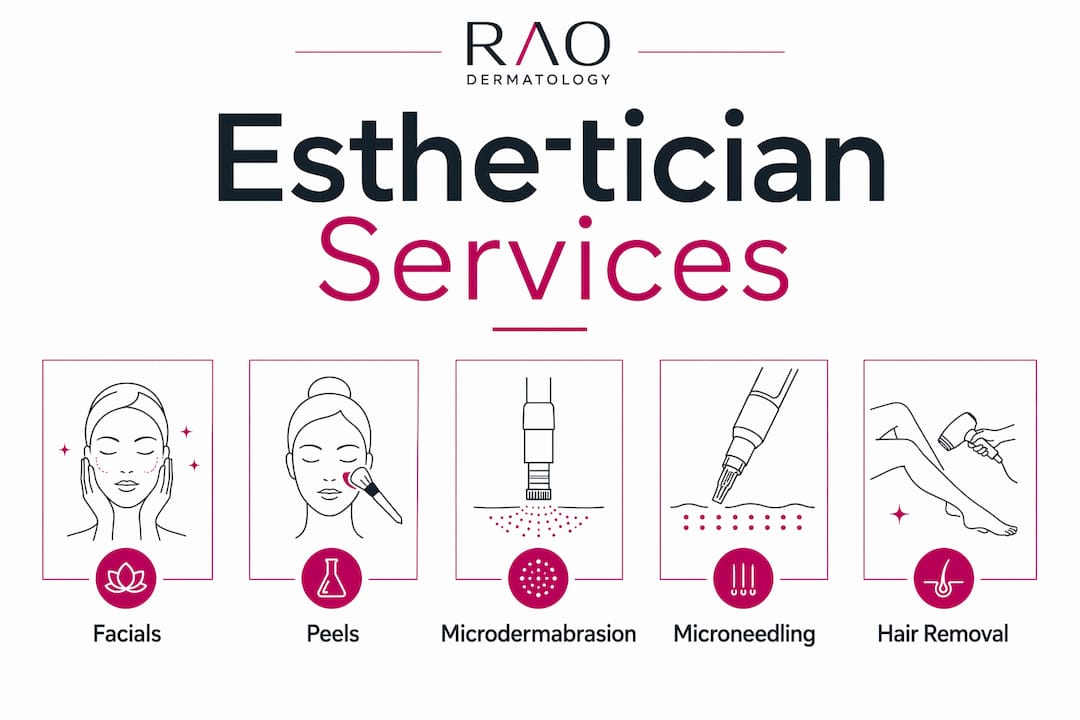
Discover the top esthetician services that rejuvenate your skin. From facials to microneedling, find out how each treatment can enhance your glow.

The most-booked professional skin care treatments in the U.S. are classic and advanced facials (deep cleansing, hydration), chemical peels (resurfacing, tone correction), microdermabrasion (texture smoothing), microneedling and RF microneedling (collagen stimulation), dermaplaning (peach fuzz and dead cell removal), HydraFacial-style treatments (simultaneous cleanse and infusion), LED and light therapy (acne and anti-aging), waxing and hair removal (long-lasting smoothness), lash and brow services (tinting, lifting, shaping), and body esthetic treatments (exfoliation, targeted resurfacing). Licensed estheticians at practices like Raodermatology deliver these services within a structured, medically informed setting that supports the skin’s cellular turnover cycle.
Quick-scan guide:
- Classic/advanced facials — deep cleanse, exfoliation, and hydration tailored to your skin type
- Chemical peels — resurface and even skin tone; light to medium depth available from estheticians
- Microdermabrasion — mechanical exfoliation for smoother texture and reduced dullness
- Microneedling / RF microneedling — controlled micro-injuries that trigger collagen production
- Dermaplaning — manual blade exfoliation that removes vellus hair and dead cells in one pass
- HydraFacial-style treatments — vacuum-powered cleanse, exfoliation, and serum infusion simultaneously
- LED / light therapy — targeted wavelengths that calm acne or support anti-aging
- Waxing and hair removal — removes hair at the root for weeks of smooth skin
- Lash and brow services — lifts, tints, and shapings for defined, low-maintenance features
- Body esthetic treatments — exfoliation, wraps, and targeted resurfacing for the body
Table of Contents
- Top esthetician services: what each one does, costs, and how often to book
- What estheticians can and cannot do: the line between esthetic and medical care
- How to choose the right esthetician and treatment for your skin
- Why esthetic services inside a dermatology practice can improve your outcomes
- Key Takeaways
- The case for integrated care, from a practice that provides it
- Raodermatology’s esthetic services: what to expect when you book
- FAQ
Top esthetician services: what each one does, costs, and how often to book
Classic and advanced facials
A classic facial cleans, exfoliates, extracts, and moisturizes in one session. Advanced versions layer in serums, enzymes, or ultrasound to address specific concerns like hyperpigmentation or dehydration. Expect zero downtime. Most people book monthly to stay ahead of congestion and seasonal skin shifts. Cost typically runs moderate amounts depending on add-ons and location.
Chemical peels (light to medium)
Light peels using alpha hydroxy acids (AHAs) like glycolic or lactic acid dissolve dead cells and improve tone with minimal peeling and one to three days of mild sensitivity. Medium-depth peels go further, addressing sun damage and fine lines, and may cause three to seven days of visible flaking. Estheticians can perform superficial peels; deeper phenol or high-concentration trichloroacetic acid (TCA) peels require a physician. Avoid if you are on isotretinoin or have active cold sores. Pricing ranges moderately per session, with a series of multiple peels often recommended for lasting results.
Microdermabrasion
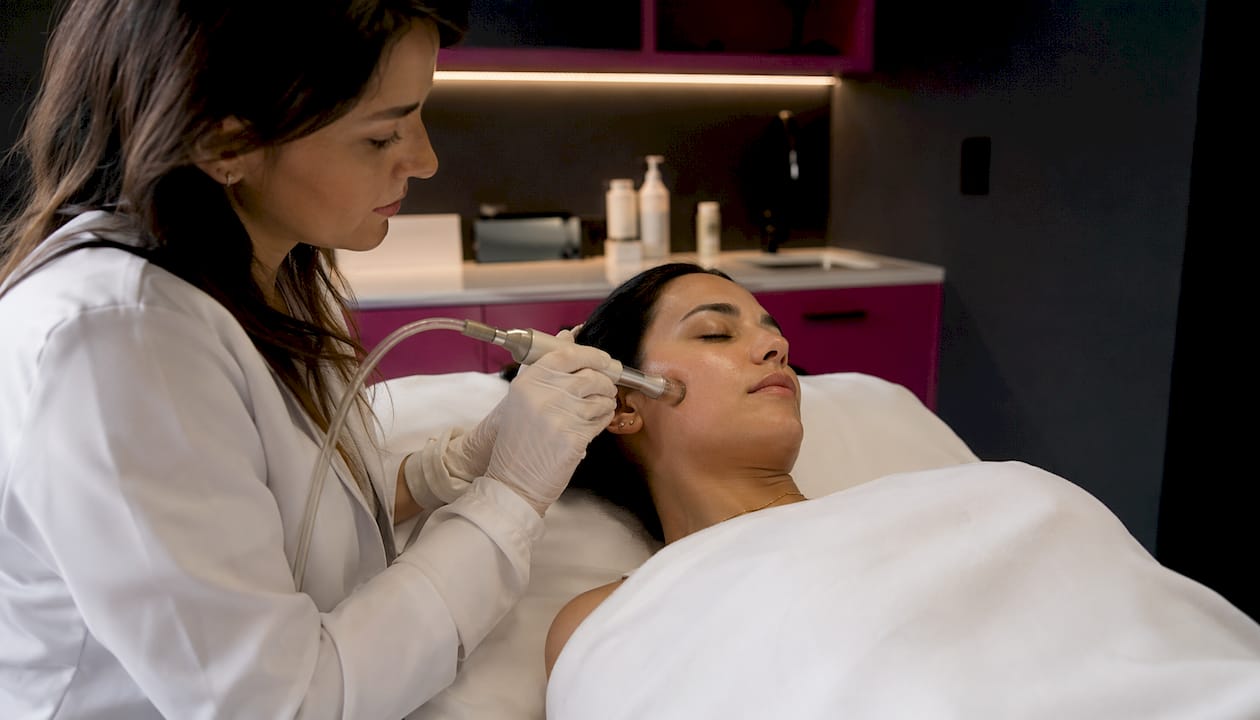
A diamond-tip or crystal-tip handpiece buffs away the outermost skin layer, improving texture, mild acne scarring, and dullness. No downtime beyond mild redness for a few hours. A series of six sessions spaced two to four weeks apart is standard, with quarterly maintenance after that. Typical cost is moderate per session. Skip this if you have active rosacea flares or open lesions.
Microneedling and RF microneedling
Fine needles create controlled micro-channels that trigger the skin’s repair response and collagen synthesis. RF (radiofrequency) microneedling, such as Morpheus8, adds heat energy to tighten tissue and address laxity. Both are among the fastest-growing non-surgical treatments in 2026. Expect two to four days of redness and mild swelling. Three to four sessions spaced four to six weeks apart is a common starting protocol. Cost is moderate per session for standard microneedling; RF microneedling runs higher. Note: most states classify microneedling as a medical treatment, so confirm your provider’s credentials and supervision structure before booking.
Dermaplaning
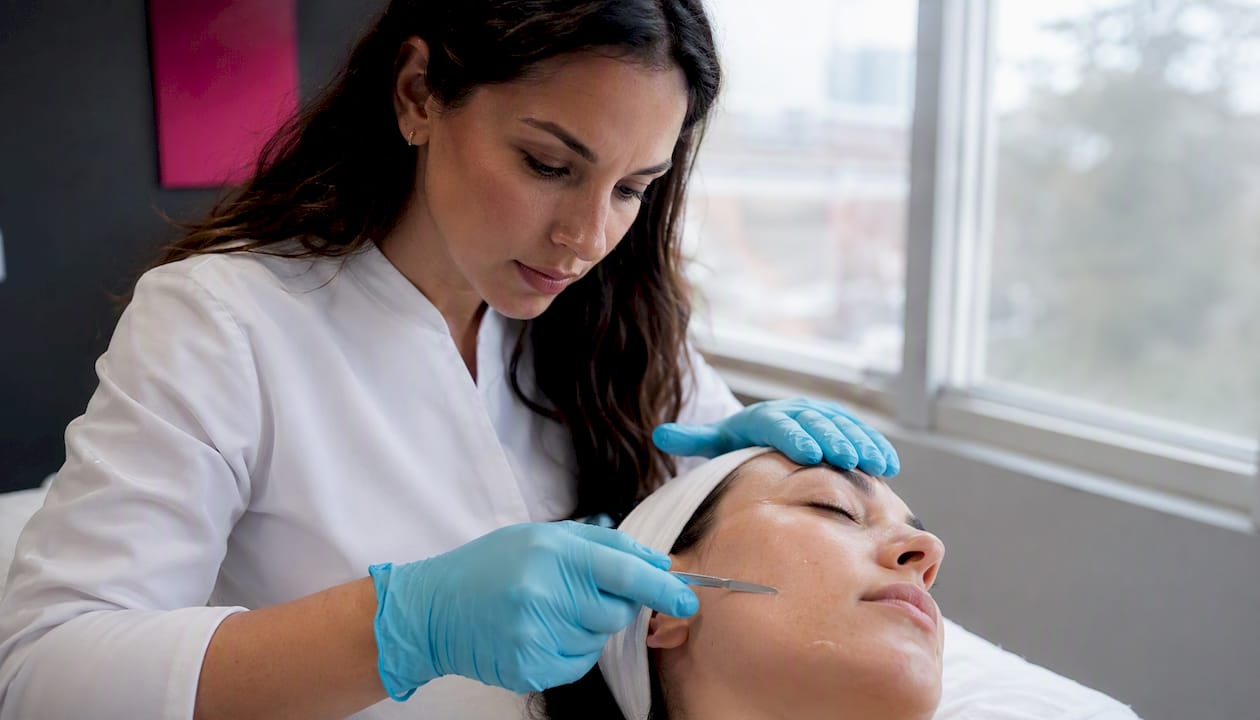
A sterile surgical blade held at a 45-degree angle removes vellus hair and the top layer of dead cells in one pass. Skin looks immediately brighter and feels noticeably smoother. Foundation applies more evenly afterward, which is why this service is popular before events. No real downtime, though skin is more sun-sensitive for 24–48 hours. Avoid with active acne or inflamed skin. Sessions cost a moderate amount and are typically repeated every four to six weeks.
HydraFacial-style treatments
These use a vortex-suction handpiece to cleanse, exfoliate, extract, and infuse hydrating serums in a single pass. The appeal is the combination of instant results and zero downtime. Monthly sessions maintain results; boosters (peptides, growth factors) can be added for specific concerns. Cost per session is moderate. Suitable for nearly all skin types, including sensitive skin.
LED and light therapy
Red light (around 630–700 nm) stimulates fibroblasts and supports collagen production; blue light (around 415 nm) targets acne-causing bacteria. Sessions are painless and take 20–30 minutes with no downtime. LED is often added to other treatments rather than booked alone. A series of six to ten sessions is typical for acne management. Standalone sessions cost a moderate amount. Avoid if you take photosensitizing medications.
Waxing and hair removal
Hard and soft waxes remove hair at the follicle, leaving skin smooth for three to six weeks. Common areas include brows, lip, chin, underarms, legs, and bikini. A patch test is advisable for sensitive skin or if you use retinoids. Cost varies by area, with smaller treatments less costly than larger area waxing. Laser hair removal requires a medical provider or physician-supervised medspa in most states.
Lash and brow services
Lash lifts curl natural lashes at the root for six to eight weeks; lash tints add depth without mascara. Brow lamination restructures brow hairs into a fuller, defined shape; brow tints fill sparse areas. These services carry low risk but always require a patch test 24–48 hours before application, since tinting products can cause allergic reactions. Pricing is moderate for lash lifts and brow lamination treatments.
Body esthetic treatments
Body scrubs and exfoliation treatments remove dead skin and improve circulation. Targeted resurfacing (light peels or microdermabrasion applied to the back, chest, or arms) addresses body acne, keratosis pilaris, or uneven texture. Post-weight-loss patients increasingly seek these services alongside facial restoration to address skin laxity and texture changes. Sessions cost a moderate amount depending on area and technique.
Summary table: downtime, frequency, and U.S. cost ranges
| Service | Downtime | Typical sessions / frequency | Ballpark U.S. cost |
|---|---|---|---|
| Classic / advanced facial | None | Monthly | Moderate cost |
| Chemical peel (light–medium) | 1–7 days | Multiple sessions, weeks apart | Moderate cost |
| Microdermabrasion | None to minimal | Series of sessions, weeks apart | Moderate cost |
| Microneedling | 2–4 days | Multiple sessions, weeks apart | Moderate cost |
| RF microneedling | 2–5 days | Multiple sessions, weeks apart | Higher than standard |
| Dermaplaning | None | Every 4–6 weeks | Moderate cost |
| HydraFacial-style | None | Monthly | Moderate cost |
| LED / light therapy | None | Multiple sessions | Moderate cost |
| Waxing | None to minimal | Every 3–6 weeks | Varies by area |
| Lash and brow services | None | Every 6–8 weeks | Moderate cost |
| Body esthetic treatments | Minimal | Monthly or as needed | Moderate cost |
What estheticians can and cannot do: the line between esthetic and medical care
Licensed estheticians focus on surface-level, cosmetic treatments. Injectables, fillers, surgical procedures, and anything requiring a diagnosis or prescription sit firmly in the dermatologist’s domain. U.S. esthetician training ranges from 600 to 1,200 hours depending on the state, and that training does not include the clinical scope needed to diagnose skin disease or administer medications. Understanding this boundary protects you.
| Esthetician scope | Dermatologist / medical scope |
|---|---|
| Skin analysis and consultation | Diagnosis of skin conditions |
| Facials and advanced facials | Prescription medications (topical and oral) |
| Superficial chemical peels | Deep chemical peels (phenol, high-TCA) |
| Microdermabrasion | Injectables and dermal fillers |
| Dermaplaning | Laser procedures (most states) |
| LED / light therapy | Surgical procedures and biopsies |
| Waxing and hair removal | Microneedling (most states require supervision) |
| Lash and brow services | Skin cancer screening and treatment |
Estheticians can support acne-prone patients with topical guidance and gentle treatments, but they cannot replace medical care for severe or nodular acne. The esthetician-versus-dermatologist distinction comes down to this: estheticians maintain and improve appearance; dermatologists diagnose and treat.
See a dermatologist first if you notice:
- A mole or lesion that is changing in size, shape, or color
- A persistent sore that does not heal within a few weeks
- An unexplained rash or widespread skin reaction
- Nodular or cystic acne that has not responded to over-the-counter care
- Any skin concern that appeared suddenly without a clear cause
Pro Tip: Before your first esthetic appointment, ask your esthetician to review your current prescriptions. Retinoids, isotretinoin, and certain antibiotics change how your skin responds to peels, waxing, and microneedling. A quick heads-up prevents avoidable reactions and helps your esthetician build a safer treatment plan.
For a deeper look at how these roles interact, the role of estheticians in skincare within a medical practice is worth reading before your first appointment.
How to choose the right esthetician and treatment for your skin
The single most important criterion: find a licensed esthetician with documented experience treating your specific concern and a clear aftercare protocol. A beautiful treatment menu means nothing without the credentials to back it up.
What to verify before booking:
- State licensure (check your state board’s public lookup tool)
- Experience with your skin type and concern (ask directly)
- Medical oversight on-site when you have complex or reactive skin
- Before-and-after photos from real patients
- Transparent pricing and written aftercare instructions
Questions to ask at your consultation:
- Are you licensed in this state, and how long have you been practicing?
- Have you treated my specific concern before (hyperpigmentation, acne scarring, rosacea)?
- Do I need a patch test before this treatment?
- I’m currently using [retinoid / isotretinoin / GLP-1 medication] — does that change the plan?
- What is the expected downtime, and what should I avoid afterward?
- How many sessions will I realistically need to see results?
- What is the total cost for a full treatment series?
- Will you coordinate with my dermatologist if needed?
- What home-care products should I use between sessions?
- Are there any contraindications I should know about for my skin history?
Red flags to walk away from:
- No formal consultation before treatment
- Pressure to purchase a full product line on the first visit
- Vague or dismissive answers about contraindications
- Unwillingness to communicate with your dermatologist
- No written aftercare instructions provided
For questions to bring to a dermatology consult specifically, this dermatologist visit checklist covers the essentials.
Why esthetic services inside a dermatology practice can improve your outcomes
Booking best esthetician services within a dermatology practice gives you something a standalone spa cannot: on-site medical evaluation. If an esthetician notices a suspicious lesion during a facial, a dermatologist is steps away. That proximity matters more than most people realize until they need it.
Concrete advantages of a clinical setting:
- Medical diagnosis on demand — a dermatologist can evaluate a concerning spot the same day
- Prescription access — if a treatment reveals a condition needing medication, you are already in the right place
- Documented contraindication protocols — isotretinoin, immunosuppressants, and other medications require specific precautions that a medically supervised practice tracks systematically
- Integrated aftercare — your esthetic and medical records are in the same system, reducing the risk of conflicting advice
- Emergency protocols — adverse reactions are managed by trained clinical staff, not front-desk staff calling 911
When a medical setting is the right choice:
- You have a history of adverse reactions to skin treatments
- You are managing a chronic skin condition like psoriasis or rosacea alongside cosmetic goals
- You are post-weight-loss and need combined facial and body restoration
- You have not had a full skin cancer screening and want one before starting cosmetic treatments
- Your skin concern has not been formally diagnosed
The NewBeauty State of Aesthetics report notes that patients increasingly prioritize safety and results over cost when choosing where to receive aesthetic treatments. A dermatology-integrated practice directly addresses both. Raodermatology’s esthetic services are delivered within this kind of medically supervised environment across its California, New Jersey, and New York locations.
Key Takeaways
Licensed estheticians deliver the most effective surface-level skin care when their work is guided by clear scope boundaries, proper credentials, and coordinated medical oversight.
| Point | Details |
|---|---|
| Start with the right service | Match your skin concern to the treatment: peels and microdermabrasion for texture; facials and HydraFacial for maintenance; microneedling for collagen loss. |
| Verify credentials first | Confirm state licensure and ask for documented experience with your specific skin type before booking any professional skin care treatment. |
| Know the referral triggers | Evolving moles, persistent lesions, nodular acne, and unexplained rashes require a dermatologist evaluation before esthetic treatment begins. |
| Schedule maintenance consistently | Regular sessions aligned with the skin’s cellular turnover cycle support lasting results; monthly or every four to six weeks is typical for most services. |
| Raodermatology offers both | Raodermatology provides licensed esthetic services within a medical dermatology practice across California, New Jersey, and New York, combining cosmetic care with on-site medical oversight. |
The case for integrated care, from a practice that provides it
Most people treat esthetic services and dermatology as two separate tracks. You book a facial at a spa, and you see a dermatologist when something goes wrong. That split works until it doesn’t. The patients who get the best long-term results are the ones whose esthetician and dermatologist are actually talking to each other, or better yet, working in the same building.
What gets overlooked in the typical spa-versus-clinic debate is the compounding value of coordinated care. An esthetician who knows your full medication list, your biopsy history, and your dermatologist’s treatment plan can make smarter decisions at every session. That is not a luxury. For anyone managing rosacea, post-acne scarring, or post-weight-loss skin changes, it is the difference between treatments that build on each other and treatments that occasionally undo each other.
The shift in 2026 toward outcome-oriented messaging reflects something patients have known for a while: they want results that hold, not just a single impressive session. Practices that deliver both medical and esthetic care under one roof are positioned to provide exactly that.
Raodermatology’s esthetic services: what to expect when you book
Raodermatology brings licensed estheticians and board-certified dermatologists together under one roof across California, New Jersey, and New York. That structure means your esthetic and cosmetic services are backed by 25+ years of clinical dermatology experience, not just a treatment menu.

When you book a consult, you start with a skin analysis that accounts for your full health history, current medications, and cosmetic goals. From there, your esthetician builds a treatment plan that fits your skin’s actual condition, not a one-size approach. If anything during that evaluation warrants a dermatologist’s eye, the referral happens the same day. To see the full range of medical and cosmetic services available, visit Raodermatology’s services page and request a consultation at the location nearest you.
Useful sources and further reading
- Skincare Specialists — U.S. Bureau of Labor Statistics
- Esthetician vs. Dermatologist: What They Treat and How to Choose — Healthline
- When to See an Esthetician vs. a Dermatologist — InStyle
- The State of Aesthetics, Summer 2026 — NewBeauty
- Most Popular Wellness and Aesthetic Procedures in 2026 — Haute MD
- Esthetician vs. Dermatologist Scope and Referrals — WellnessPro Insurance
- Facials & Esthetic Services — Raodermatology
- Our Services — Raodermatology
FAQ
What are the most popular esthetician treatments?
Facials, chemical peels, microdermabrasion, dermaplaning, and HydraFacial-style treatments are consistently among the most-booked professional skin care treatments in the U.S. LED therapy and lash and brow services round out the top tier for repeat bookings.
What services make estheticians the most revenue?
Advanced facials, chemical peel series, and RF microneedling (where estheticians are permitted to perform it under medical supervision) tend to generate the highest per-session revenue because of their combination of visible results and repeat-visit structure.
What is the highest level of esthetician practice?
A master esthetician or medical esthetician working within a physician-supervised clinical setting represents the top tier. These professionals perform more advanced treatments, including deeper peels and certain laser-adjacent services, under medical oversight.
How much should you tip for a $100 facial?
Tipping for facials typically follows the general grooming service custom of about 15–20% of the service cost. Tip at the higher end for a particularly thorough treatment or if the esthetician spent extra time addressing your concerns.
When should I see a dermatologist instead of an esthetician?
See a dermatologist for any changing mole or lesion, persistent skin sore, unexplained rash, nodular acne, or any concern that may require diagnosis or prescription treatment. Raodermatology offers both medical evaluation and licensed esthetic services at its multi-location practice, so you do not have to choose between the two.
Recommended
Filed under: