
Discover effective strategies to minimize acne scars with personalized home care and expert clinic treatments for optimal results.
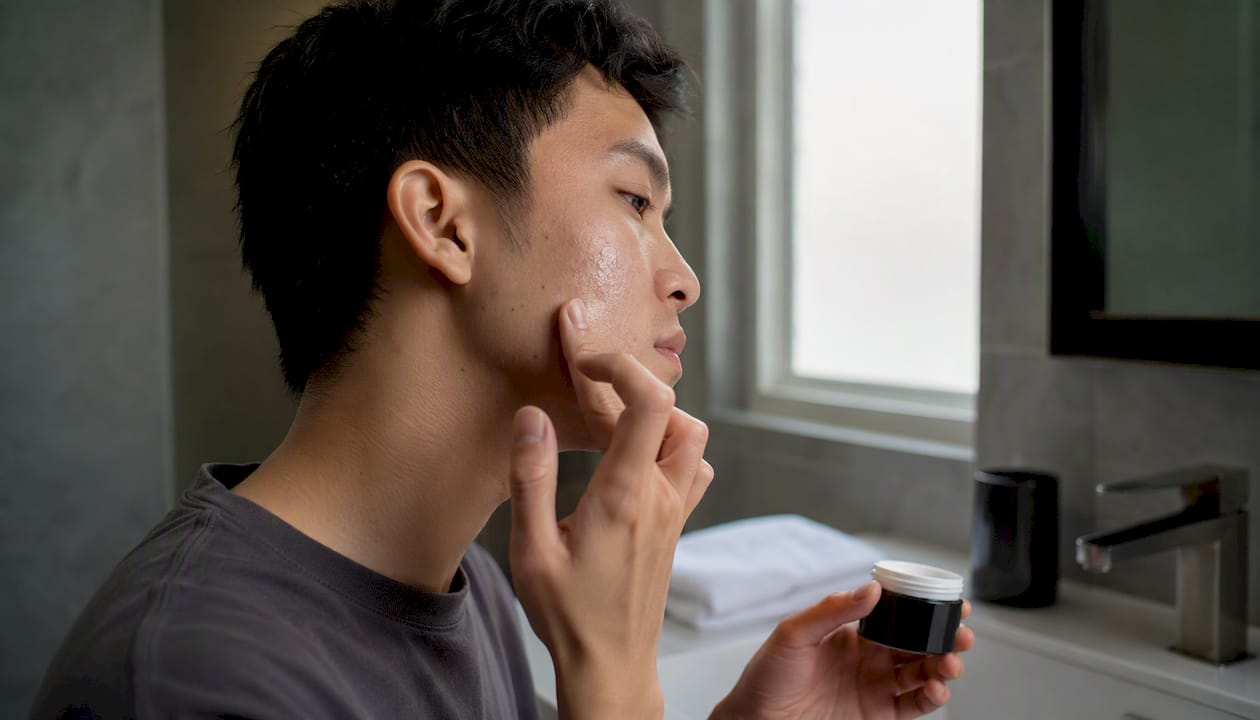
The most effective way to minimize acne scars is a personalized, multimodal plan: daily sun protection plus a topical retinoid or acid regimen, layered with scar-type–directed in-office procedures when needed. The American Academy of Dermatology is clear that no single treatment removes all scars, and the best outcomes come from matching the approach to your specific scar morphology, skin tone, and goals. Practices like Rao Dermatology build exactly this kind of individualized plan.
Where to start:
- Apply broad-spectrum SPF 30+ sunscreen every morning without exception
- Add a topical retinoid (OTC adapalene or prescription tretinoin) three to five nights per week
- Introduce an AHA or BHA (glycolic, lactic, or salicylic acid) two to three times per week
- Control any active acne before pursuing procedural treatments
- Book a board-certified dermatologist consult if scars are deep, numerous, or affecting your confidence
Realistic timeline: expect several months of consistent home care to see meaningful fading of post-acne marks, and multiple procedural sessions spaced weeks apart for deeper structural scars.
Key Takeaways
A personalized, multimodal plan combining daily sun protection, a topical retinoid or acid regimen, and scar-type–directed in-office procedures is the most effective approach to minimizing acne scars.
| Point | Details |
|---|---|
| Sunscreen is non-negotiable | Daily SPF 30+ prevents PIH and protects collagen remodeling from UV damage. |
| Match procedure to scar type | Rolling scars need subcision; ice-pick scars respond to TCA CROSS; raised scars require steroid injections, not lasers. |
| Expect multiple sessions | Most procedural courses involve one to four sessions spaced four to twelve weeks apart, with months of remodeling afterward. |
| Skin tone shapes the plan | Fitzpatrick types III–VI carry higher PIH risk; RF microneedling and picosecond lasers are safer first-line procedural options. |
| Rao Dermatology | Offers morphology-directed, multimodal scar treatment across California, New Jersey, and New York, with 25+ years of clinical experience. |
Table of Contents
- How do acne scars differ, and why does type drive treatment?
- What topical treatments actually reduce scar visibility?
- What in-office procedures work best for acne scars?
- How do clinicians choose treatments, and what should you ask at your consult?
- How Rao Dermatology approaches acne-scar care
- Sources
- FAQ
How do acne scars differ, and why does type drive treatment?
Not all acne scars are the same tissue problem, and treating the wrong type with the wrong method can make things worse. Atrophic scars, the most common category, result from tissue loss during healing. Hypertrophic and keloid scars do the opposite: they form when the body overproduces collagen.
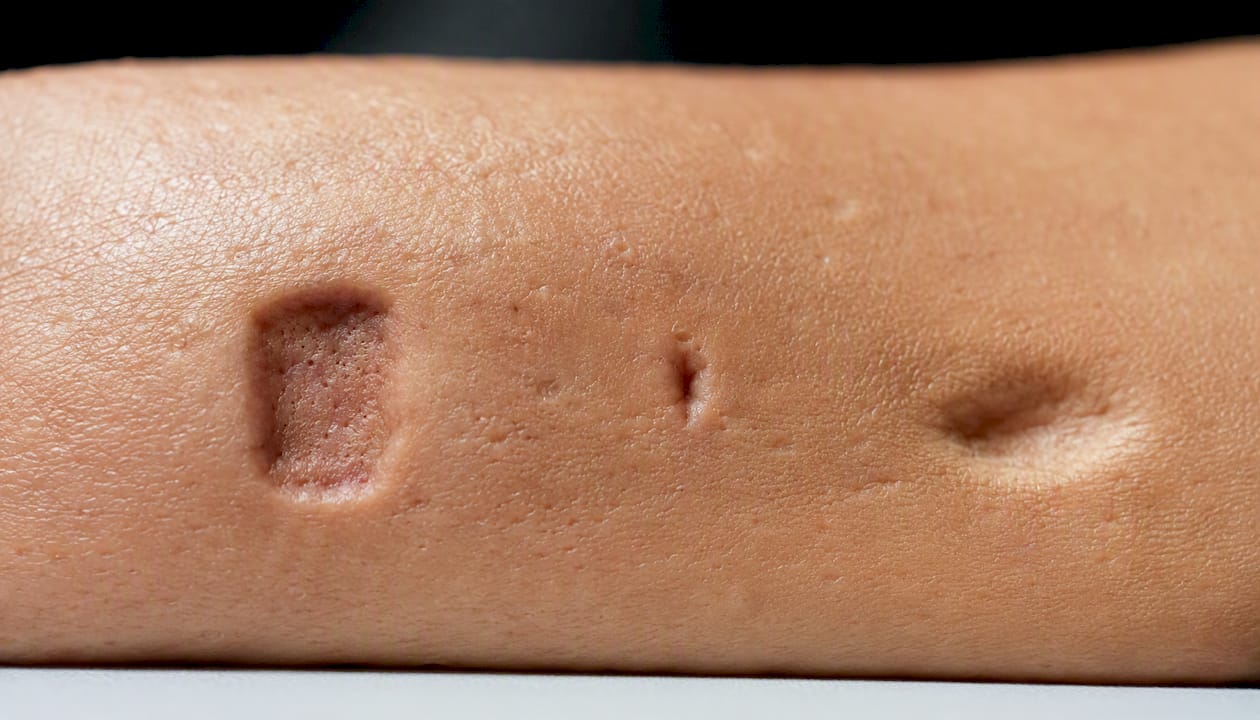
Atrophic scar subtypes
Ice-pick scars are narrow, deep channels that extend into the dermis. They resist surface-level treatments because the damage runs too deep for peels or microneedling alone to reach. TCA CROSS (focal application of high-concentration trichloroacetic acid) is a well-established, cost-effective option, often combined with laser resurfacing.
Boxcar scars are wider, flat-bottomed depressions with defined edges. Fractional ablative lasers, radiofrequency microneedling, and chemical peels show good results here because the scar base is accessible.
Rolling scars have a wave-like, undulating surface caused by fibrous bands tethering the skin downward. Subcision (releasing those bands with a needle) followed by a dermal filler or biostimulator is the standard approach, since no surface treatment can address the tethering.
Hypertrophic and keloid scars
These raised scars require a completely different playbook. Intralesional corticosteroid injections, sometimes combined with 5-fluorouracil or pulsed dye laser, are the mainstay for flattening hypertrophic tissue. Applying ablative laser energy to a keloid-prone patient without this distinction can trigger further overgrowth.
Skin tone matters here. Patients with Fitzpatrick skin types III–VI carry a higher risk of post-inflammatory hyperpigmentation (PIH) from aggressive treatments. Any plan for darker skin tones should account for this from the first consultation, not as an afterthought.
Pro Tip: Take close-up photos of your scars in natural light before any treatment. Scar morphology can shift as skin heals, and a visual baseline helps your dermatologist track progress and adjust the plan.
What topical treatments actually reduce scar visibility?
Home care will not erase deep structural scars, but it does two important things: it fades post-acne discoloration and primes skin to respond better to in-office procedures. The NHS notes that nonprocedural measures can improve skin tone, though they rarely eliminate deep scars on their own.
The non-negotiable: sunscreen
UV exposure darkens post-inflammatory marks and slows collagen remodeling. A broad-spectrum SPF 30 or higher applied every morning is the single highest-leverage daily habit for anyone trying to reduce acne scars. No topical active works as well without it.
Retinoids
Topical retinoids accelerate cell turnover and stimulate collagen production. Start two to three nights per week to build tolerance, then increase frequency. Expect eight to twelve weeks before visible improvement in texture.
AHAs, BHAs, and azelaic acid
Glycolic acid (an AHA) and salicylic acid (a BHA) exfoliate the surface, which helps with shallow textural irregularities and fades discoloration. Lactic acid is a gentler AHA option for sensitive skin.
Vitamin C and silicone
For raised hypertrophic scars, topical silicone gel or silicone sheets applied consistently over weeks can soften and flatten the tissue.
Pro Tip: If you’re planning in-office procedures, ask your dermatologist about a retinoid or peel-prep protocol four to six weeks beforehand. Pre-treating with a retinoid thins the stratum corneum and can improve how evenly a laser or chemical peel penetrates, leading to more uniform results.
- Do not layer strong retinoids and AHAs on the same night until your skin has adapted
- Introduce one new active at a time, spaced two weeks apart
- Always patch-test new formulations on a small area first
What in-office procedures work best for acne scars?
Procedural treatments address the structural changes that topicals cannot reach. The 2022 international consensus supports morphology-driven selection of energy-based devices and emphasizes patient-specific planning, including skin-of-color safety. Combination therapies consistently outperform monotherapy across scar types.
| Procedure | Best for | Typical downtime | Key risks |
|---|---|---|---|
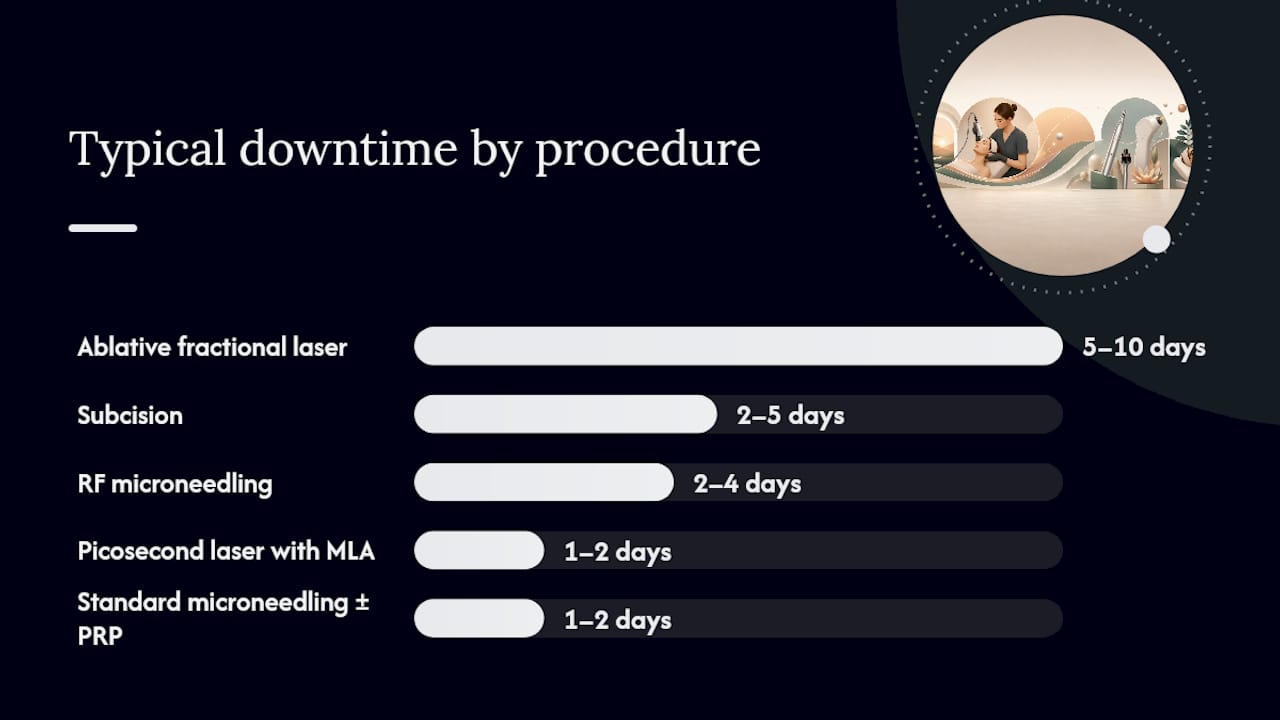
| Ablative fractional laser (CO2, Er:YAG) | Boxcar, rolling, moderate atrophic | 5–10 days | PIH (higher in Fitzpatrick III–VI), prolonged redness |
| Non-ablative fractional laser | Mild–moderate atrophic, early rolling | short downtime | Mild swelling, lower efficacy per session |
| Picosecond laser with MLA | Atrophic scars, darker skin tones | 1–2 days | Minimal; safer PIH profile |
| Radiofrequency (RF) microneedling | Rolling, boxcar, all skin tones | 2–4 days | Temporary swelling, rare PIH |
| Standard microneedling ± PRP | Mild–moderate atrophic, maintenance | 1–2 days | Redness, rare infection |
| TCA CROSS | Ice-pick, deep atrophic | 5 days (focal) | Focal PIH, requires multiple sessions |
| Chemical peel (medium/deep) | Superficial atrophic, discoloration | moderate downtime | PIH, infection if not managed |
| Subcision | Rolling scars (tethered) | 2–5 days | Bruising, temporary swelling |
| Dermal fillers (HA, CaHA, PLLA) | Rolling, boxcar (volume loss) | minimal downtime | Temporary; repeat needed |
| Steroid injections ± 5-FU / PDL | Hypertrophic, keloid | minimal downtime | Atrophy if overdosed |
| Punch excision / grafting | Isolated ice-pick, deep boxcar | 5–10 days | Scarring at punch site |
| Dermabrasion | Superficial atrophic, textural | extended downtime | PIH, infection |
A note on PIH risk and skin tone
Ablative CO2 and Er:YAG lasers carry elevated PIH and downtime risks, particularly for Fitzpatrick types III–VI. Picosecond lasers with microlens arrays and RF-based microneedling devices offer a meaningfully safer profile for darker skin without sacrificing efficacy. This is not a minor footnote. Aggressive ablative treatment on unprepared darker skin can produce hyperpigmentation that looks worse than the original scars.
Adding PRP to microneedling sessions can accelerate healing and improve collagen remodeling outcomes compared to microneedling alone. For esthetic device selection and current device options, the technology landscape has shifted considerably toward these safer, fractionated approaches.
- Multimodal combinations (subcision + filler for rolling; CROSS + laser for ice-pick; microneedling + PRP for mixed atrophic) outperform any single procedure
- No procedure produces results after one session; plan for a series
- Maintenance sessions are often needed six to twelve months after the initial course
How do clinicians choose treatments, and what should you ask at your consult?
The selection process starts well before any device is turned on. Active acne must be controlled before definitive scar revision because ongoing inflammation creates new scars faster than procedures can address existing ones. Getting active acne under control first is a prerequisite, not optional.
The clinical decision sequence
- Map scar morphology. Identify the predominant scar types (ice-pick, boxcar, rolling, hypertrophic) and their distribution. Mixed presentations are common and require layered plans.
- Assess skin tone and PIH risk. Fitzpatrick typing guides device selection and energy settings. Higher types shift the plan toward RF microneedling and picosecond platforms.
- Confirm acne is controlled. Topical or systemic therapy should have stabilized breakouts before any procedural work begins.
- Align on goals and budget. A patient wanting maximum improvement in minimum time has a different plan than one prioritizing minimal downtime.
- Stage the treatment course. Typically: three to six months of topical prep, then one to four procedural sessions spaced four to twelve weeks apart, followed by months of remodeling before final results are visible.
U.S. cost ranges (approximate, consult for exact quotes)
Costs vary widely by location, provider, and device. Microneedling sessions generally run $200–$700 per session; fractional laser treatments range from $500 to over $2,000 per session; chemical peels span $150–$600; subcision and fillers are typically priced per area or per syringe. These are broad ranges — a clinic consult is the only way to get an accurate figure for your specific plan.
Questions to bring to your dermatologist
- What scar types do I have, and which procedures address each?
- How many sessions do you recommend, and how far apart?
- What is the downtime for each procedure, and what does post-care involve?
- What is my PIH risk given my skin tone, and how does that change the plan?
- Are you currently on isotretinoin, or have you taken it in the past year? (Many procedures require a waiting period after isotretinoin.)
- Can I see before-and-after photos of patients with similar scar types and skin tones?
- What happens if I develop PIH or another complication?
Red flags to watch for: any clinic that promises complete scar removal, skips a thorough skin-tone and scar-type assessment, or rushes through informed consent is not operating to the standard you deserve. Addressing scars earlier generally yields better outcomes, but only when the approach is properly matched to your skin.
How Rao Dermatology approaches acne-scar care
A board-certified dermatologist at Rao Dermatology follows a staged, evidence-based pathway rather than defaulting to a single device or protocol.
- Assessment first. Every new patient receives a thorough skin evaluation including photo documentation, Fitzpatrick typing, and scar morphology mapping before any treatment is discussed.
- Acne control as a prerequisite. If active breakouts are present, the team addresses those through professional acne treatment before scar revision begins.
- Morphology-directed procedure selection. Rolling scars, ice-pick scars, and hypertrophic scars each get a different protocol. Combination approaches are the norm, not the exception.
- Skin-tone safety built in. For patients with Fitzpatrick types III–VI, the practice prioritizes RF microneedling and picosecond platforms and uses conservative energy settings to minimize PIH risk.
- Transparent planning. Patients leave the consult with a written plan covering expected sessions, downtime, pre- and post-care instructions, and a realistic outcome range.
With 25+ years of experience and cosmetic dermatology services across California, New Jersey, and New York, Rao Dermatology brings both the clinical depth and the procedural range to handle mixed scar presentations that simpler clinics cannot.
What realistic expectations actually look like
Scars do not disappear. The honest goal is meaningful improvement in texture, depth, and discoloration — and for most patients who follow a consistent plan, that improvement is real and visible. Darker skin tones can achieve excellent results; the path just requires more careful device selection and a longer prep phase. Rao Dermatology’s multimodal approach is designed precisely for that nuance, not around a one-size protocol.
Ready to build your acne-scar treatment plan?
Rao Dermatology offers a structured consult that goes beyond a quick look in the mirror. You get photo documentation, a full scar-morphology assessment, Fitzpatrick typing, and a written treatment plan with session estimates and realistic outcome ranges — not a generic recommendation.

Cosmetic dermatology services at Rao Dermatology span microneedling, laser resurfacing, chemical peels, subcision, fillers, and more, available across California, New Jersey, and New York. For patients who also need medical acne management, the practice handles both under one roof. Browse all available services or book a consult directly to get a plan built around your specific scars, skin tone, and goals.
Sources
- Energy-based devices for the treatment of Acne Scars: 2022 International consensus recommendations - Johns Hopkins University
- Advances in the treatment of acne scars - PMC
- Acne scars: Consultation and treatment - AAD
- Acne scars management - Skin Therapy Letter
- Complications - Acne - NHS
- Advances in the treatment of acne scars - Frontiers (2025)
This article is general information, not a substitute for advice from a qualified doctor. Consult a qualified healthcare professional about your own circumstances before acting on anything here.
FAQ
How do I get acne scars to fade?
Consistent daily sunscreen prevents new discoloration, while topical retinoids and AHAs gradually resurface the skin over three to six months. Deeper structural scars typically require in-office procedures like microneedling, laser resurfacing, or subcision for meaningful fading.
What is the best treatment for acne scars?
There is no single best treatment — the AAD recommends individualized plans tailored to scar type, skin tone, and patient goals, often combining two or more procedures. Rolling scars respond well to subcision plus fillers; ice-pick scars to TCA CROSS; boxcar scars to fractional laser or RF microneedling.
How many sessions does acne scar treatment take?
Most procedural courses involve one to four sessions spaced four to twelve weeks apart, followed by several months of collagen remodeling before final results are visible. Maintenance sessions are often recommended six to twelve months later.
Is acne scar treatment safe for darker skin tones?
Yes, with the right approach. Patients with Fitzpatrick types III–VI have a higher PIH risk from aggressive ablative lasers, but RF microneedling and picosecond laser platforms offer effective, safer alternatives. A thorough skin-tone assessment before treatment is non-negotiable.
When should I see a dermatologist for acne scars?
See a board-certified dermatologist if scars are deep, numerous, or have not responded to three to six months of consistent home care. A dermatologist can map your scar types, assess PIH risk, and build a procedural plan that home products cannot replicate.
Recommended
- Why Treat Acne Early: Stop Scars Before They Start | Rao Dermatology
- Microneedling for Acne Scars: Transform Your Skin with Professional Treatment | Rao Dermatology
- Why Address Scars Early: What the Evidence Says | Rao Dermatology
- Microdermabrasion vs Chemical Peels for Acne: Which Treatment Is Right for You? | Rao Dermatology
Filed under: